What Local Conditions Do
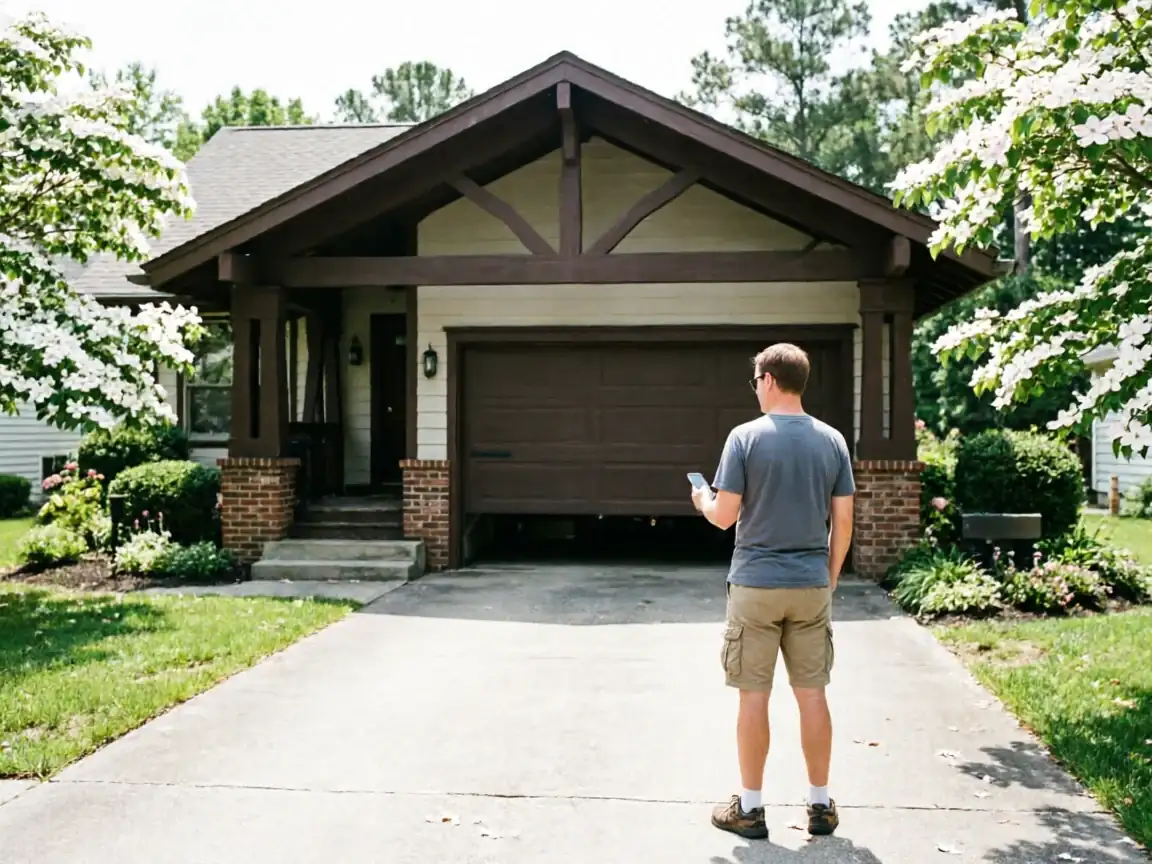
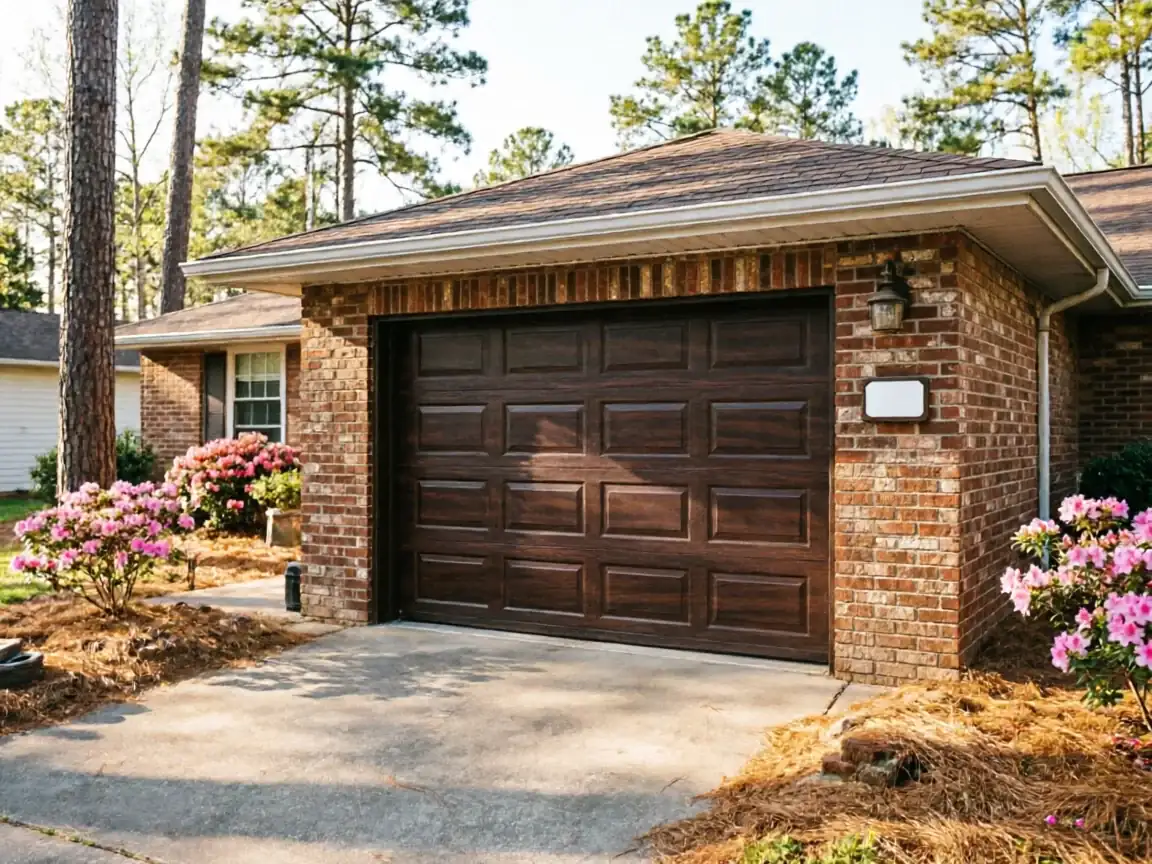
Most of the houses in this service area went up between 1953 and 2013
With the median landing around 1991, and across the 12 named areas we work - Oak Hill, Nolensville, Forest Hills, Belle Meade, and the rest - the stock leans heavily 1980s and 90s. That matters for noise because a door and opener installed during that stretch is now thirty-plus years old, and steel fatigues on a schedule whether anyone's watching or not.
The climate here sits in a cold-moderate band, which isn't brutal but it isn't nothing either
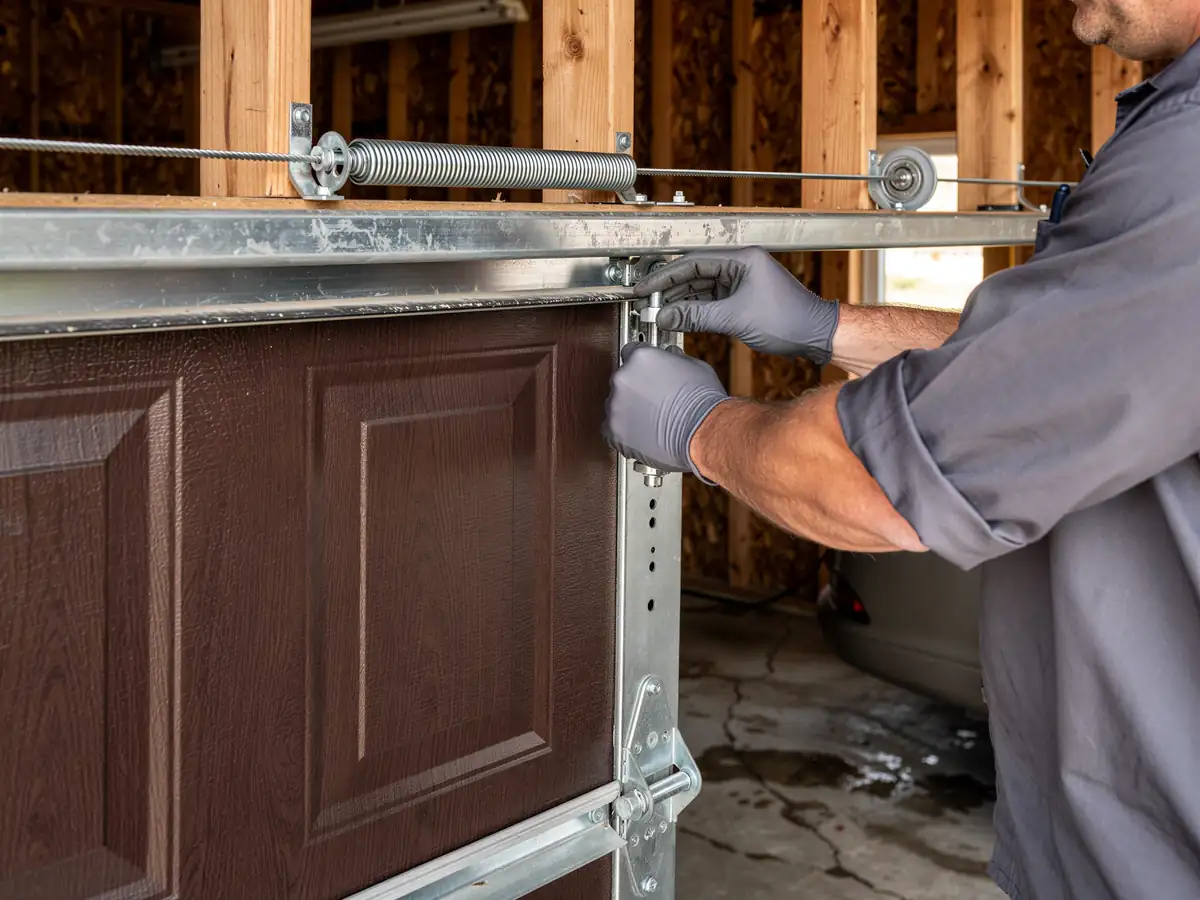
Garages in this area see real temperature swings between a summer afternoon and a winter morning, and every swing makes steel expand and contract. A torsion spring or a track bracket that's slightly loose will tell you about it with a creak, a bang, or a metal-on-metal grind that wasn't there in August.
So when a door in this area starts making noise, it's rarely random
It's usually the age of the hardware meeting the swing of the season, and the two together are what you're hearing.
When to Call Someone
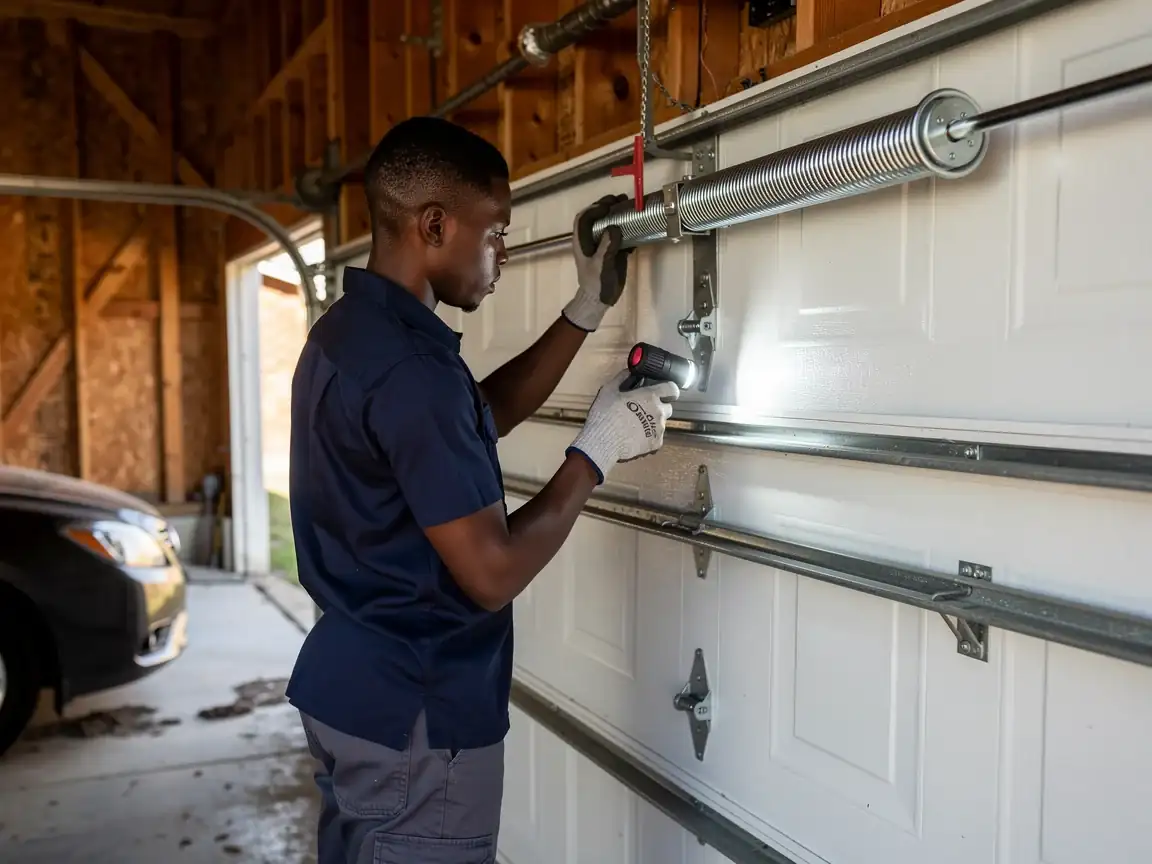
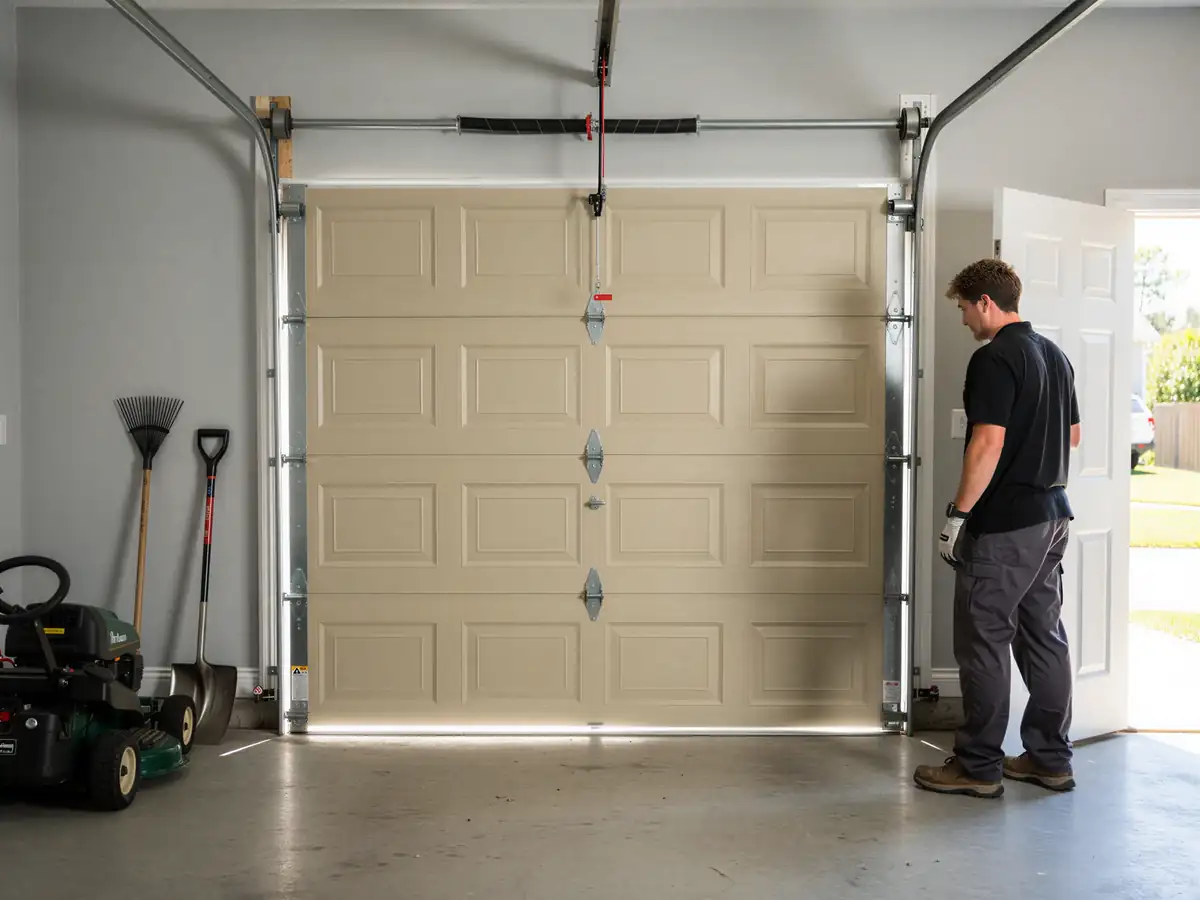
A door built in the 1980s or 90s boom that's still on its original springs has likely put tens of thousands of cycles on steel that was only ever rated for so many. A grinding or popping noise right at the top or bottom of the travel, especially on a cold morning, is usually a spring losing tension or a roller that's worn its bearing out. That's worth a call before the spring fails outright, because a broken torsion spring under load is a real hazard, not just a nuisance.
A rhythmic thump as the door moves is almost always a bent track section or a roller that's cracked - common on doors from this era since the original hardware wasn't built to last forever. A screech on opening that fades once the door's moving is usually just dry hinges, and that one you can handle yourself with the right lubricant.
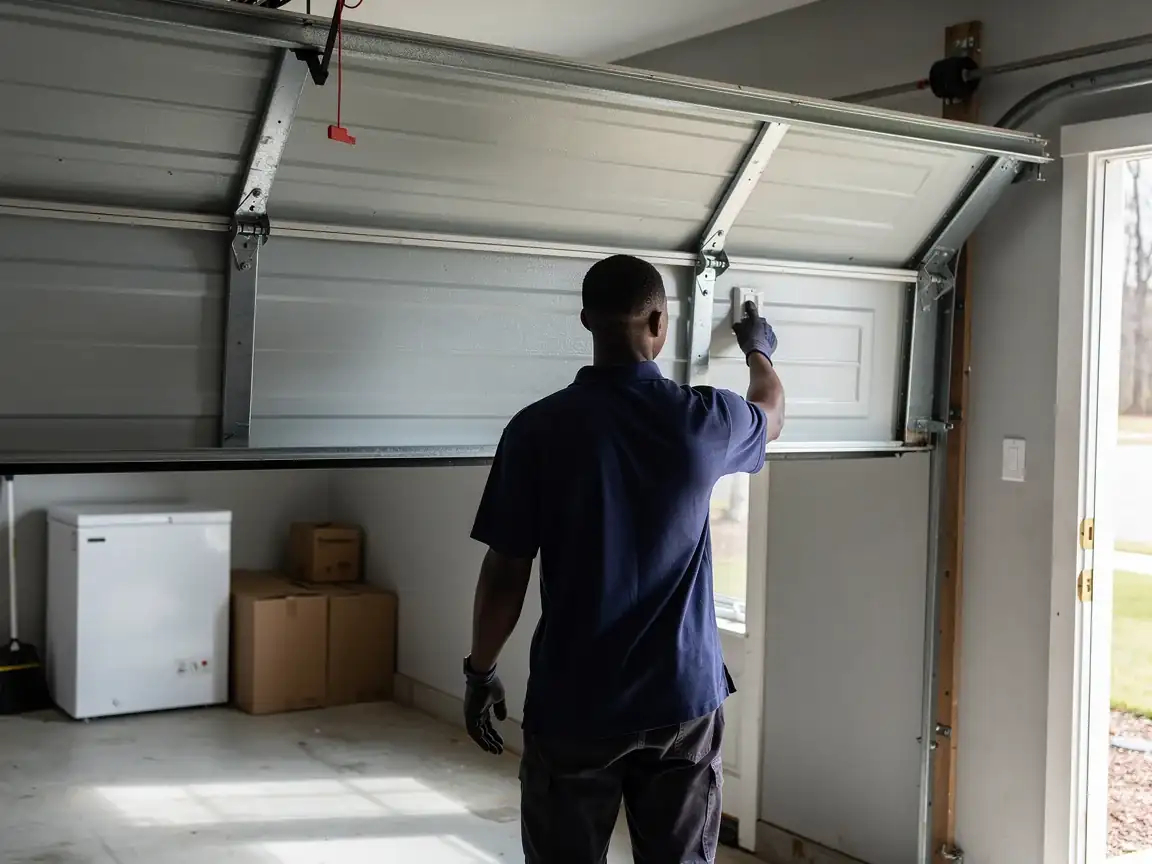
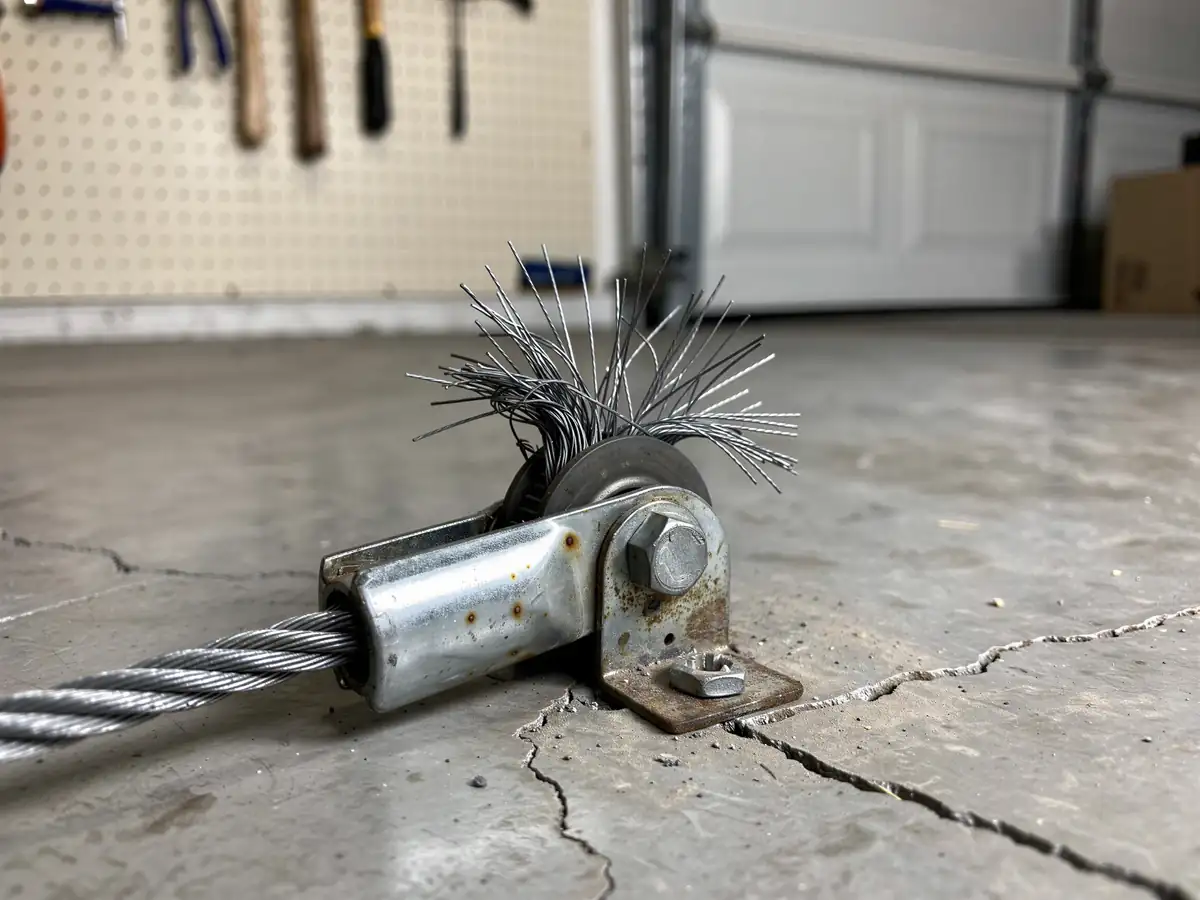
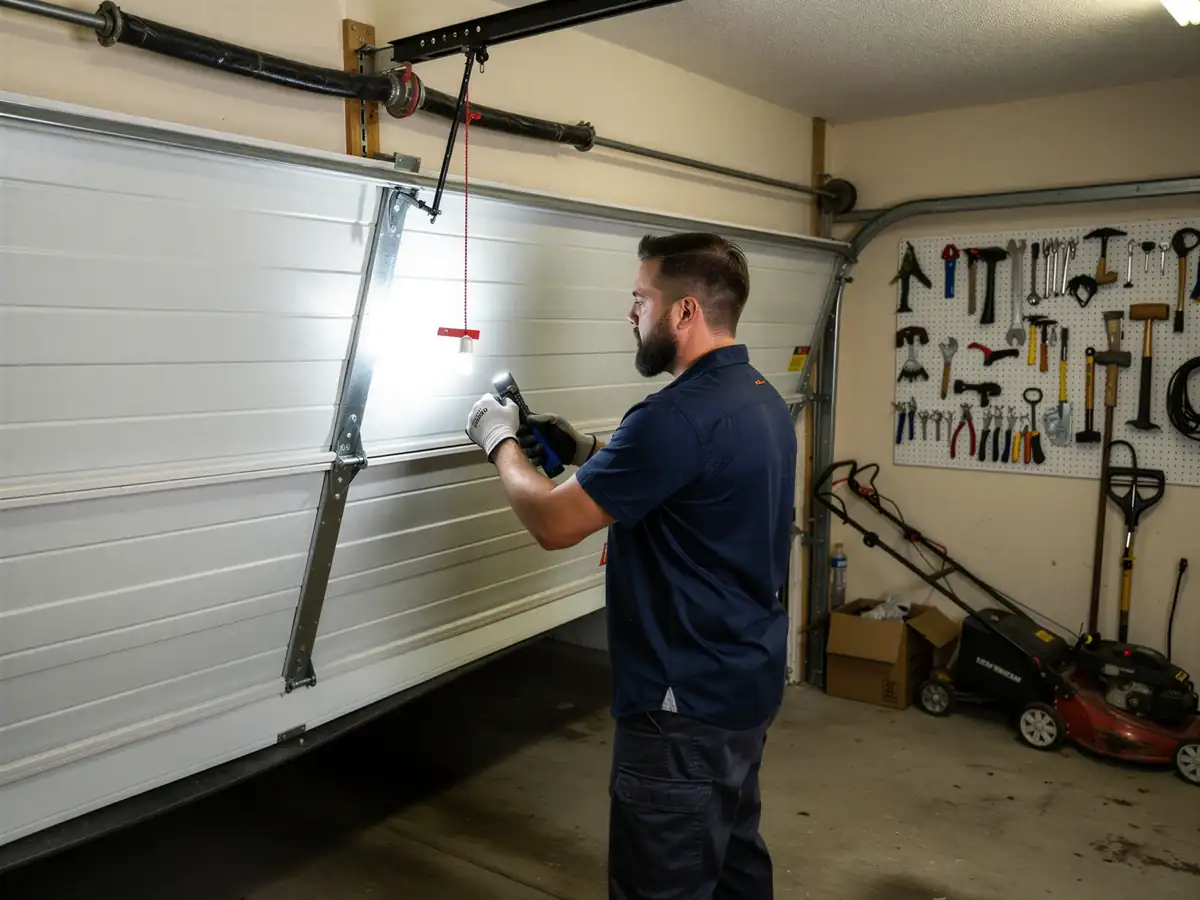
What you shouldn't wait on: any noise paired with the door moving unevenly, jerking, or hanging at an angle. That's a cable or a spring giving out, and it tends to get worse fast, not slow.
The Cost of This Job
We don't have a flat number to hand you here, and we're not going to make one up. What we can tell you is what drives the cost up or down for a house in this area. A door from the 1980s-90s stock that's original equipment usually needs more than one part replaced at once - spring, cable, and roller wear tend to hit around the same age, since they were all installed the same year.
Median household income across this service area runs $98,723, and what we see reflected in that is more homeowners choosing a full spring and hardware swap over a patch job, because a patch on thirty-year-old steel buys you a short reprieve before the next part fails. That's a judgment call, not a rule, and a straightforward lubrication or sensor adjustment costs nothing like a full hardware replacement.
The honest limitation: we can't quote a repair over the phone from a noise description alone. Spring tension, cable wear, and track alignment all look different once we're standing in front of the door.
The Problem
The core issue in this area isn't bad installation
It's time catching up with hardware that was built to a 1980s or 90s standard and is still doing the job decades later. A door installed when the house was built in, say, 1991 wasn't engineered to run silently forever; it was engineered to run for a service life, and a lot of doors in this area are well past that mark now.
The cold-moderate climate speeds that clock up a little
Overnight temperature drops shrink steel just enough that a spring under tension or a bolt on a bent bracket finds the slack and makes noise finding it. None of this is dramatic on its own, but across 33,732 households and 24,663 owner-occupied houses in this service area, it adds up to a lot of doors making the same handful of noises for the same handful of reasons.
- 33,732 households
- 24,663 owner-occupied
The fix almost always starts with identifying which part is actually loose, worn, or fatigued
Not by guessing from the sound alone, but by watching the door move.