Doing It Yourself
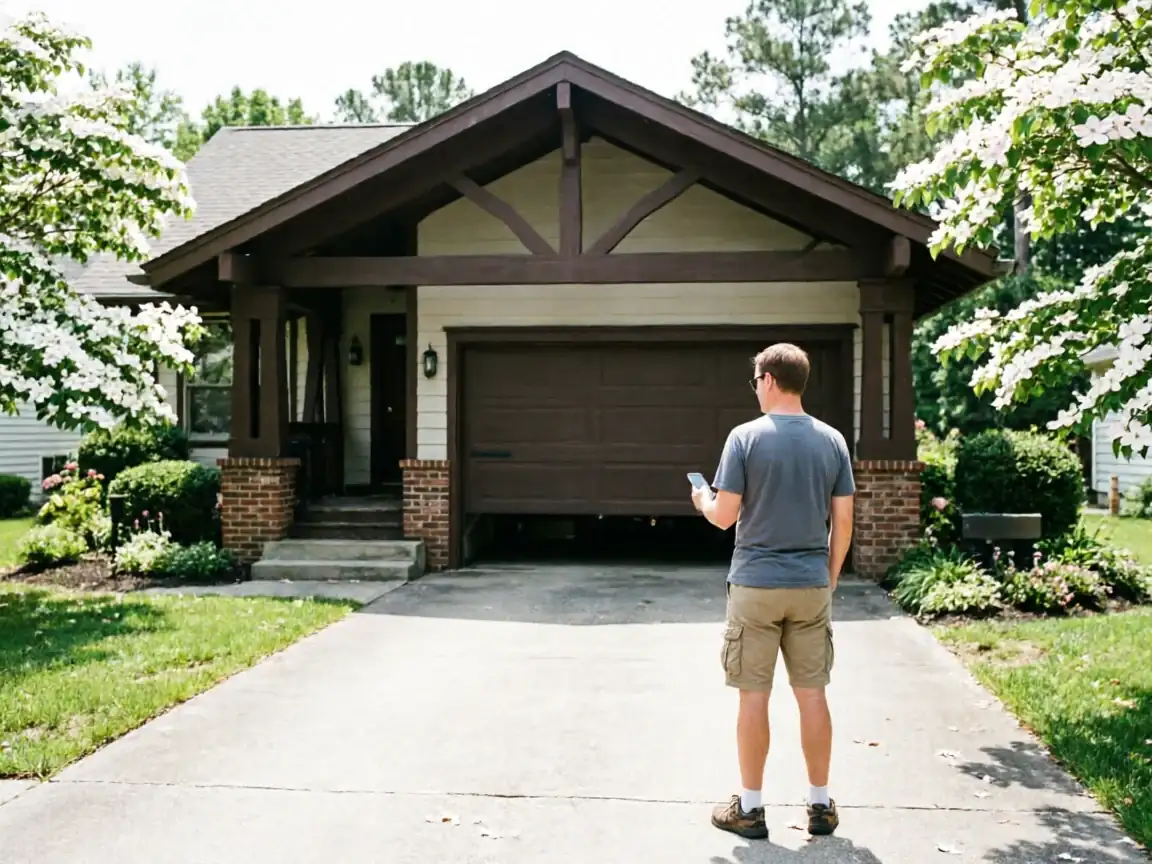
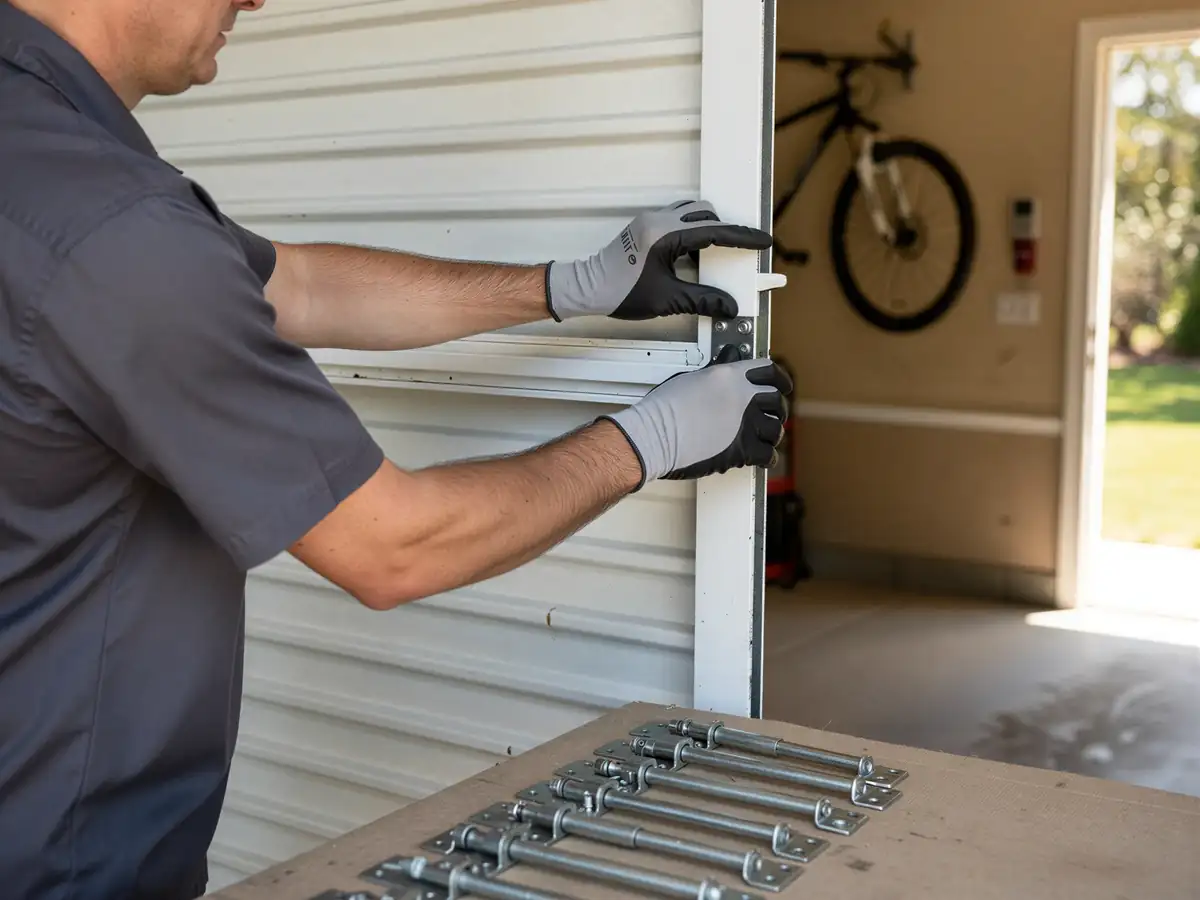
When a garage door comes off its track, the first instinct is to grab a ladder and push the roller back into the rail
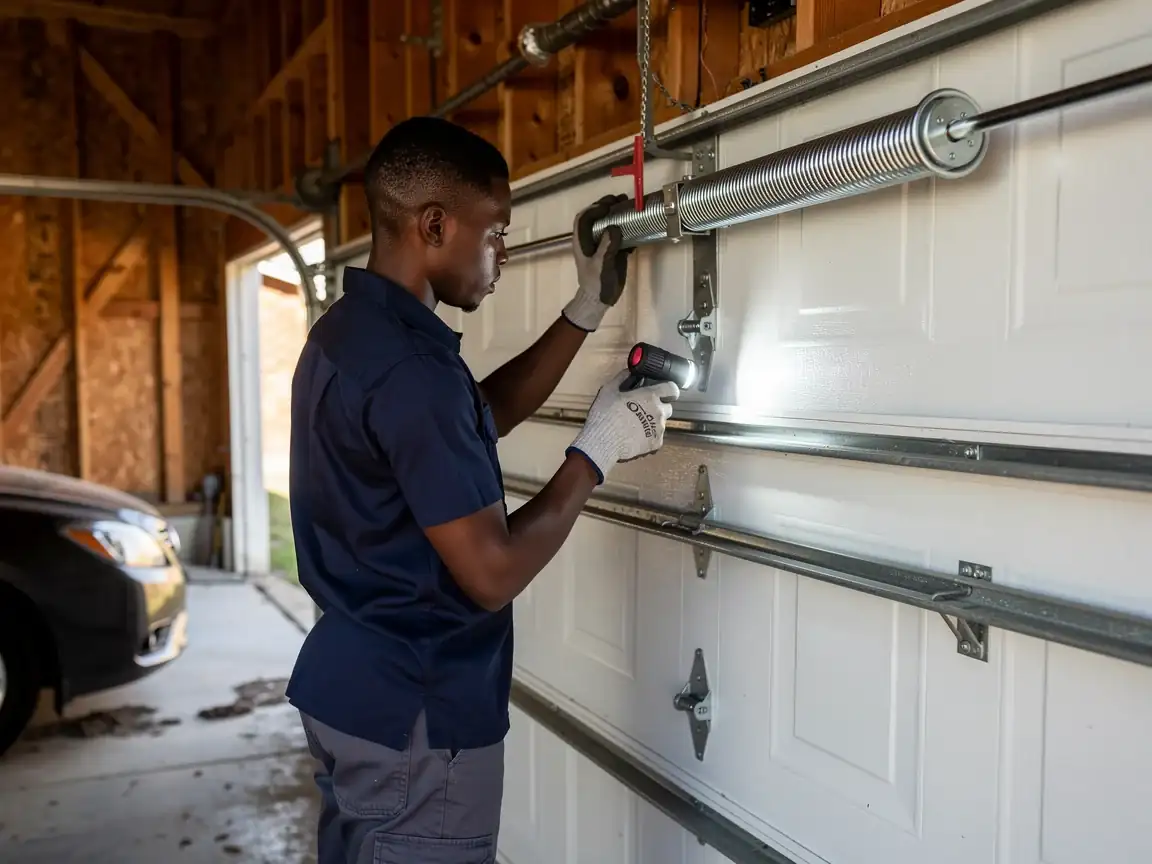
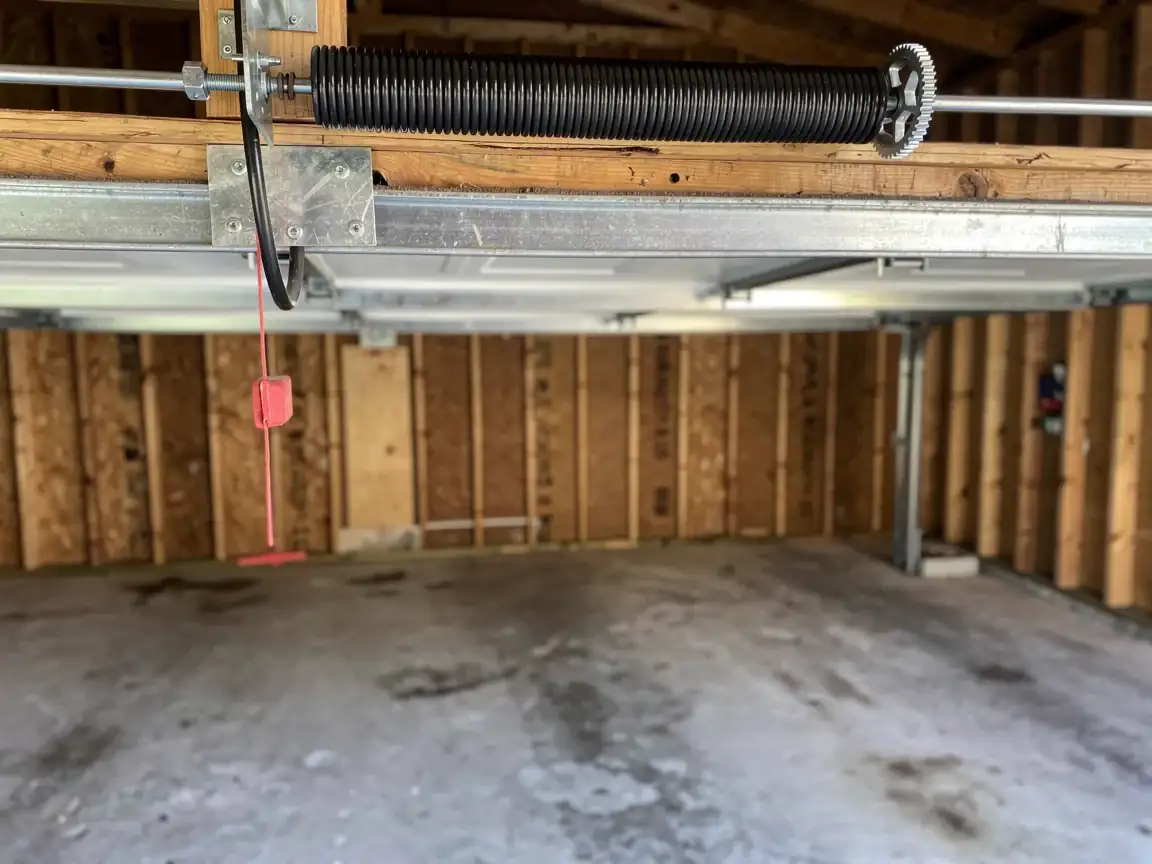
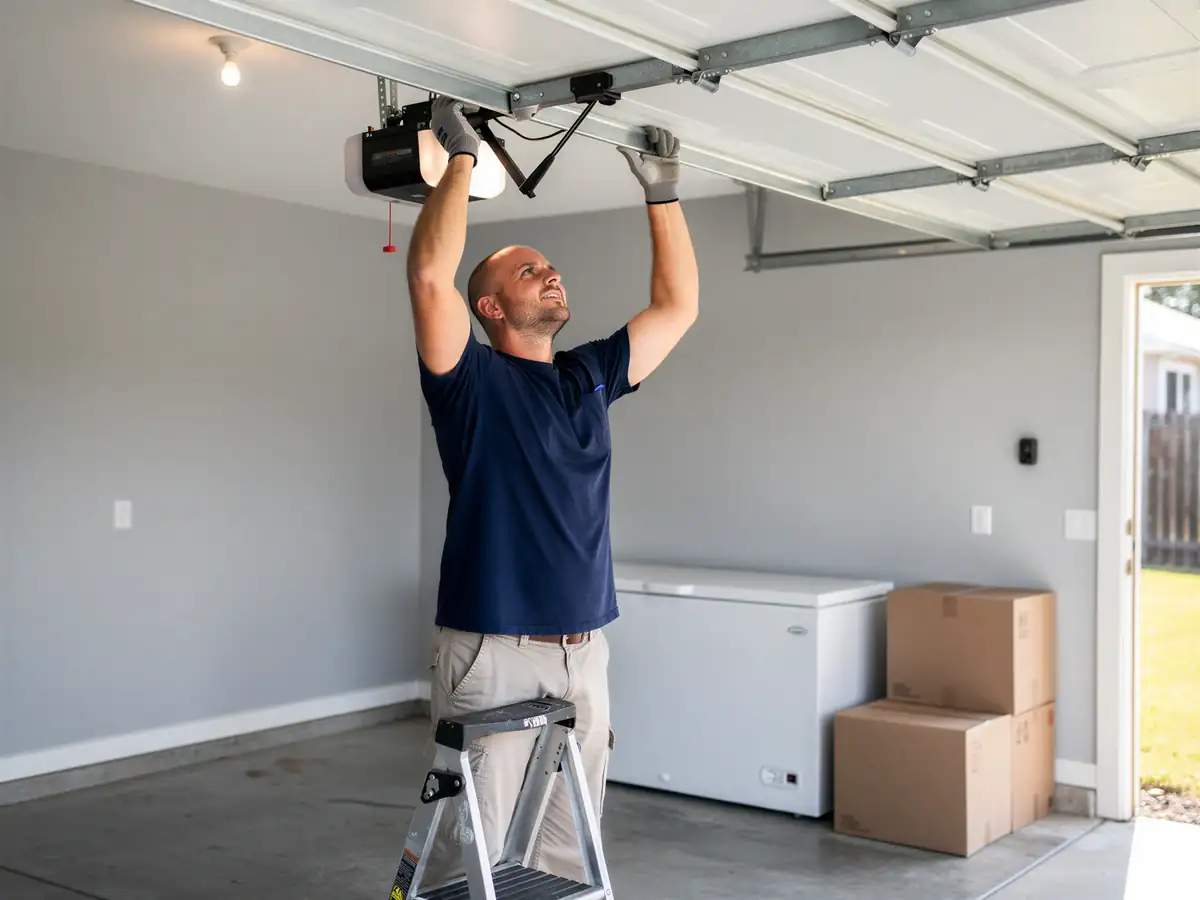
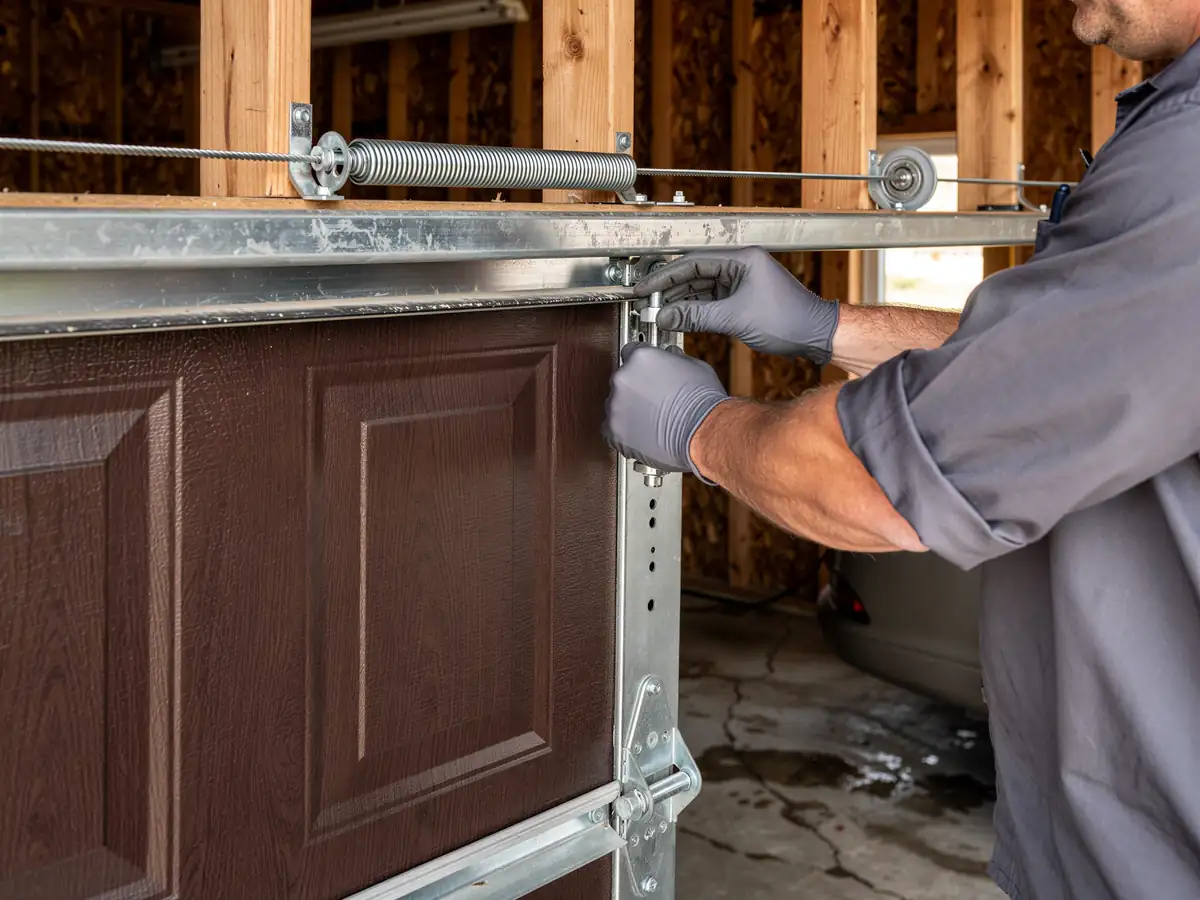
Don't. A door that's off track on one side is still under spring tension, and if you grab a panel to muscle it back into place, you're working next to a torsion spring doing most of the lifting. That's the part of this job we won't walk you through over the phone.
What you can safely do
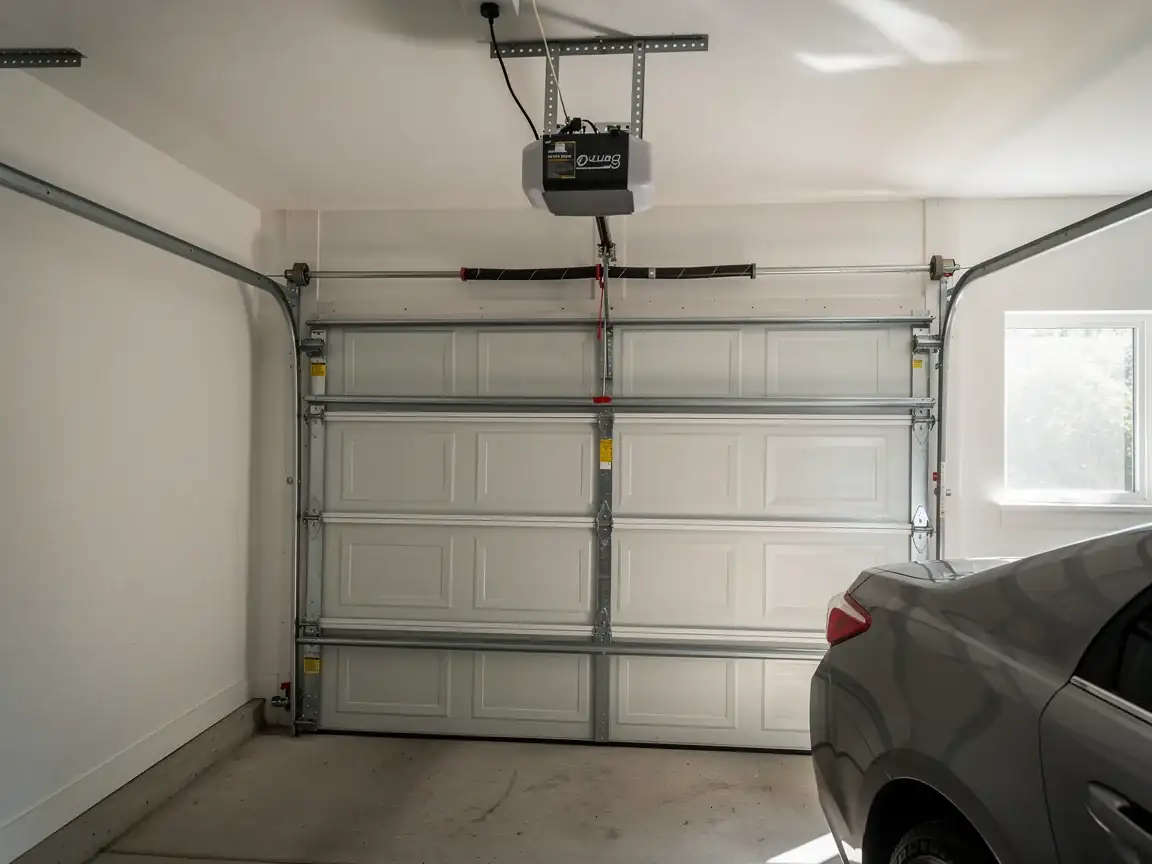
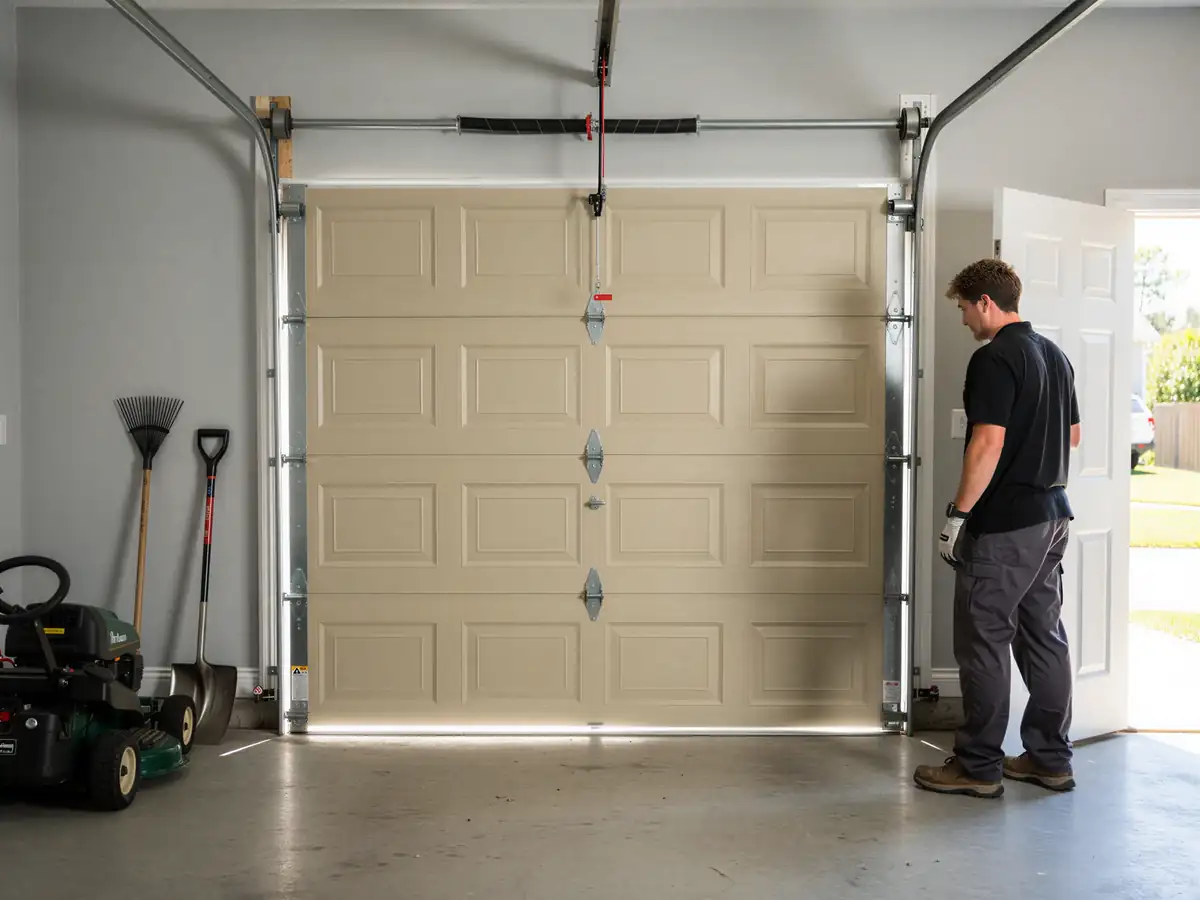
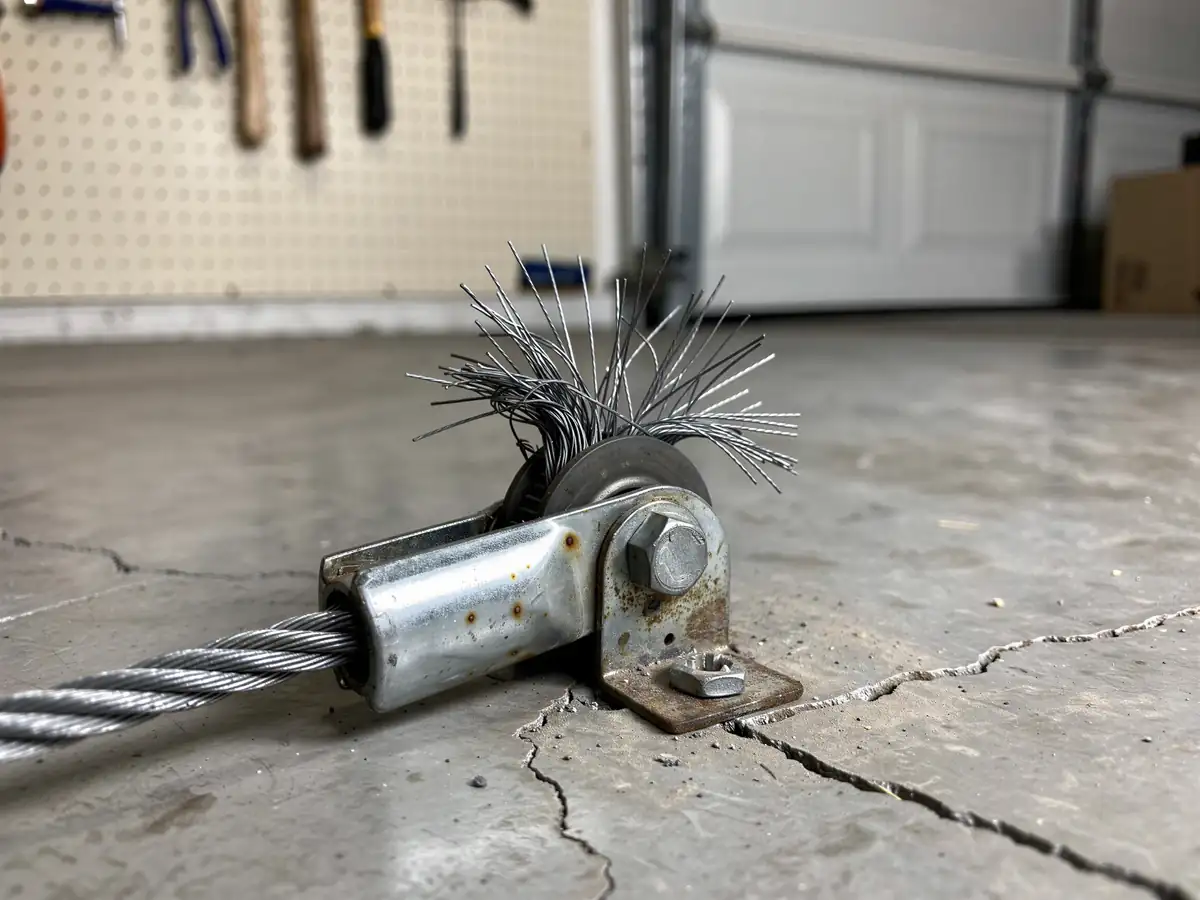
Cut power to the opener so it doesn't try to run the door, check for anything visibly bent - a roller bracket, the track itself - and look at whether the door came off evenly or on just one side. A door that's off on one side only, with cables still wound on the drums, is usually a faster fix than one where a cable has jumped the drum or snapped. If you can see slack cable or a bent track section, that's your sign to stop looking and start calling. Pushing a bent track back "close enough" usually just moves the failure point six inches down the rail, and now it's a bigger job than it needed to be.
How It Shows Up
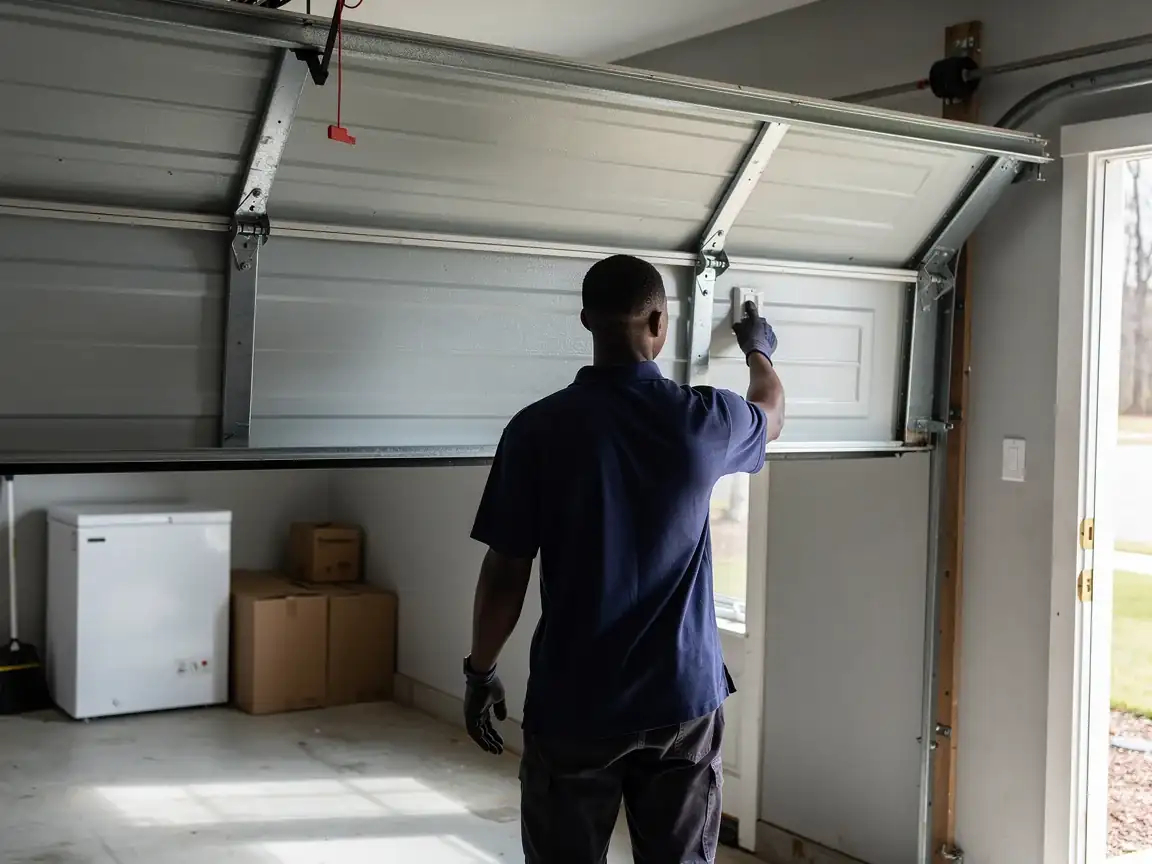
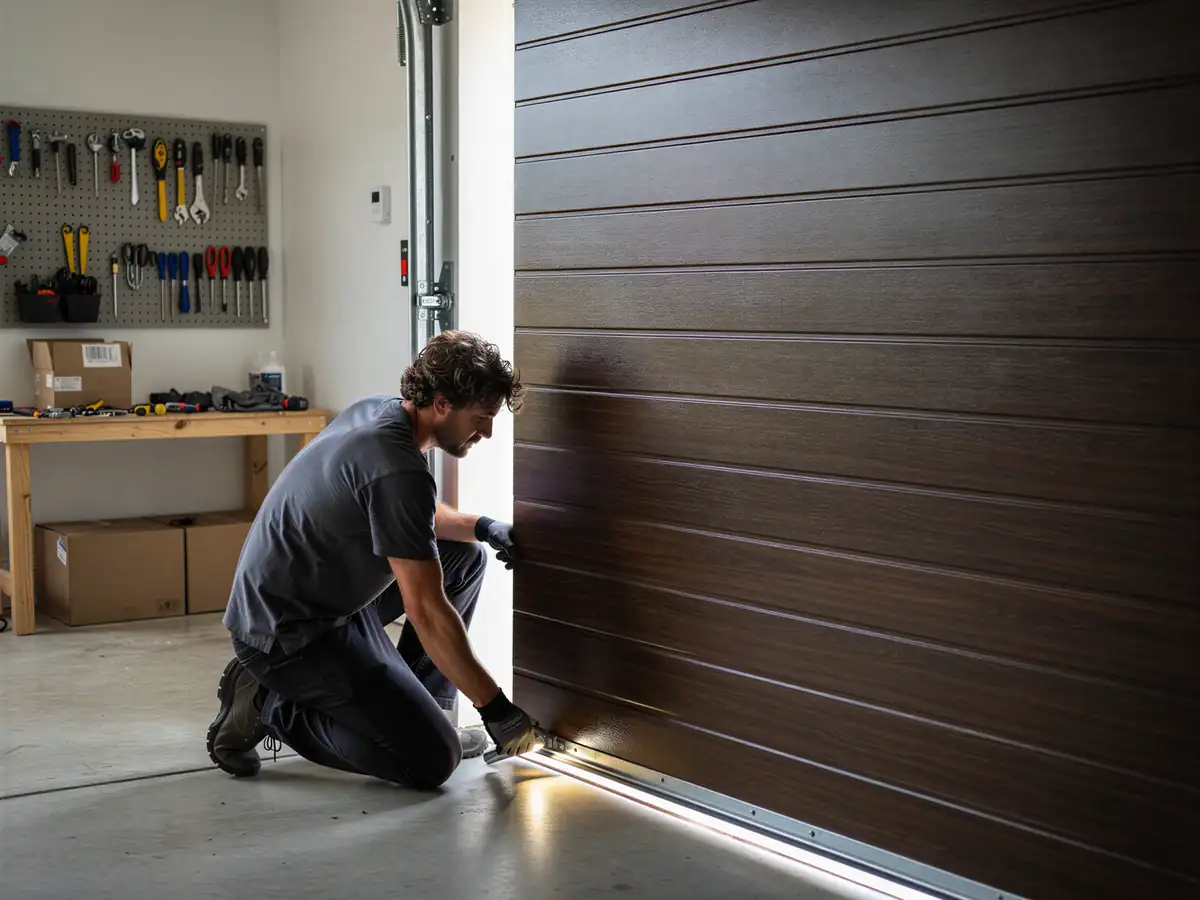
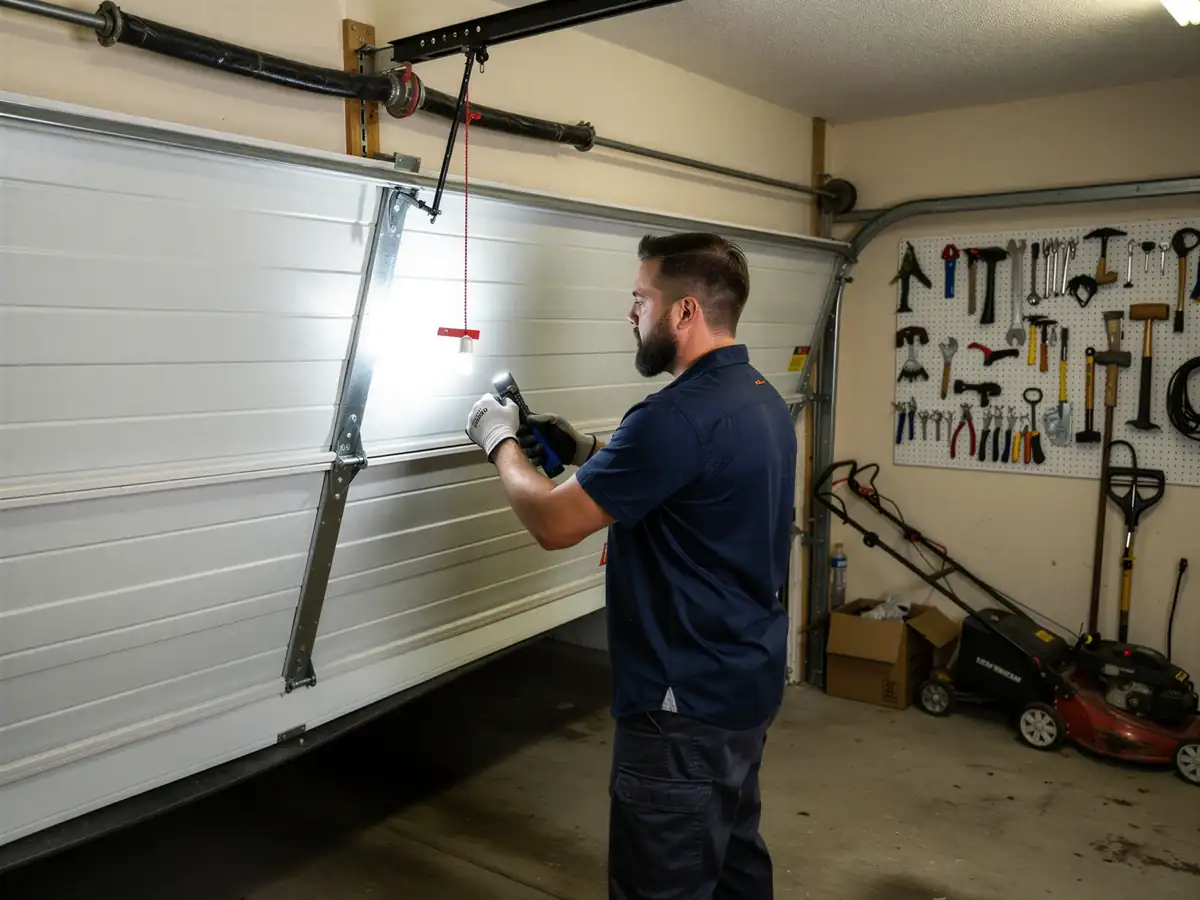
Most calls start the same way: the door looks crooked in the opening, tilted down on one side while the other still sits level, or it's stuck a foot off the slab and won't go up or down without grinding. Sometimes it's quieter - a rumble that wasn't there last month, a roller visibly riding outside the rail instead of inside it, or a gap between the bottom panel and the track bracket you can see from across the garage.
On double doors we see one specific pattern a lot: the door walks off track on the side closer to the house wall, where the track run is shorter and takes more flex when a panel's warped even slightly. On single doors it's more often a bent track from something hitting it - a bike, a car mirror, a bumper tap - than a true derailment. Either way, once a roller leaves the rail, running the opener again usually doesn't put it back. It just grinds the roller or the track edge until one of them gives first, and then you've got a second problem stacked on the first.
The Cost of This Job
There's no single number for this one, because "off track" covers two very different jobs. Sometimes it's a ten-minute realignment - the track bracket loosened, the door walked over, tightening the bracket fixes it for good. Other times the track itself is bent, the roller's seized in its bearing, or the cable meant to keep the door square has slipped the drum, and now you're replacing track sections and rollers, not just adjusting them.
Age of the hardware matters more than most homeowners expect. A door on original rollers and track from a 1990s build has steel that's thinner and rollers more likely worn oval instead of round, so a bent track on that door is less likely to straighten cleanly and more likely to need a new section. On a newer door with nylon rollers and heavier track, the same impact that knocks an old door off its rail might just need a bracket re-set.
We'll tell you on site which one you've got before we touch anything, and if a ten-minute fix turns into a full track swap, you'll know why before we start - not after.
Why It Happens Here
This one's tied to what's actually in the ground around here
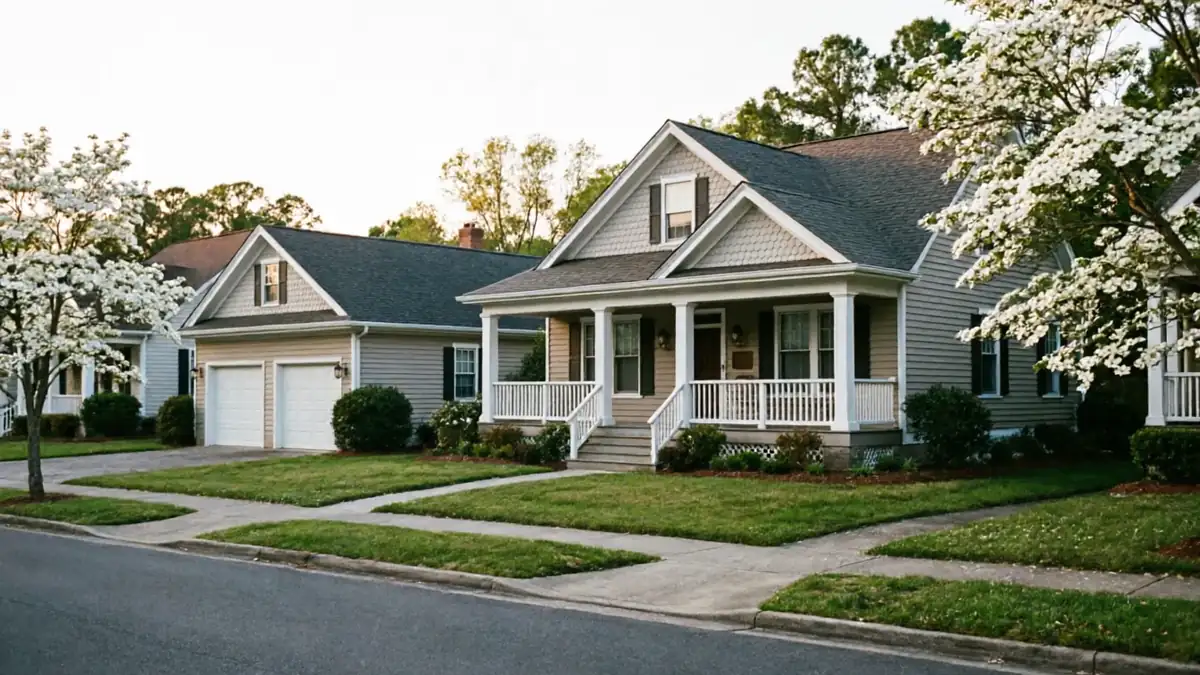
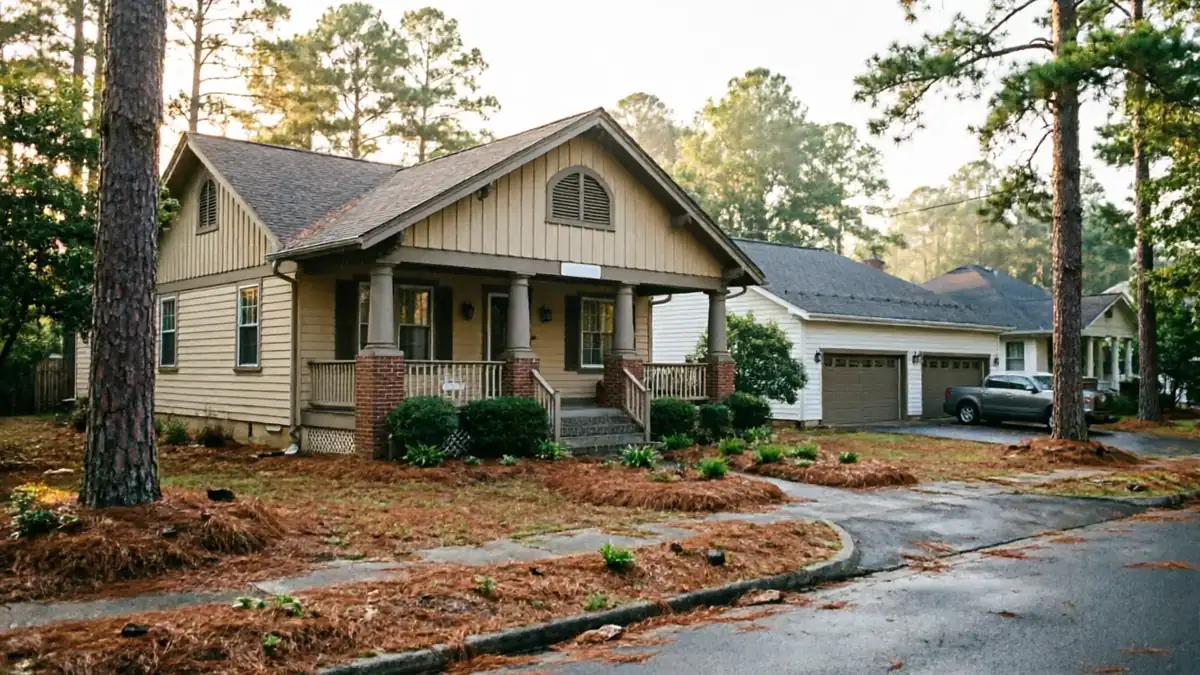
Housing in the service area spans 1953 to 2013, with most of it clustered in the 1980s and 90s, which means a lot of garages still run the track and roller hardware that came with the house, not a replacement. That hardware wasn't built to run forever, and three-plus decades of use is enough for brackets to work loose and track to go slightly out of true even without a single hard impact.
Climate plays its part too
This is a cold-moderate band, which means the garage sees real swings - cold snaps that shrink steel track just enough to change the clearance the rollers ride in, followed by warm stretches that expand it back. That cycle, repeated every winter for thirty years, is exactly the kind of slow stress that loosens a track bracket nobody ever looks at until the door won't run straight anymore. It's less dramatic than a car backing into the door, but across the houses we see, it's the more common reason we get called out.