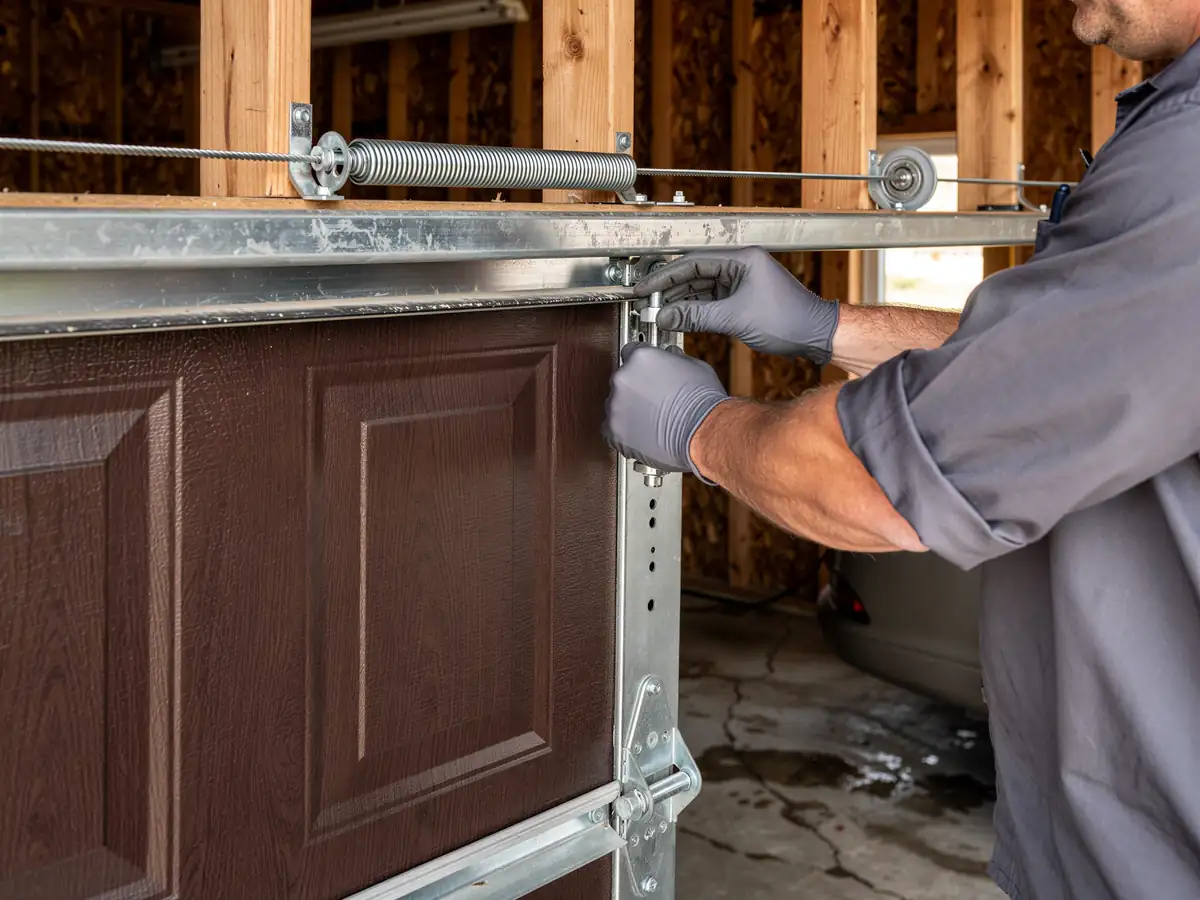
When Cold Weather Breaks an Old Torsion Spring in Brentwood
Many Brentwood houses date to the 1980s and 90s, and original torsion springs often snap in cold weather. See what drives the repair, cost, and timing.
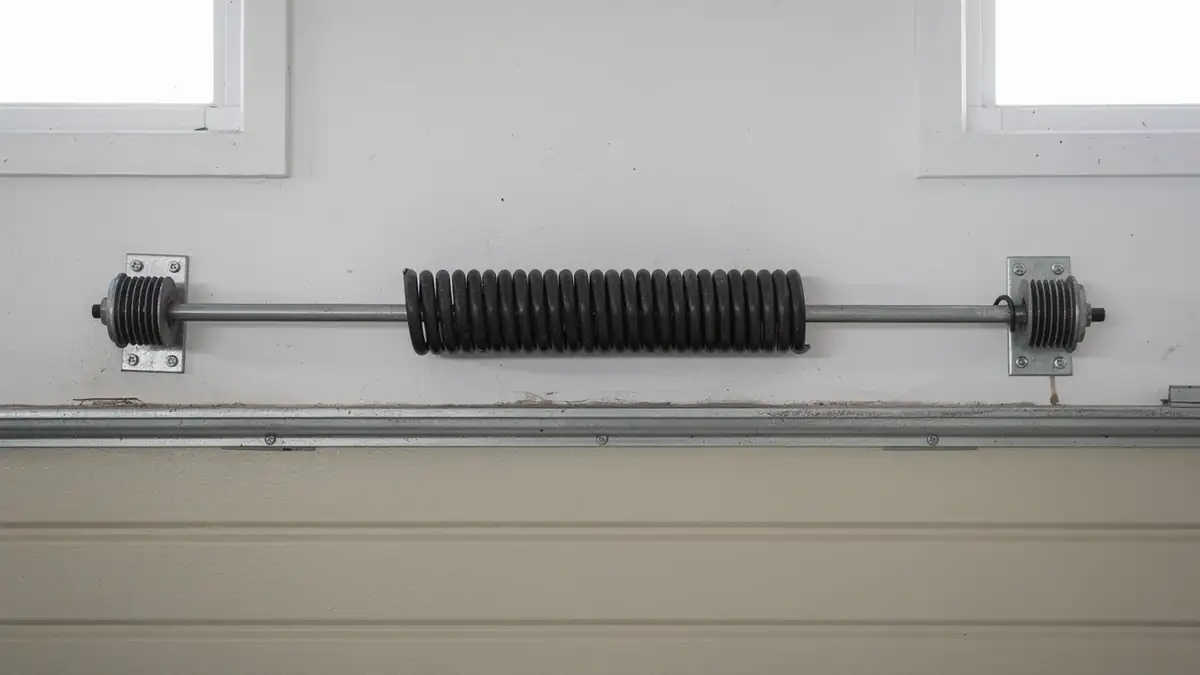
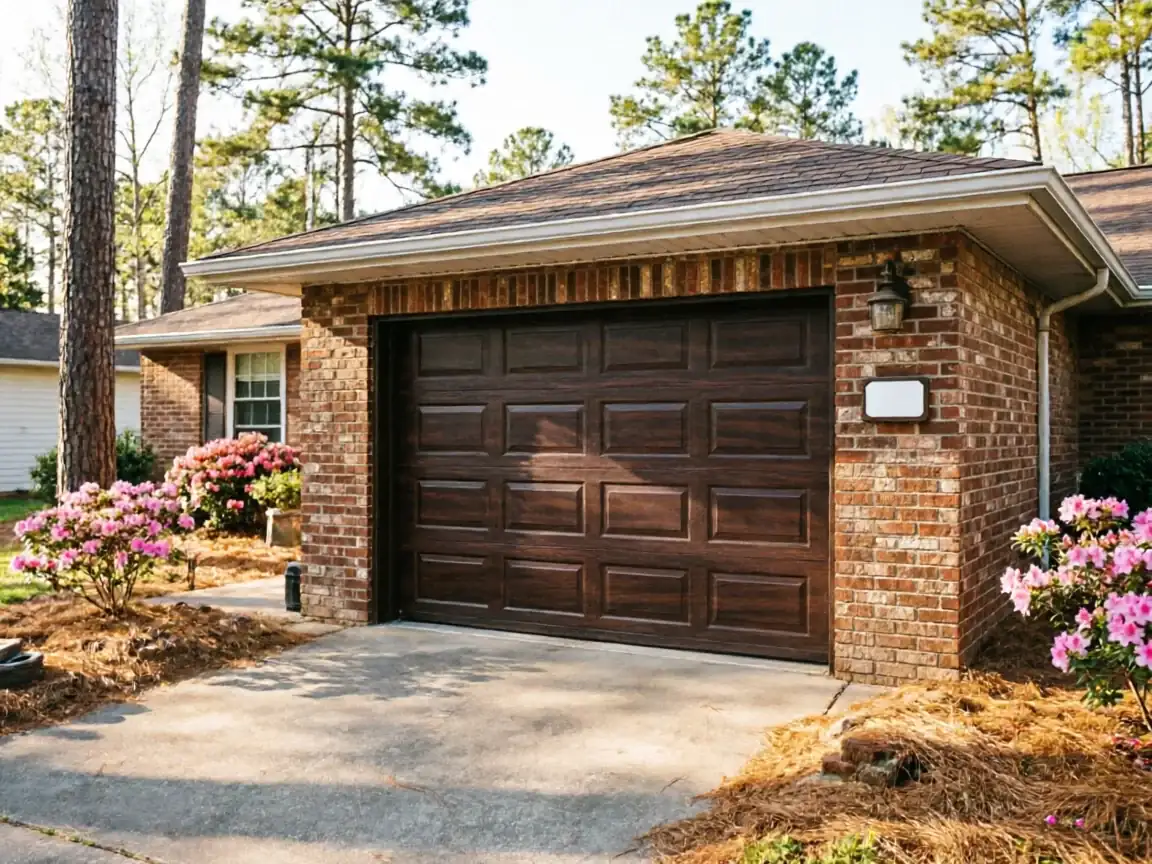
Brentwood sits in a cold-moderate climate band, which doesn't mean brutal winters, it means swing. A door that sat at 60 degrees in the afternoon sun can be looking at a hard overnight freeze by morning, and that swing is what finishes off a torsion spring that's already fatigued from thousands of cycles. The spring doesn't care about the thermometer reading, it cares about the metal contracting faster than it can flex.\n\nMost of the houses on this side of town were built between 1953 and 2013, with the median landing around 1991, so a huge share of the garage doors still running are on the original torsion hardware from that era. Steel that's been doing its job quietly for thirty-plus years loses tensile give before it ever shows rust or visible wear. Cold just picks the day.\n\nThis isn't a once-a-year event. Across the twelve named areas in this market, the housing stock clusters hard in the 1980s and 90s, which means a lot of doors are hitting that same window of spring fatigue at close to the same time, especially once the first real cold front comes through.
When to Call Someone
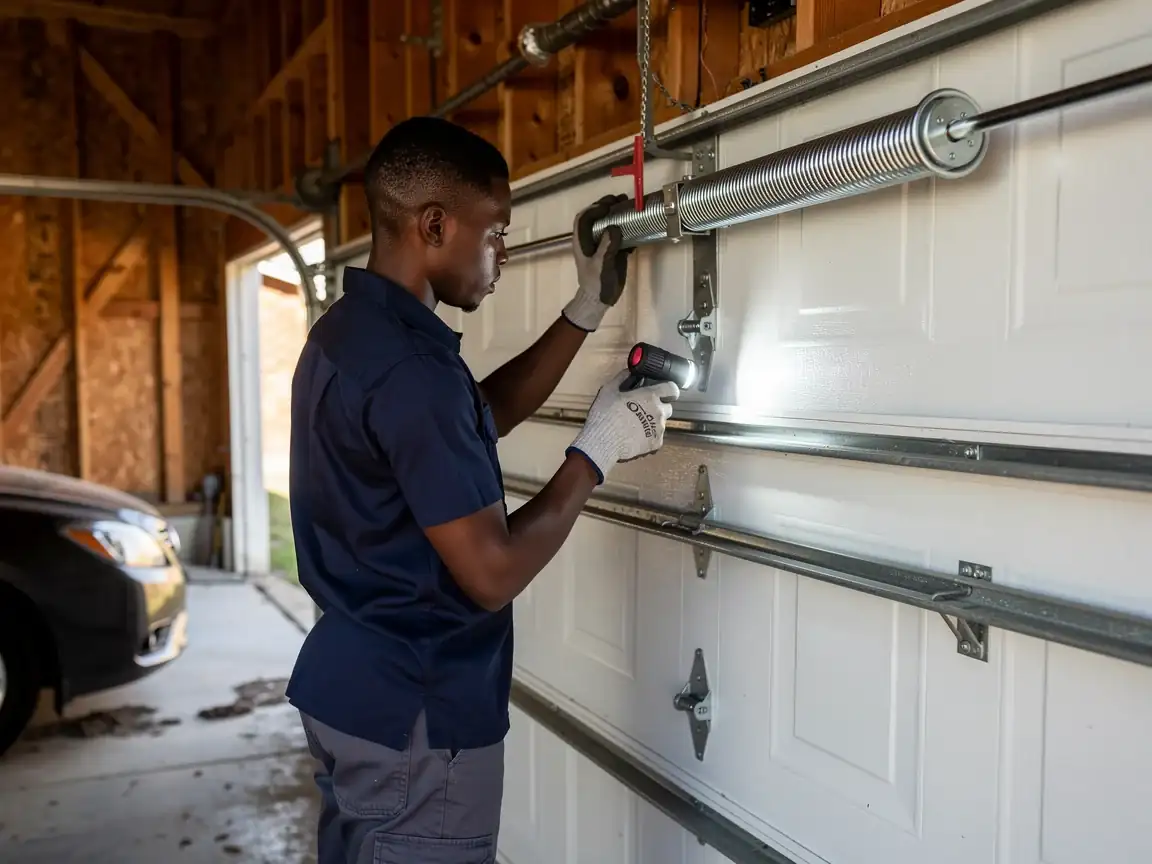
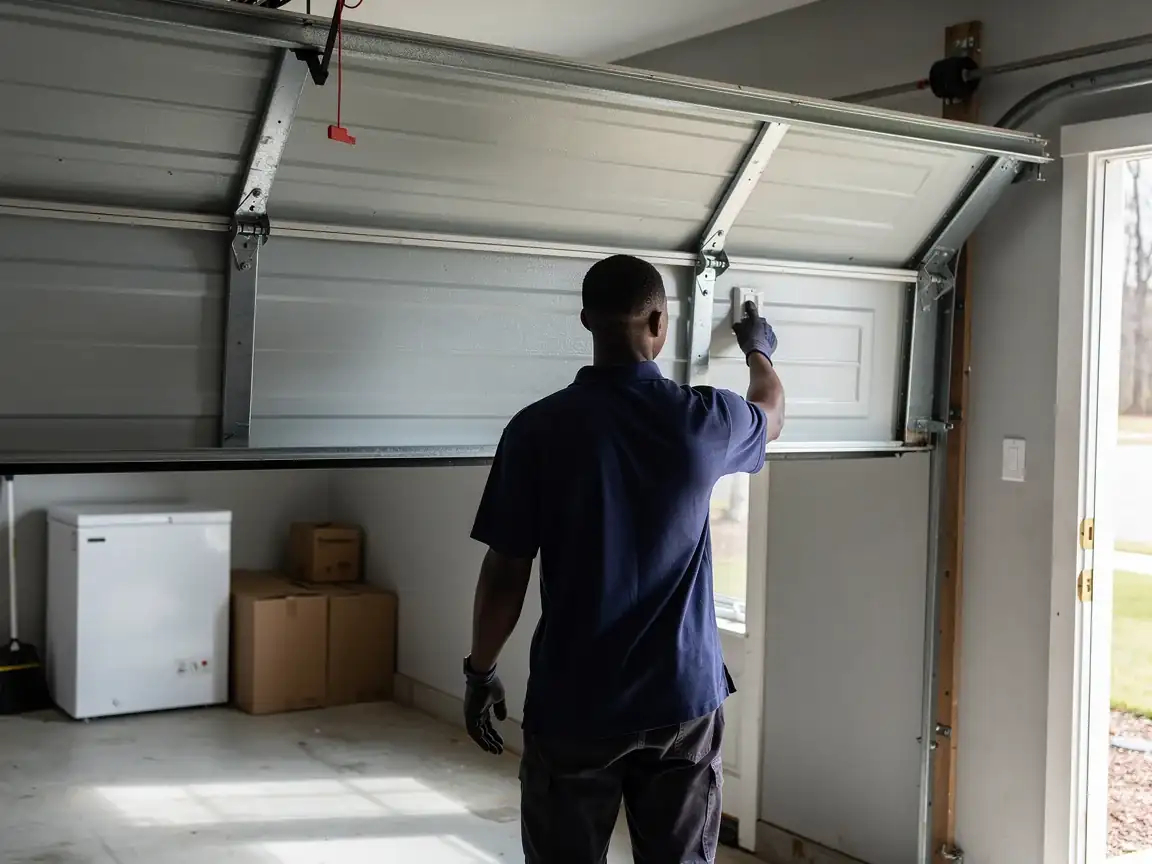
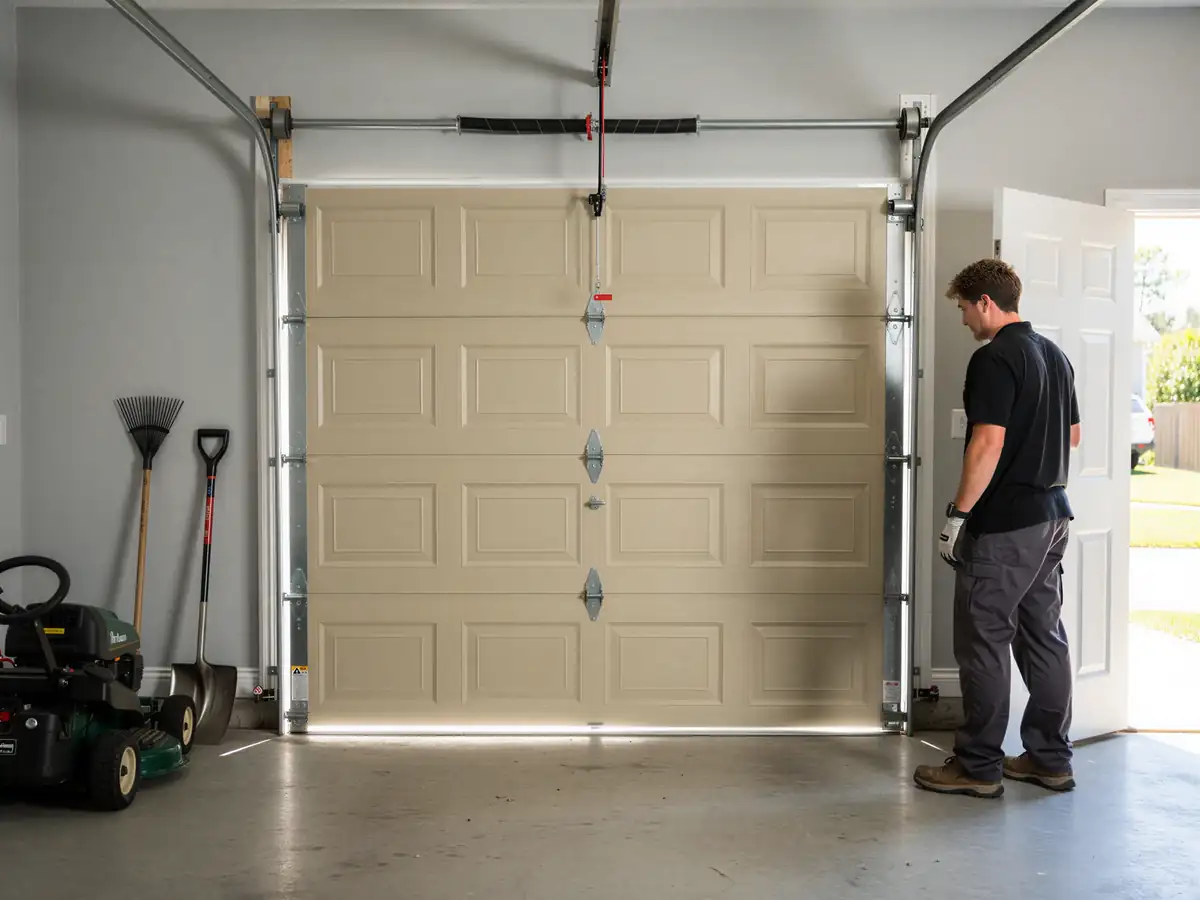
Call before the spring lets go completely, not after. The tells: the door feels heavier than it used to when you lift it by hand with the opener disconnected, the opener strains and groans partway up, or you hear a loud bang from the garage on a cold morning, which is usually the spring itself snapping under tension. None of those are something to ride out.\n\nA door that's stuck shut with a broken spring is not a weekend project. Torsion springs are wound under heavy tension and a DIY attempt is one of the more common ways people get hurt in a garage. If the door won't move, or moves unevenly side to side, stop using the opener and get it looked at.\n\nHouses built in the 1980s and 90s stock common to this area tend to run a single standard torsion setup, which is usually a straightforward swap once we're on site. Older or modified setups sometimes need a second look before we can say what's involved. If you're not sure whether it's the spring or something else, like a bent track or a bad cable, that's worth a call too, since the symptoms overlap.
The Cost of This Job
We don't post a flat number here because spring jobs vary more than people expect, even within the same neighborhood. A single door with a standard torsion spring, which covers most of the 1980s and 90s builds common in this area, is a different job than a double door or a setup where the drum or cable also needs replacing because of the original hardware.\n\nWhat we can tell you is what drives the number: spring size and wind, whether it's one spring or two, whether the cable and drums have worn alongside the spring, and whether the opener's travel limits need resetting afterward. We quote after we see the door, not before, because a phone guess on a spring job is usually wrong in one direction or the other.\n\nHere's the honest limitation: if your door is original to a house built in the earlier part of that 1953 to 2013 range, parts for some older track and drum configurations take longer to source than a standard current spring. We'll tell you up front if that's the case rather than guess at a timeline.
The Problem
The core issue is simple and it's not really about the garage door at all, it's about steel fatigue meeting a cold snap. A torsion spring is rated for a certain number of open-close cycles, and once it's near the end of that life, the sudden contraction from a cold night is often the thing that finishes it, not a dramatic failure on its own.\n\nBecause so much of the housing here, across both the closer-in areas like the farther ones like Thompson's Station and Fairview, was built in that same 1980s-to-90s wave, a lot of these springs are aging out together. That's different from a newer subdivision where the hardware has another decade of life left in it.\n\nThe fix itself is not complicated once the spring is identified correctly. What makes it a problem rather than routine maintenance is timing: cold weather doesn't create the fatigue, it just picks the morning the spring finally gives. Owners who get ahead of it with a spring swap before a hard freeze tend to skip the stuck-door morning altogether.
Why do garage door springs break more in cold weather?
The spring itself doesn't fail because of temperature directly, it fails because a fatigued spring contracts faster in a cold snap than it can flex. If it's already near the end of its cycle life from years of use, that contraction is often what finally snaps it. Houses here built in the 1980s and 90s are at the age where this shows up.
How do I know if it's the spring and not the opener?
If the door feels heavy when lifted by hand with the opener disconnected, or the opener strains and stalls partway through the cycle, that points to the spring, not the motor. A loud bang from the garage on a cold morning is almost always a torsion spring letting go.
Is it safe to replace a torsion spring myself?
No. Torsion springs are wound under heavy tension and a slip during removal or winding can cause serious injury. This is one job we'd always say leave to someone with the right bars and clamps, regardless of how handy you are with the rest of the house.
Will my opener need resetting after a spring replacement?
Usually, yes. Once the spring is swapped, the door's balance changes slightly, so the opener's travel limits and force settings often need to be reset so it doesn't strain against the new spring or stop short of fully closing.
Ready to get your garage door sorted?
Tell us what it’s doing and where you are in Brentwood - we’ll take it from there.