Opener installation across the Brentwood service area, matched to houses built 1953-2013 and a cold-moderate climate that hard on belts, gears, and sensors.
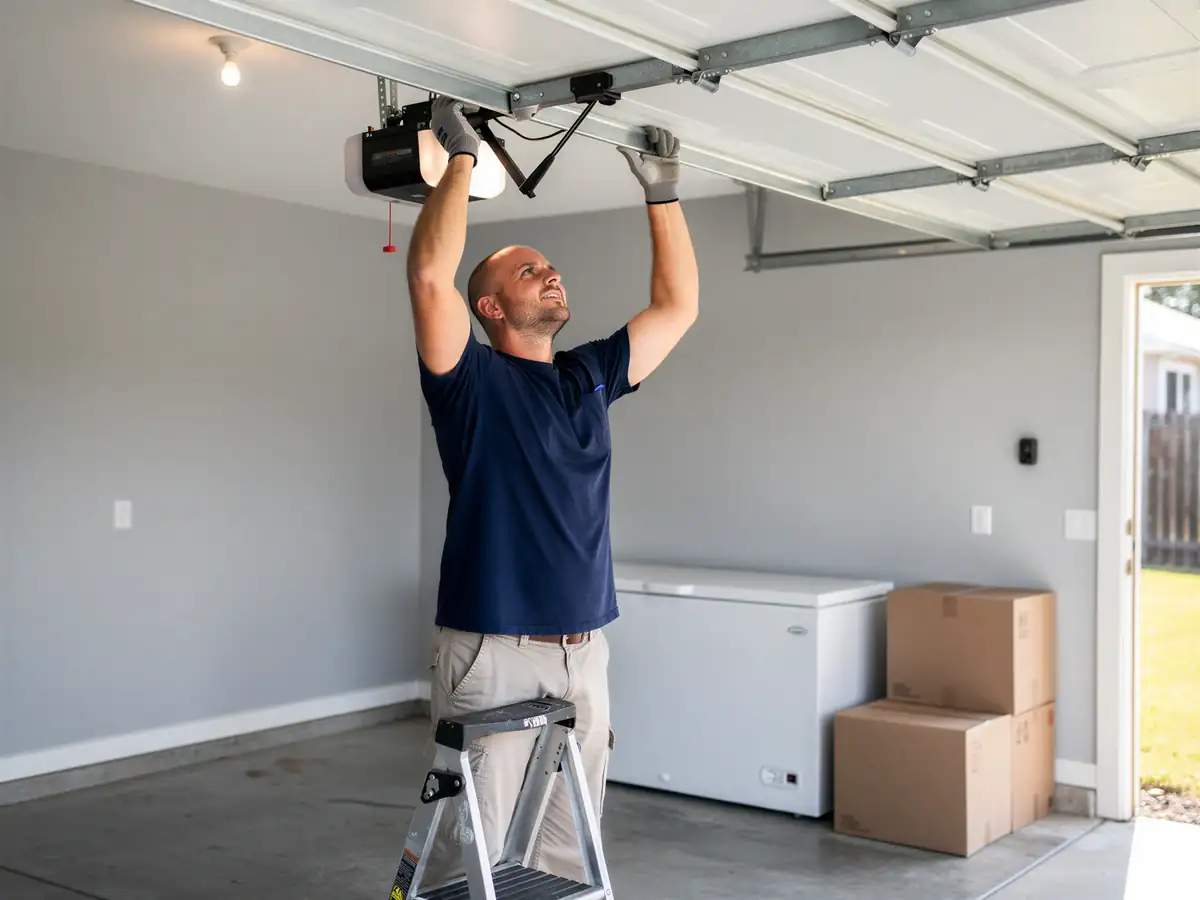
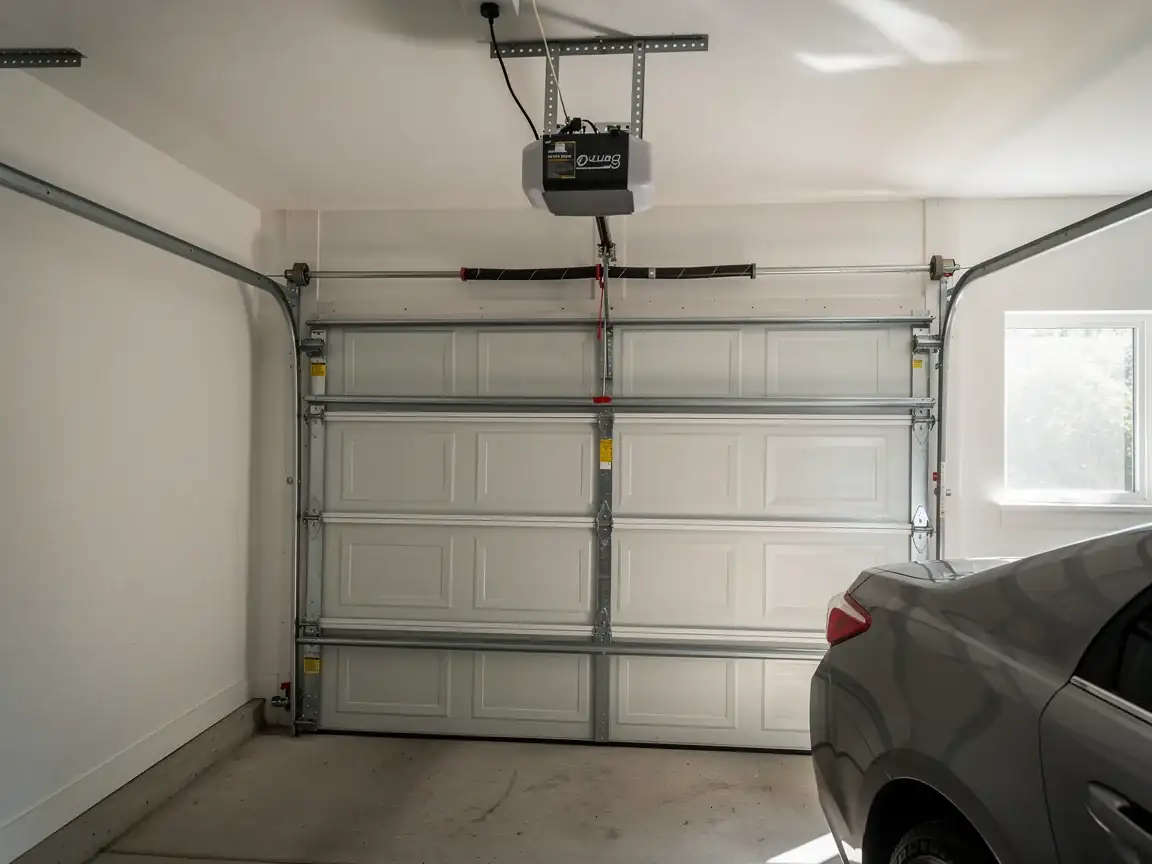
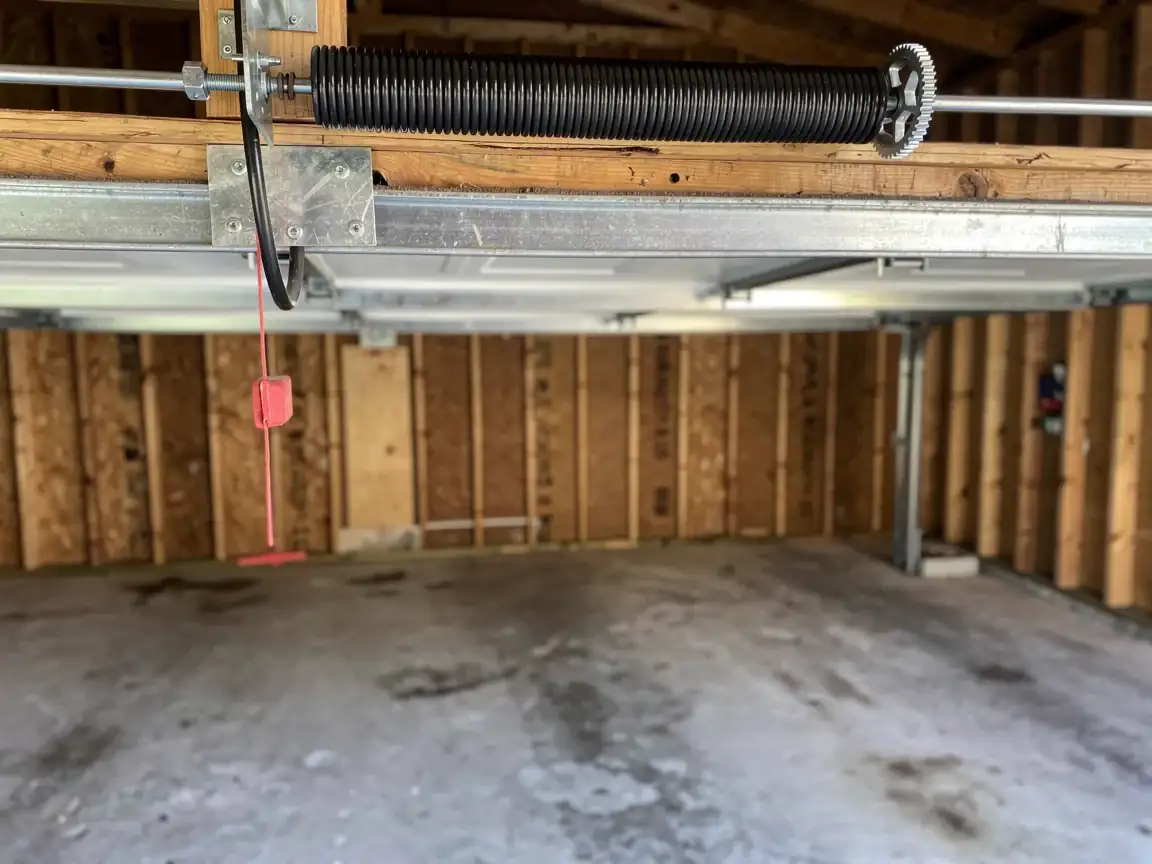
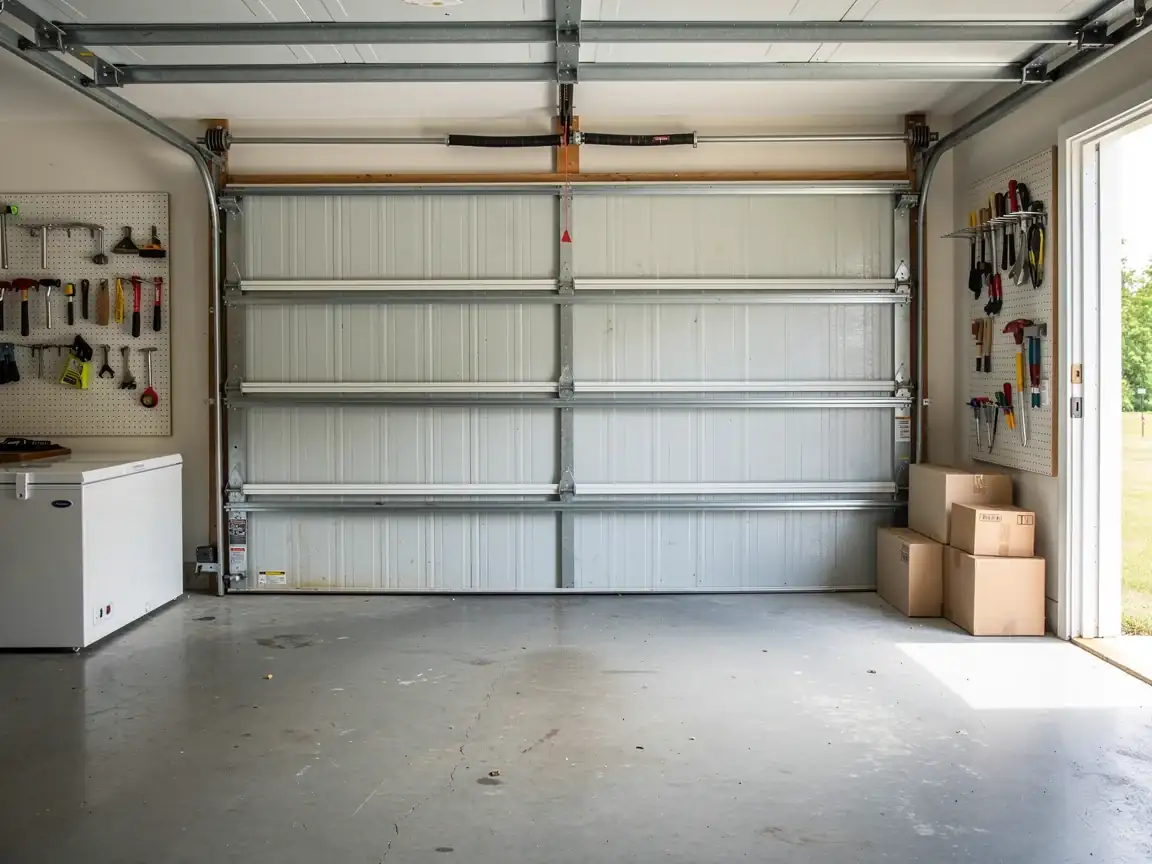
A chain-drive opener kit from a big box store comes with instructions that assume a square frame, a level header, and a bracket that lines up with what's already on your ceiling. Plenty of garages in this area don't give you any of that, especially once you're dealing with a house built before the 1990s where the original header bracket was sized for a lighter, single-horsepower unit. You can mount a new opener yourself if you're comfortable on a ladder, know how to wire a low-voltage circuit, and are willing to re-drill a header. What trips people up is the travel limit and force setting - get those wrong and the door either doesn't fully seal at the floor or reverses on its way down for no obvious reason. We won't install a unit you bought elsewhere sight unseen; if the rail, horsepower, or mounting hardware doesn't match your door's spring weight, the fix isn't tightening a bolt, it's starting over. That's the one limitation worth saying out loud: a mismatched opener on a heavy insulated door will burn out a drive gear in under a year, and no amount of adjusting fixes that.
How It Shows Up
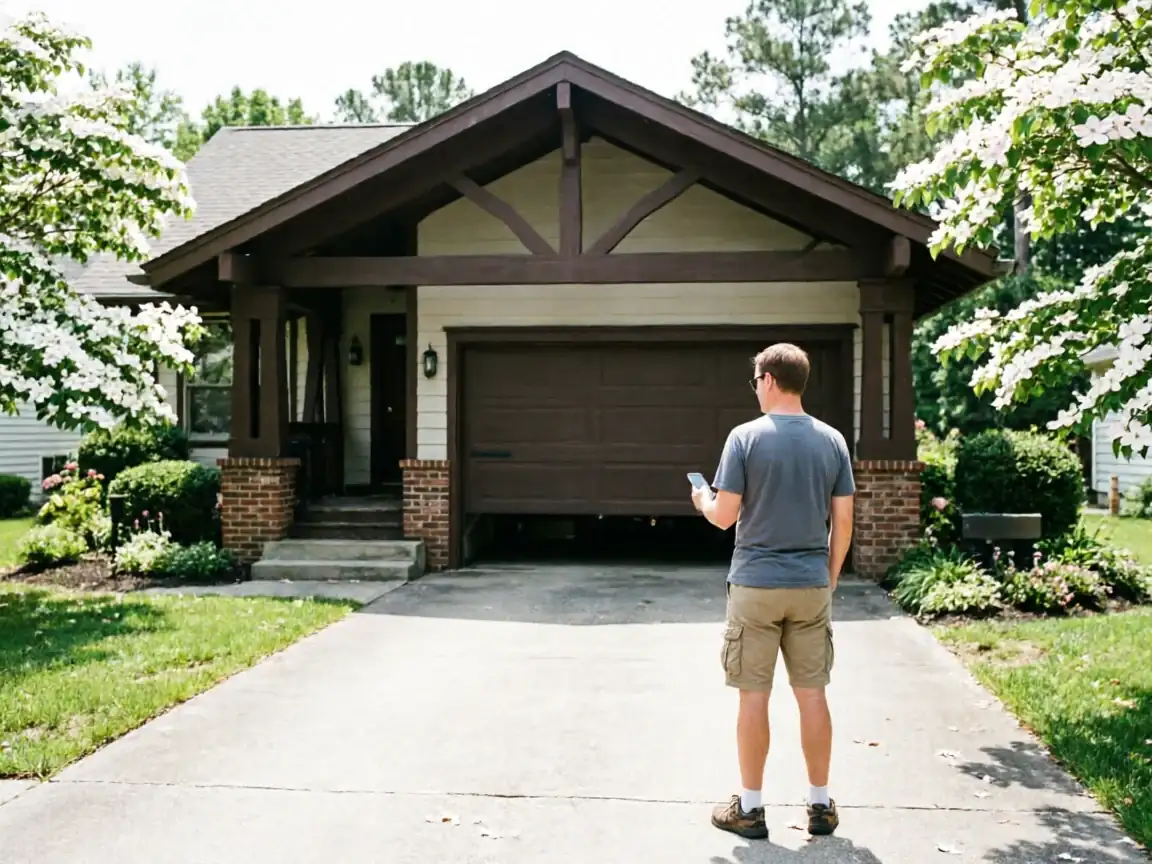
Most calls start the same way: the door hesitates, grinds, or only moves a few inches before stopping. In homes built in the 1980s and 90s - which make up a large share of the housing stock across this service area - the original chain-drive openers are now old enough that the gear kit inside the motor housing has worn down to plastic dust. You'll hear it before you see it: a rattle on the up-cycle that wasn't there last winter. Belt-drive units fail differently, with the belt slipping off track rather than grinding, which is quieter and easier to miss until the door won't open at all. Cold mornings make both worse. In a cold-moderate climate, grease inside an aging gearbox stiffens overnight, so the opener strains hardest on the first run of the day - exactly when a worn capacitor or a tired start relay gives out. If your opener only struggles before the sun's been up for an hour, that's not a coincidence, that's the climate finding the weak part.
The Cost of This Job
What drives the number on an opener install is the unit itself, not the labor - belt-drive versus chain-drive, horsepower rating, whether you want battery backup for power outages, and whether the existing rail and bracket can be reused or need replacing. A straightforward swap onto compatible hardware costs less than a full install where we're also replacing a bent rail or adding new wiring to a garage that never had a switch run to begin with. Homes in this area span six decades of construction, from houses built in the early 1950s to ones finished in the last ten years, so the mounting situation varies a lot more than people expect - older homes often need bracket work that newer ones don't. We don't quote a flat number over the phone for this reason; we quote after we've seen the header and the door weight. Given the median household income across this service area sits well above the national figure, most owners here choose a mid-tier belt-drive unit with battery backup rather than the cheapest chain-drive option, mainly for the quiet operation and the outage protection.
Why It Happens Here
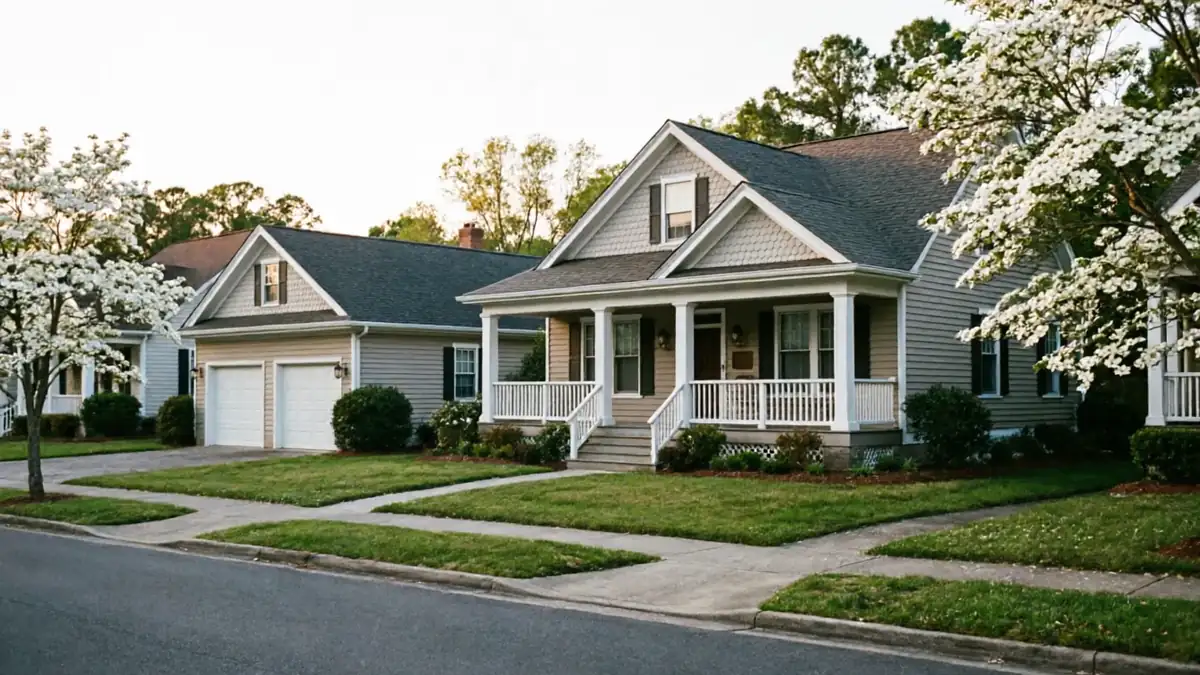
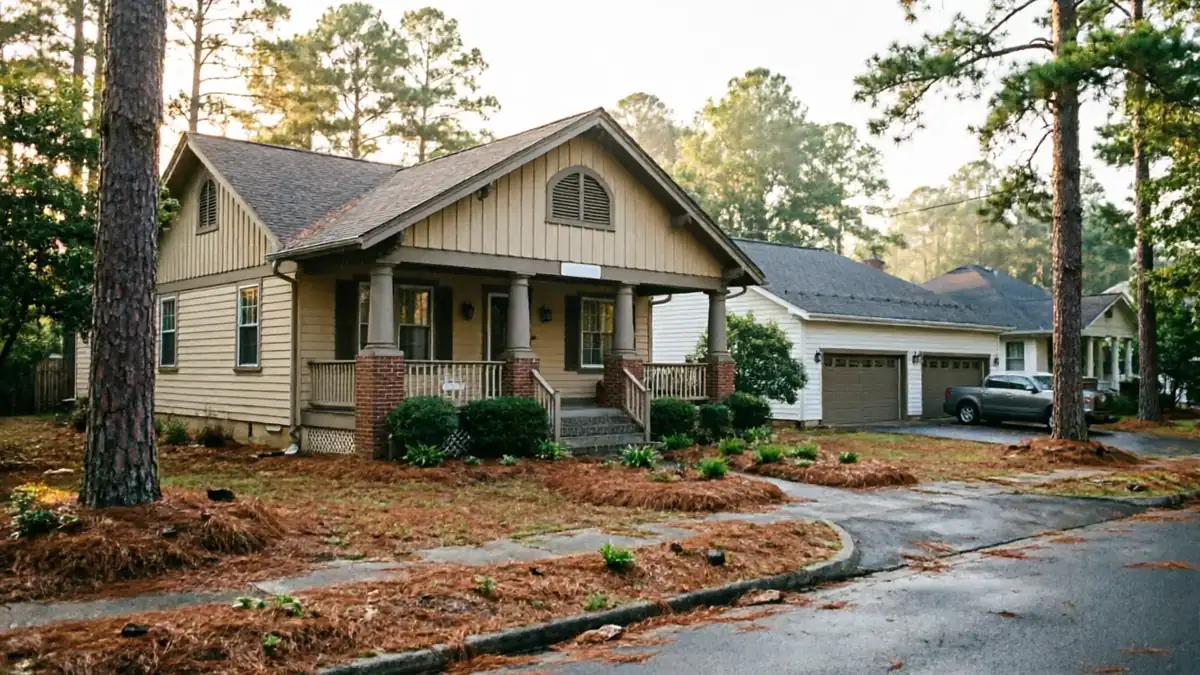
Three things stack up in this area that don't stack up everywhere. First, the housing stock runs from 1953 through 2013 with a median build year around 1991, which means a huge share of openers installed as original equipment are now thirty-plus years old and were never designed for today's heavier insulated steel doors. Second, across the roughly 33,700 households and nearly 24,700 owner-occupied houses in this service area, a lot of those original units were basic chain-drive models with no battery backup, no soft-start, and gearboxes rated for lighter doors than what's often been installed since. Third, the cold-moderate climate here means every opener does its hardest work on winter mornings when grease is stiff and metal has contracted overnight - that's when a borderline capacitor or a worn gear finally gives out. Put those three together and you get a predictable pattern: opener failures cluster in homes built before the mid-1990s, show up worse in cold months, and almost always trace back to a motor that was never matched to the door it's lifting.
How it works
From “it’s stuck” to “it’s fixed”
01
Tell us what’s wrong
Describe the symptom - won’t open, loud bang, opener runs but the door won’t move.
02
On-site diagnosis
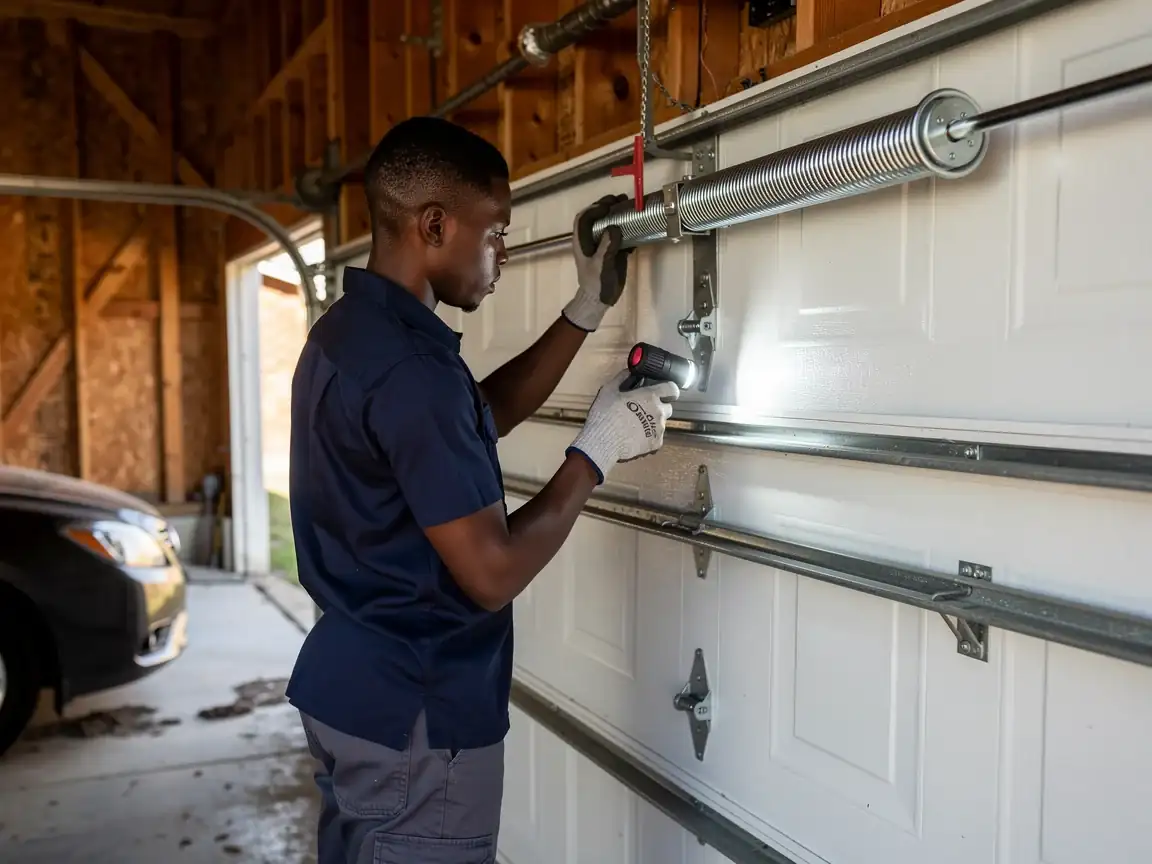
A technician tests the door under power and by hand and finds what actually failed.
03
Clear, up-front plan
You get the fix that’s needed and what drives the cost - before any work starts.
04
Repaired & tested
The repair is done, the door is set true and tested, and the work area left clean.
Not sure which repair your door needs in Brentwood, TN? Describe what it’s doing - every job starts with a diagnosis.
How do I know if I need a new opener or just a repair?
If the motor runs but the door won't move, it's often a stripped gear or a worn sprocket - a repair. If the unit won't power on, makes a burning smell, or the circuit board has visible corrosion, replacement is usually cheaper than parts plus labor on an opener that old. We check the gear kit and the circuit board before quoting either way.
Will a new opener work with my existing door and springs?
Not always. The opener has to match your door's weight and spring tension, not just the rail length. We check the spring size and door material before recommending horsepower, since a mismatch is the single most common reason a new opener wears out fast.
Why does my opener struggle more in winter?
Cold stiffens the grease inside the gearbox and tightens up mechanical tolerances, so the motor works harder on its first cycle of the day. If a capacitor or relay is already near the end of its life, that extra strain on a cold morning is often what finally finishes it off.
Can I keep my old garage door and just replace the opener?
Usually, yes. The opener and the door are separate systems as long as the door's spring tension and rail mount are still sound. We check both during the visit, since an opener installed on a door with the wrong spring weight won't last.
Ready to get your garage door sorted?
Tell us what it’s doing and where you are in Brentwood - we’ll take it from there.