What Local Conditions Do
Brentwood sits in a cold-moderate climate band
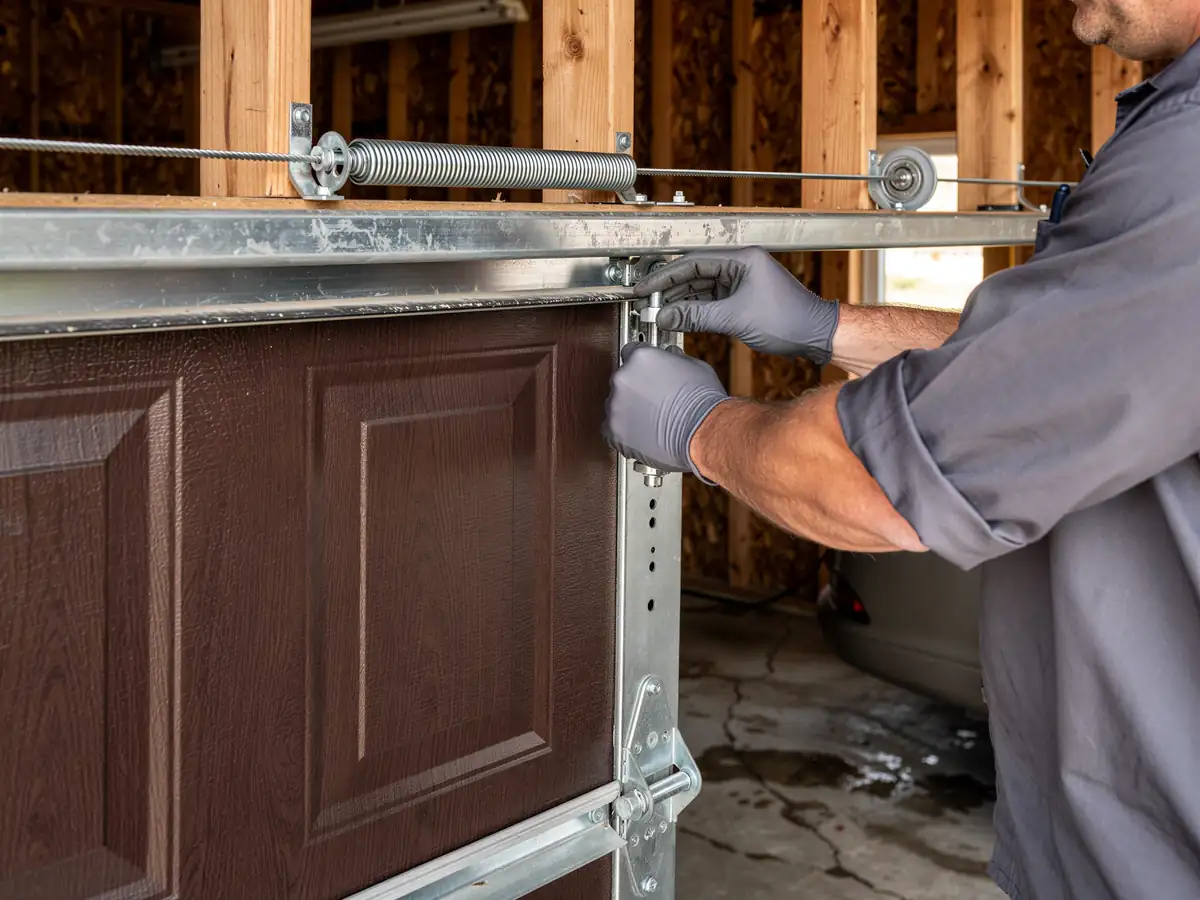
And that matters more for a garage door than most homeowners realize. Steel panels and torsion springs don't fail because of one bad night of cold - they fail from the repeated freeze-thaw cycling that's normal here every winter. Metal contracts in the cold, grease stiffens, and a spring that was already near the end of its coil-cycle life gives out on the first double-digit morning. Rollers in track systems that have gone a few years without lubrication seize up the same way.
This isn't a coastal or desert climate problem
It's specific to the swing between warm Tennessee summers and real winter cold, which puts more stress on moving steel parts than either extreme alone would. A door that opens fine in July can bind or hang crooked in January because the track has shifted slightly with the ground freeze, or because a cable has lost just enough tension that the imbalance only shows up under cold-stiffened spring load.
What we check on a cold-weather call is different from a summer one
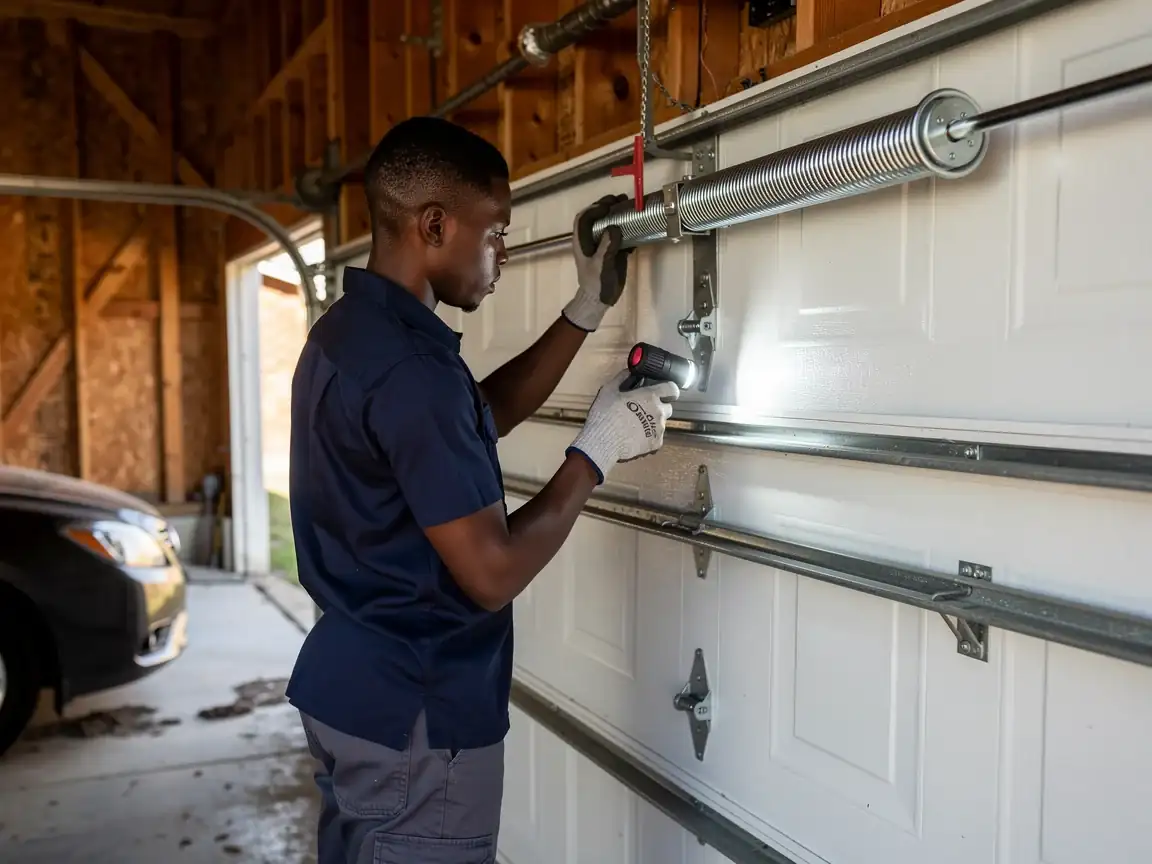
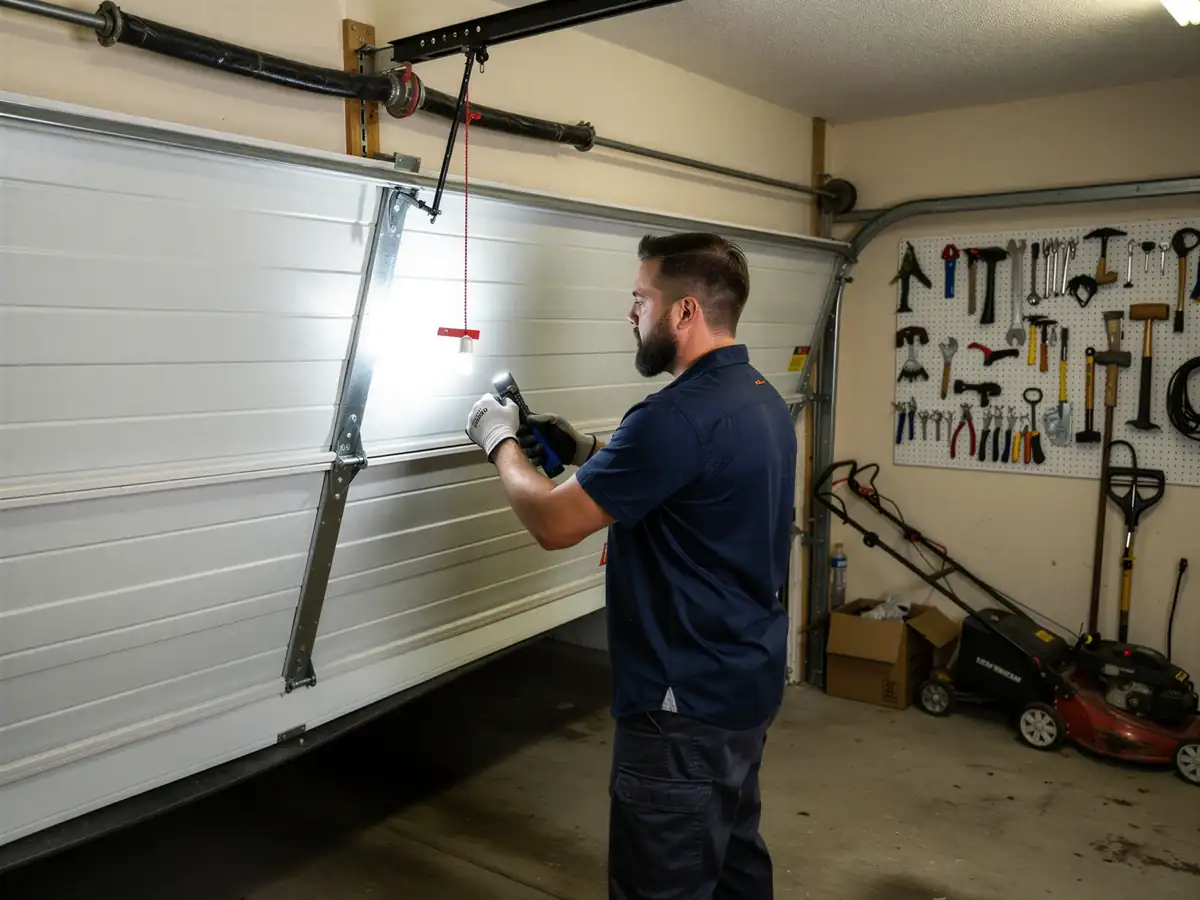
Spring tension first, then cable wear, then whether the opener's force settings have drifted enough that the safety reverse isn't triggering properly. None of that is guesswork - it's what actually breaks in this climate, on doors of the age this area tends to have.
When to Call Someone
A lot of the housing in and around Brentwood was built between 1953 and 2013, with the median landing around 1991, and the twelve areas nearest us lean heavily 1980s-90s. That puts a large share of local garage doors and openers somewhere between 25 and 40 years into service life right now - old enough that original torsion springs and chain-drive openers are reaching or past their expected cycle count.
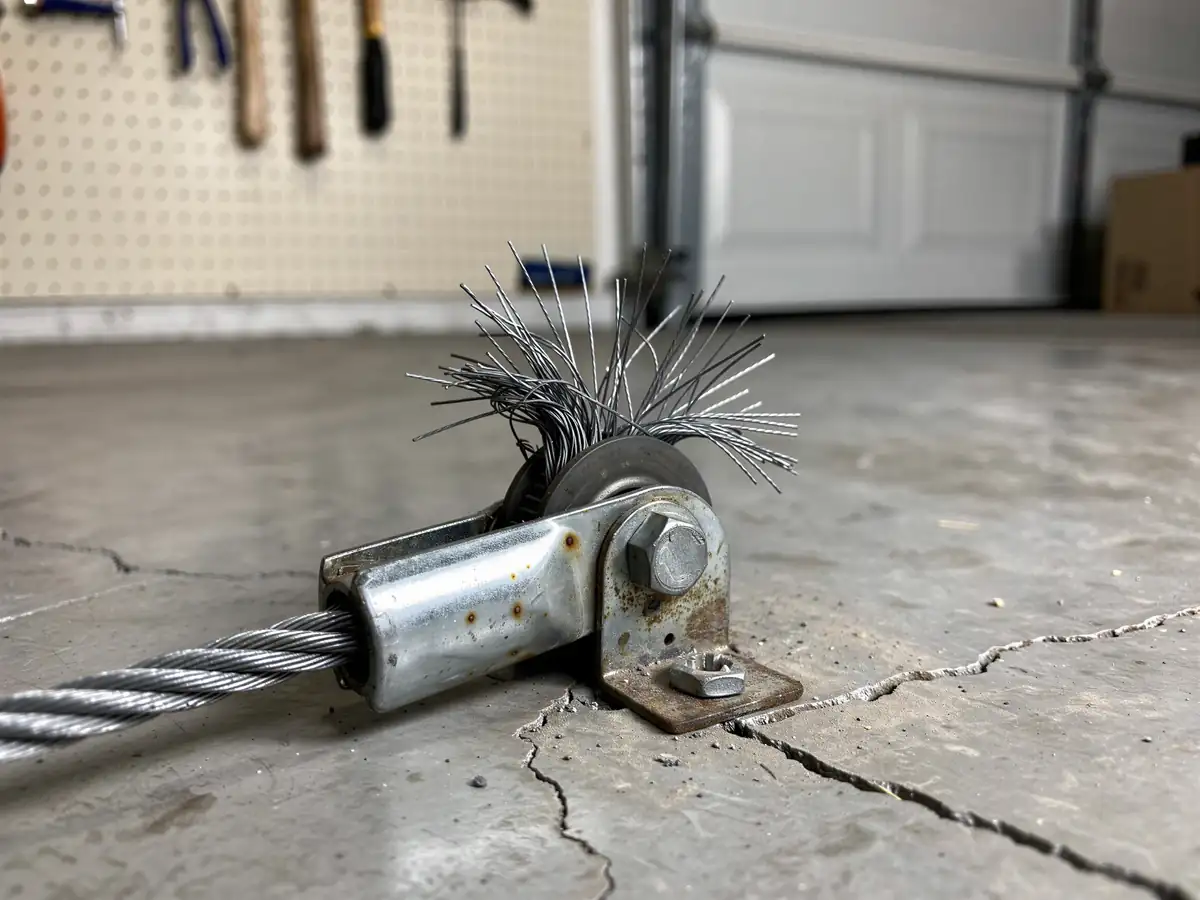
The clearest signs it's time to call: the door is noticeably louder than it used to be, it starts to open and then hesitates or reverses partway, or you notice the cable has started to fray near the bottom bracket. A spring that makes a loud bang and leaves the door stuck down is not a maintenance item - that's a same-day call, and not one to handle yourself, since a loaded torsion spring under tension can cause real injury.
We'll also say plainly: not every noise means something is failing. A door that's just squeaky but still opens smoothly and reverses correctly on contact is often a lubrication job, not a repair call. If you're not sure which category you're in, that's a reasonable thing to ask about before anyone comes out.
The Cost of This Job
We're not going to put a number here that isn't backed by anything - every door, spring size, and opener type prices out differently, and a page full of made-up ranges does nobody any good. What we can say is what drives the cost up or down in this area specifically.
Because so much of the housing stock here dates to the 1980s and 90s, a lot of service calls involve parts that are no longer the current standard - older extension spring setups, discontinued opener models, track widths that don't match what's sold today. That usually means a repair costs more in labor time, not parts, because the technician is working around a system that wasn't designed the way current ones are.
With a median household income of $98,723 across the service area, we see more homeowners here choose full door or opener replacement over a patchwork repair on something already 30 years old, simply because the math works out better long-term. That's a homeowner's call to make, not ours to push - a repair that gets you another five solid years is sometimes the right answer even when replacement is available.
One honest limitation: we can't quote a firm price without seeing the door. Spring size, panel damage, and opener compatibility change the number too much to guess at from a phone call.
The Problem
The core issue in Brentwood isn't that doors break more often here than anywhere else
It's that a large share of them are the same age at the same time. With median construction around 1991 and most of the surrounding areas built up through the 80s and 90s, a lot of torsion springs, openers, and cable systems installed during that build-out are aging out together. Across the 33,732 households in the service area, 24,663 are owner-occupied houses - the group most likely to own the original garage door that came with the house, not a replacement.
- 33,732 households
That creates a pattern
More calls for spring replacement, more calls for opener boards that have simply reached end of life, and more cases where a homeowner assumes a quick fix is possible when the whole system - track, springs, and opener - is original equipment from three decades ago. We work across the areas near here, from Oak Hill five miles out to just north, and the same build-era pattern holds through most of them.
The honest answer isn't always a repair
On a door that old, replacing one part can just move the next failure a year down the road.