What Can Go Wrong
The fault we see most in Belle Meade isn't a door that won't open at all
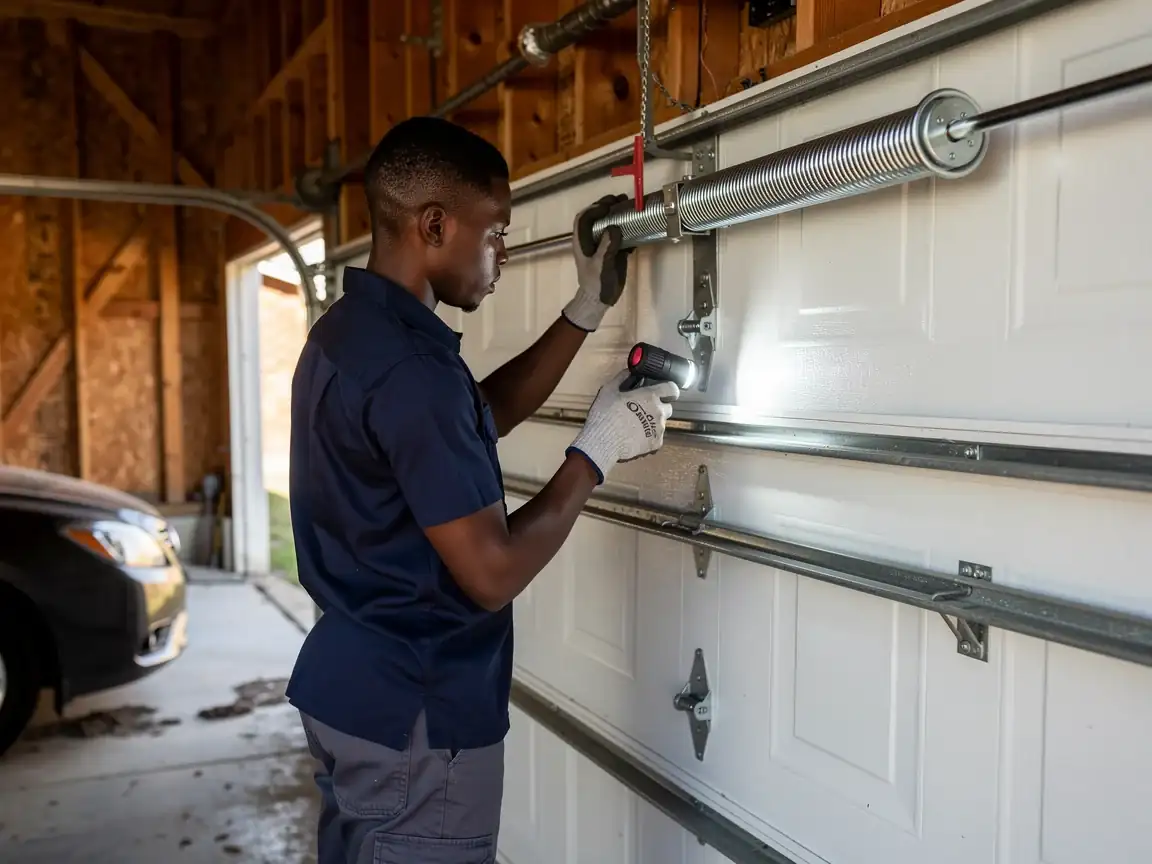
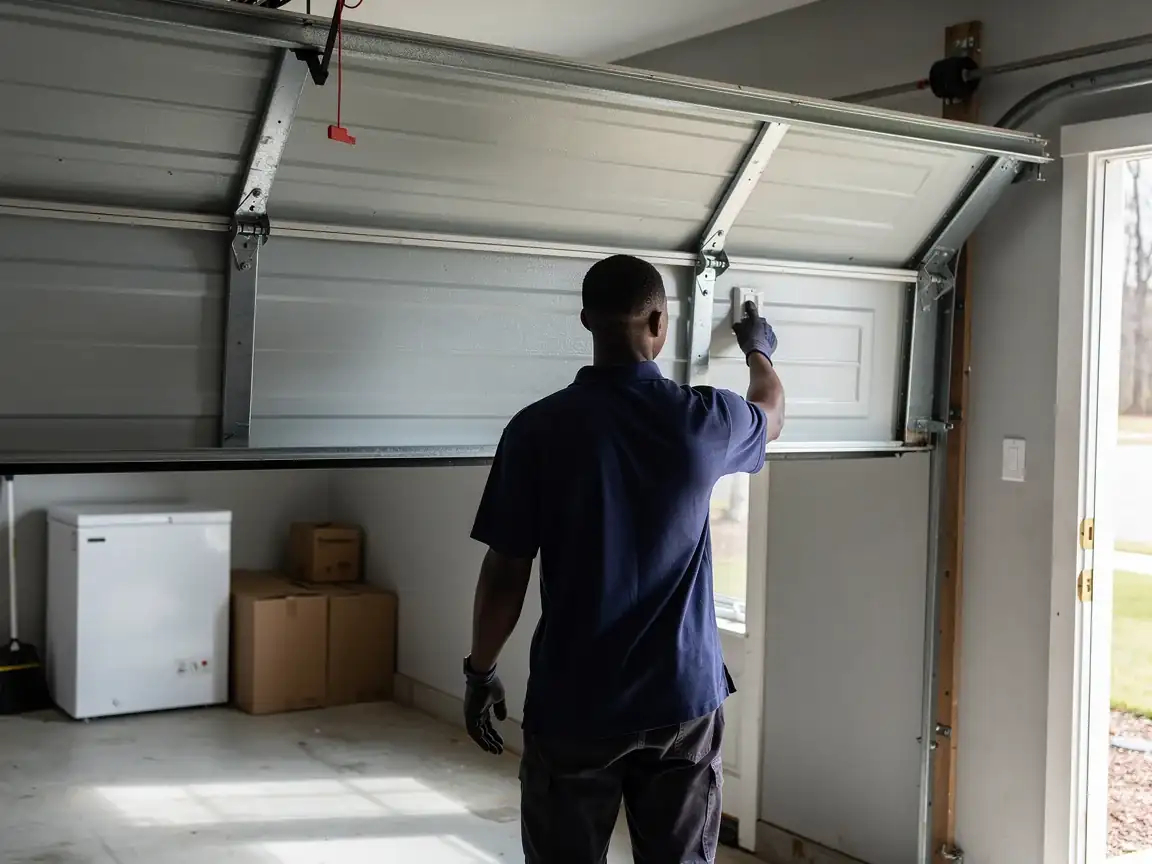
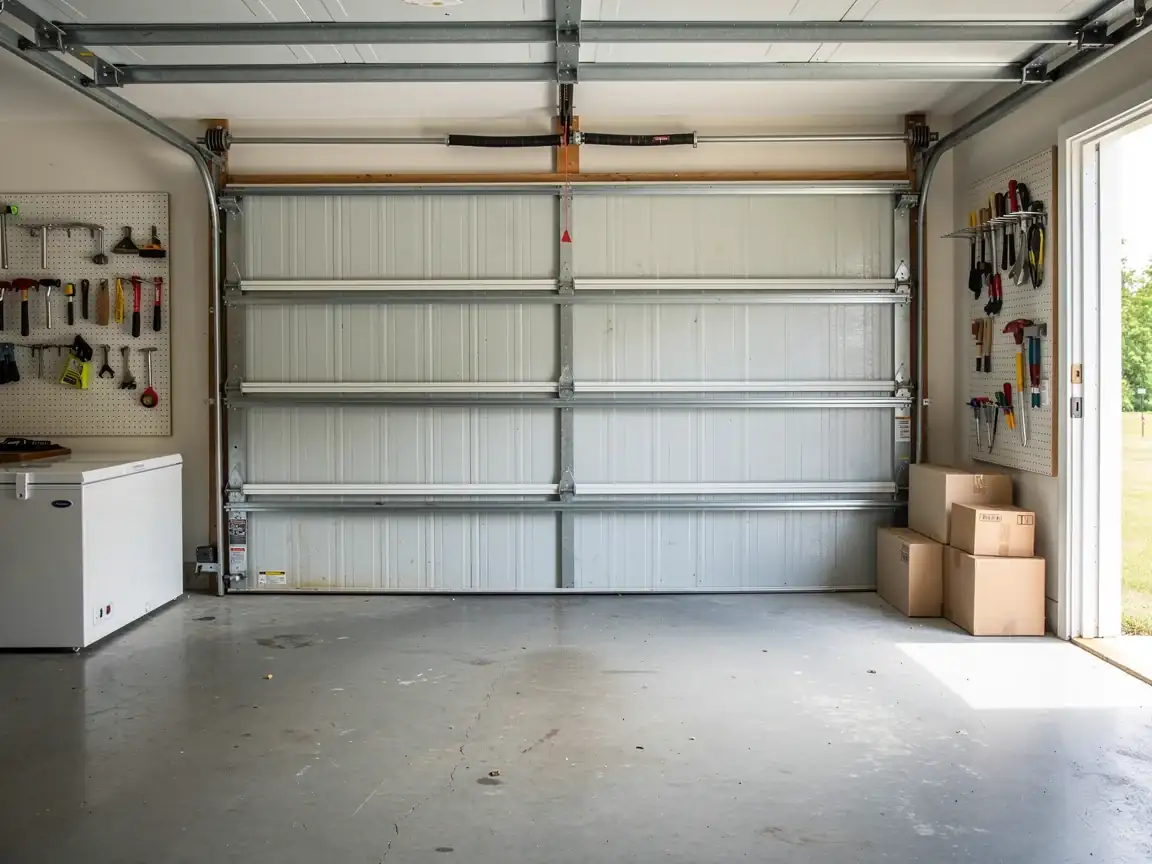
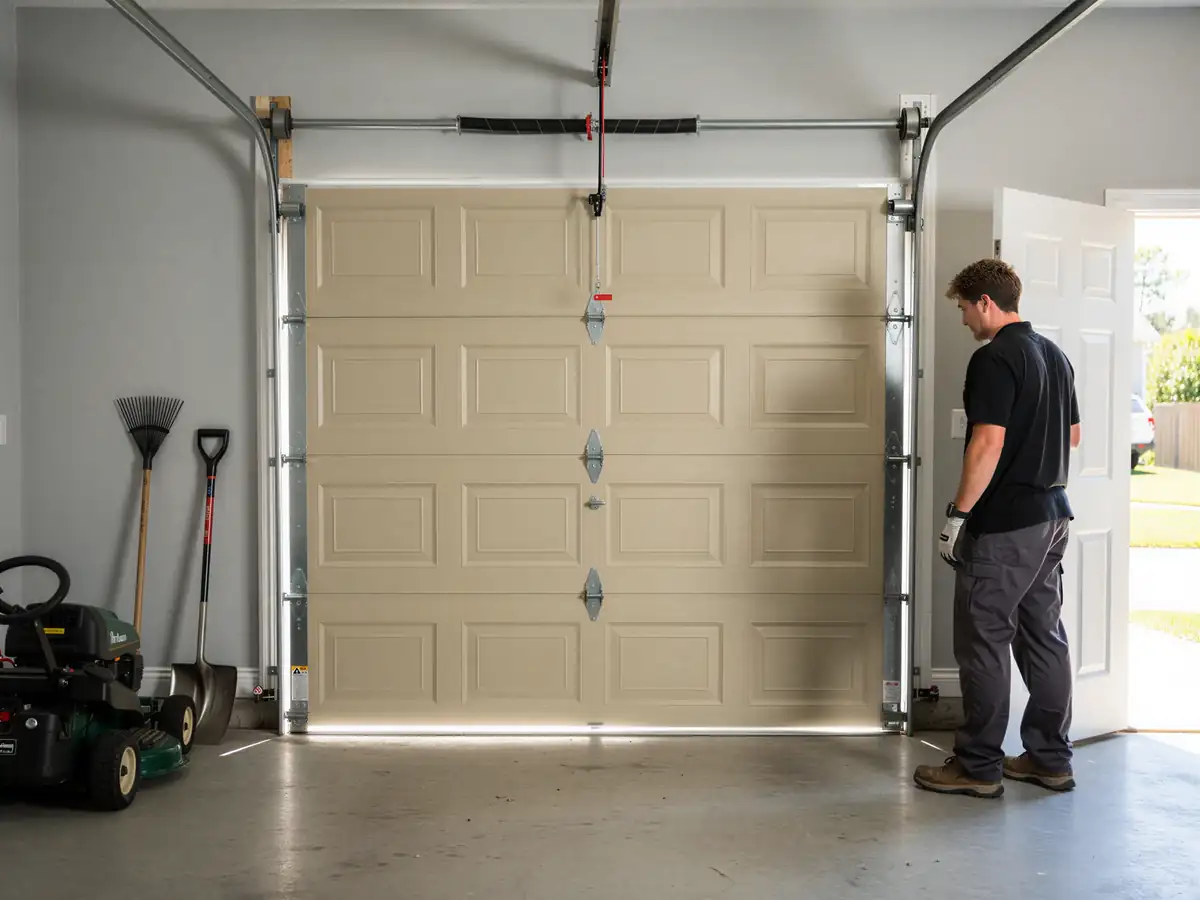
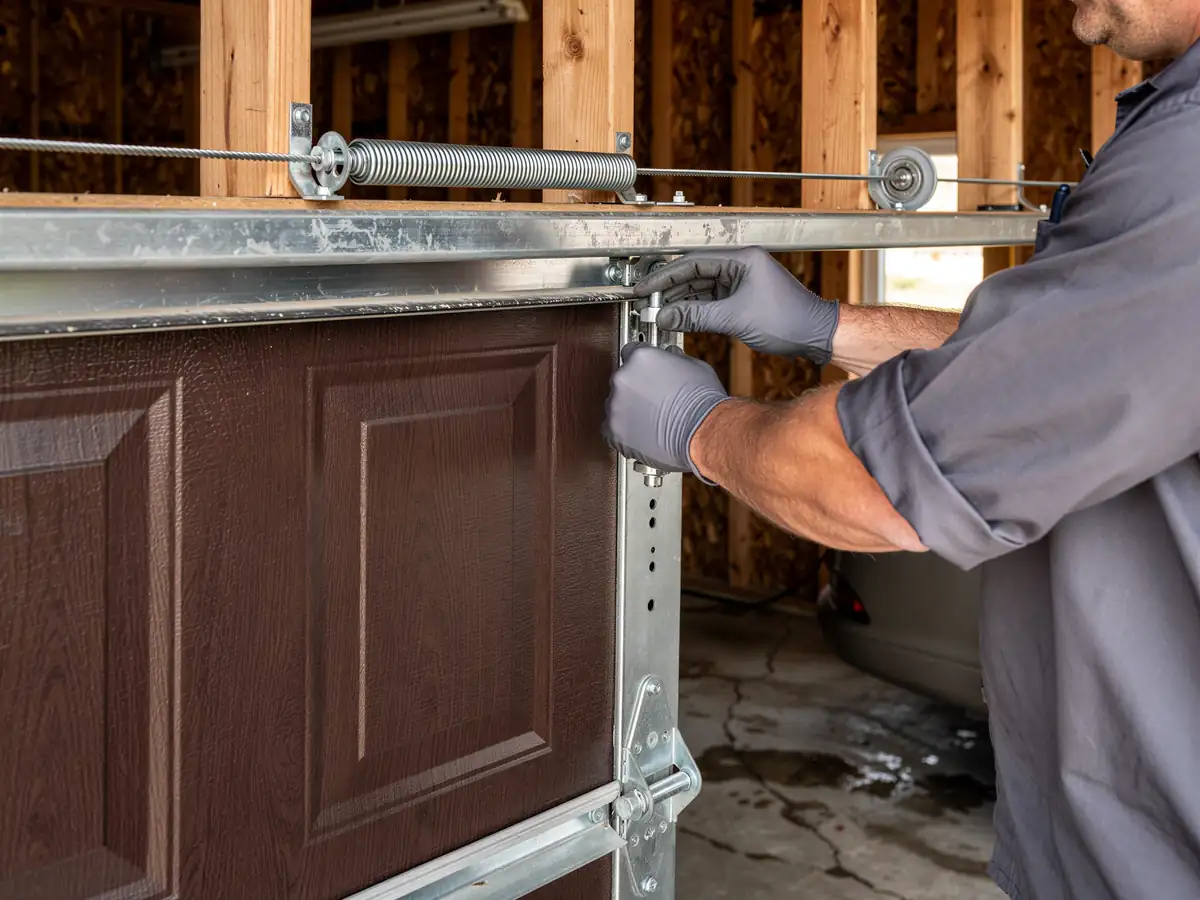
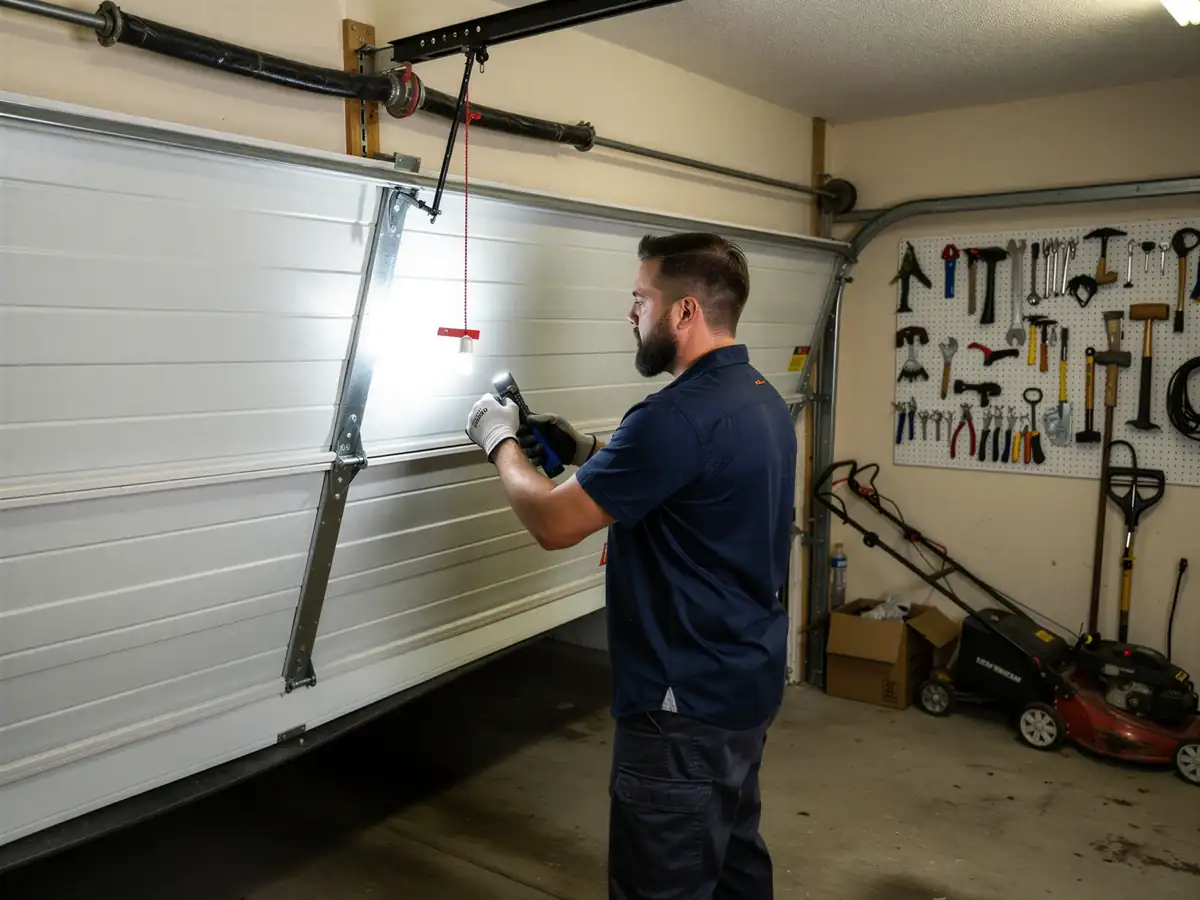
It's a door that comes off its track while it's moving, usually on one side first. A roller jumps the rail, the door racks sideways in the opening, and the bottom corner either jams against the frame or drops and binds. On a two-car door that's still running on its original track hardware, that rack can bend the rail enough that the door never tracks straight again without a full track swap, not just a bend-back.
This matters more here than in newer parts of the area
Across the wider service area, homes run from 1953 up through 2013, with the typical house dating to around 1991. Belle Meade's own housing stock centers on 1953 - right at the early edge of that range. A door built or last replaced on a house that age is more likely sitting on narrower, lighter-gauge track than anything installed in the last twenty years, and that track flexes more under a jumped roller instead of holding its shape.
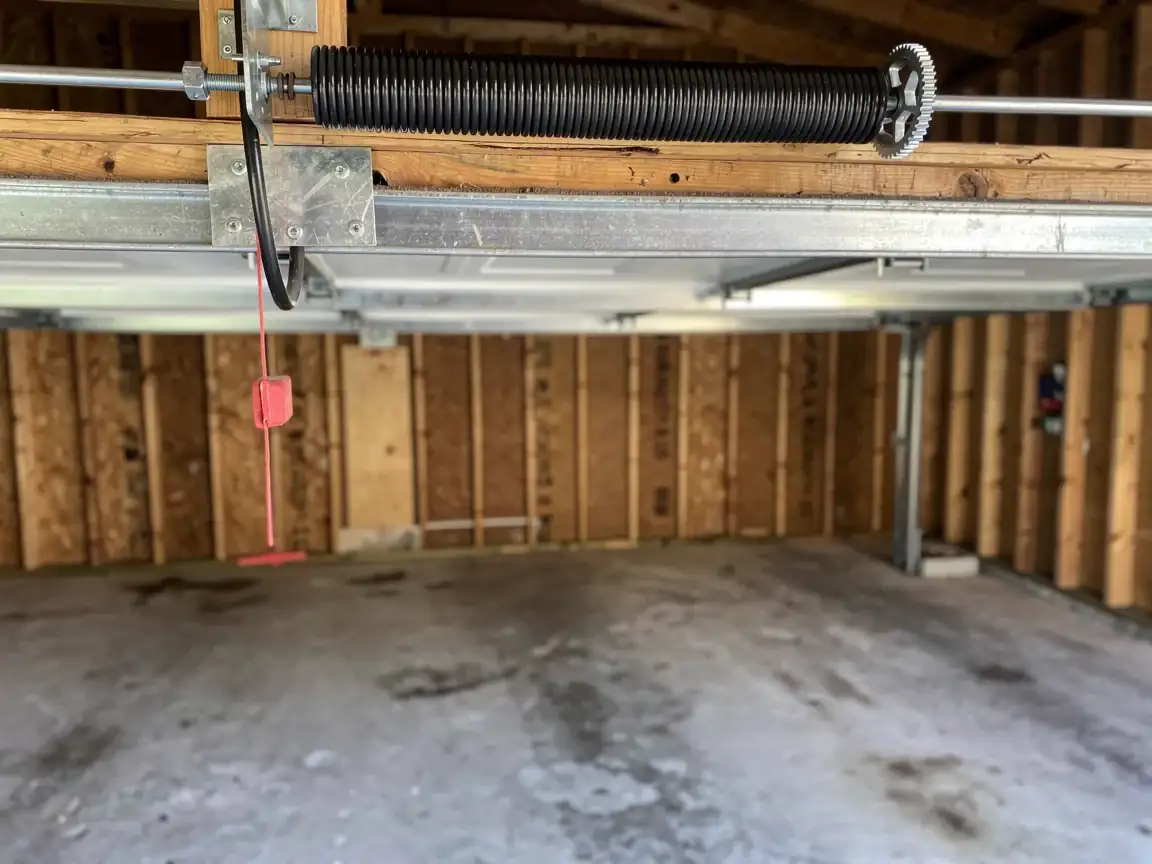
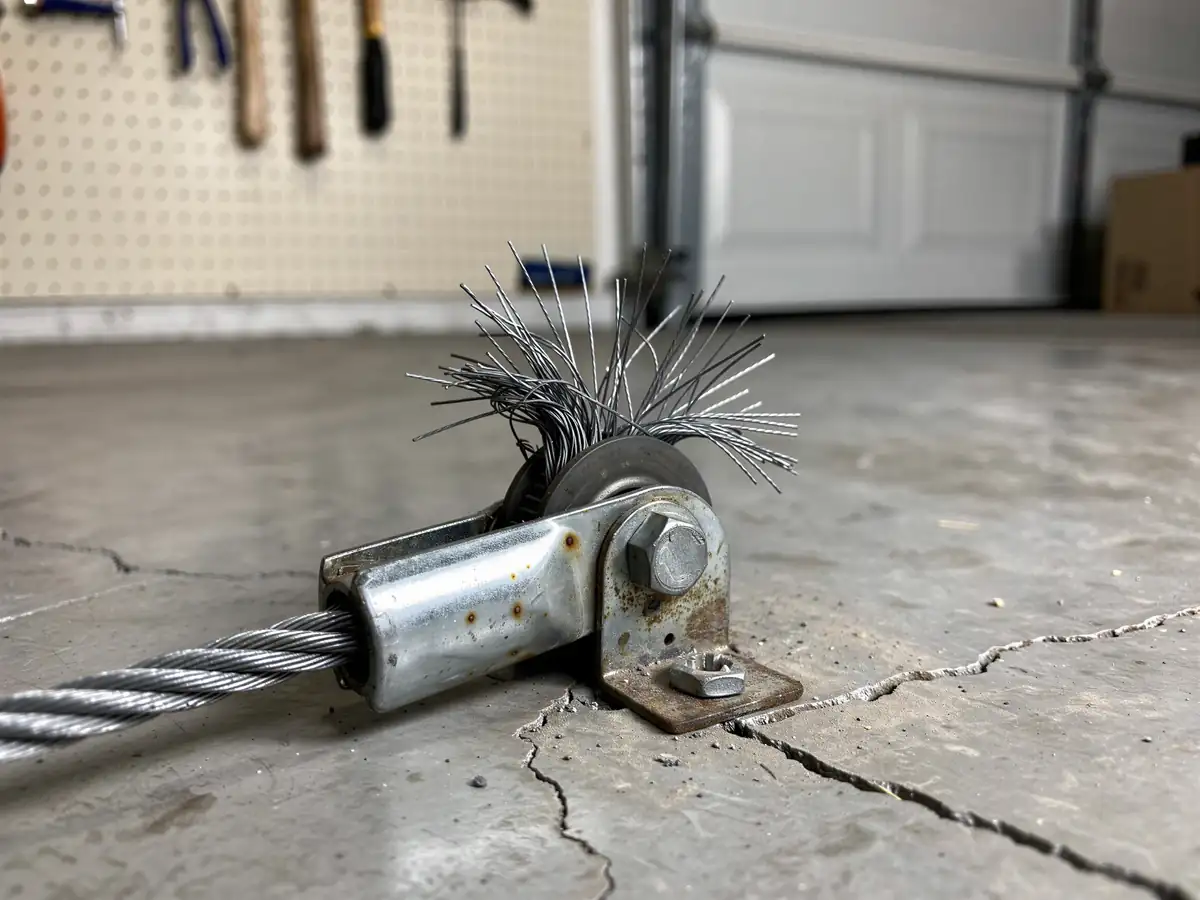
We also see cables that have frayed where they wrap the drum
Which lets one side of the door drop faster than the other - another way a door comes off track without any dramatic failure, just a slow lean that gets worse every cycle.
How It Shows Up
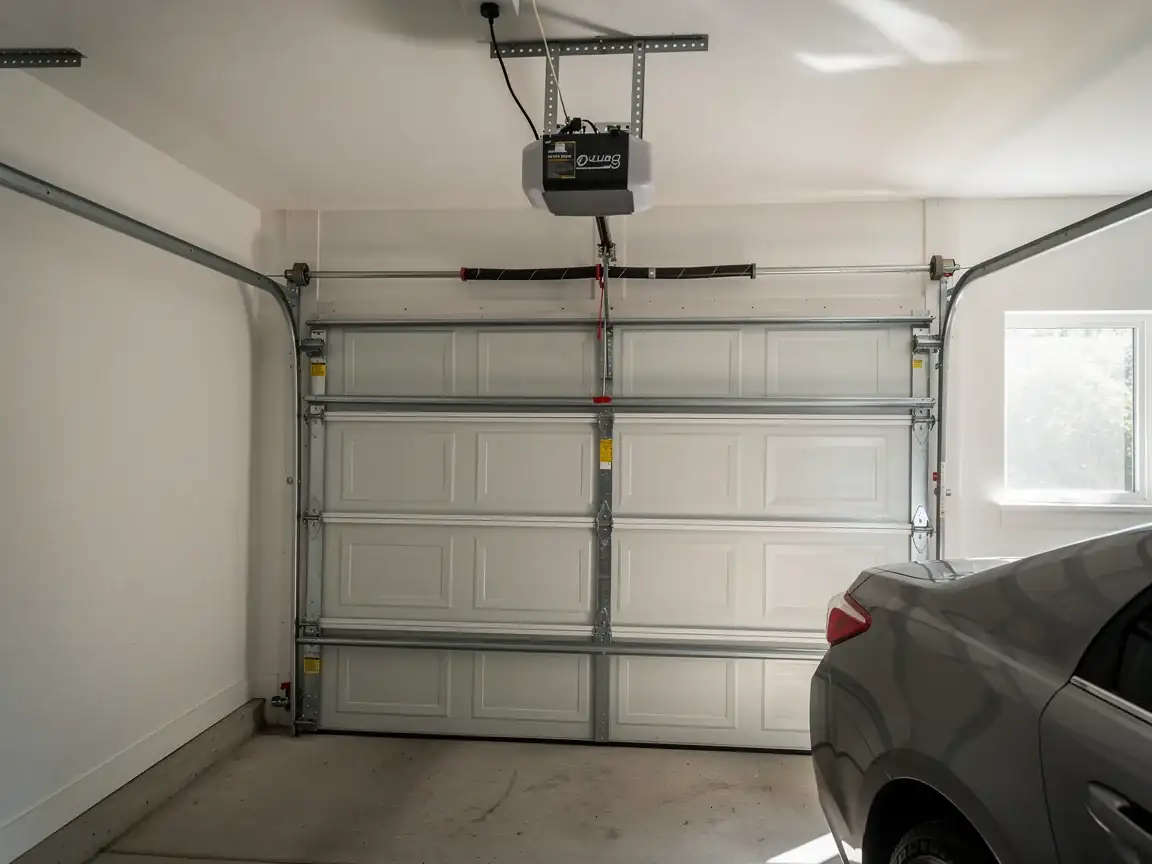
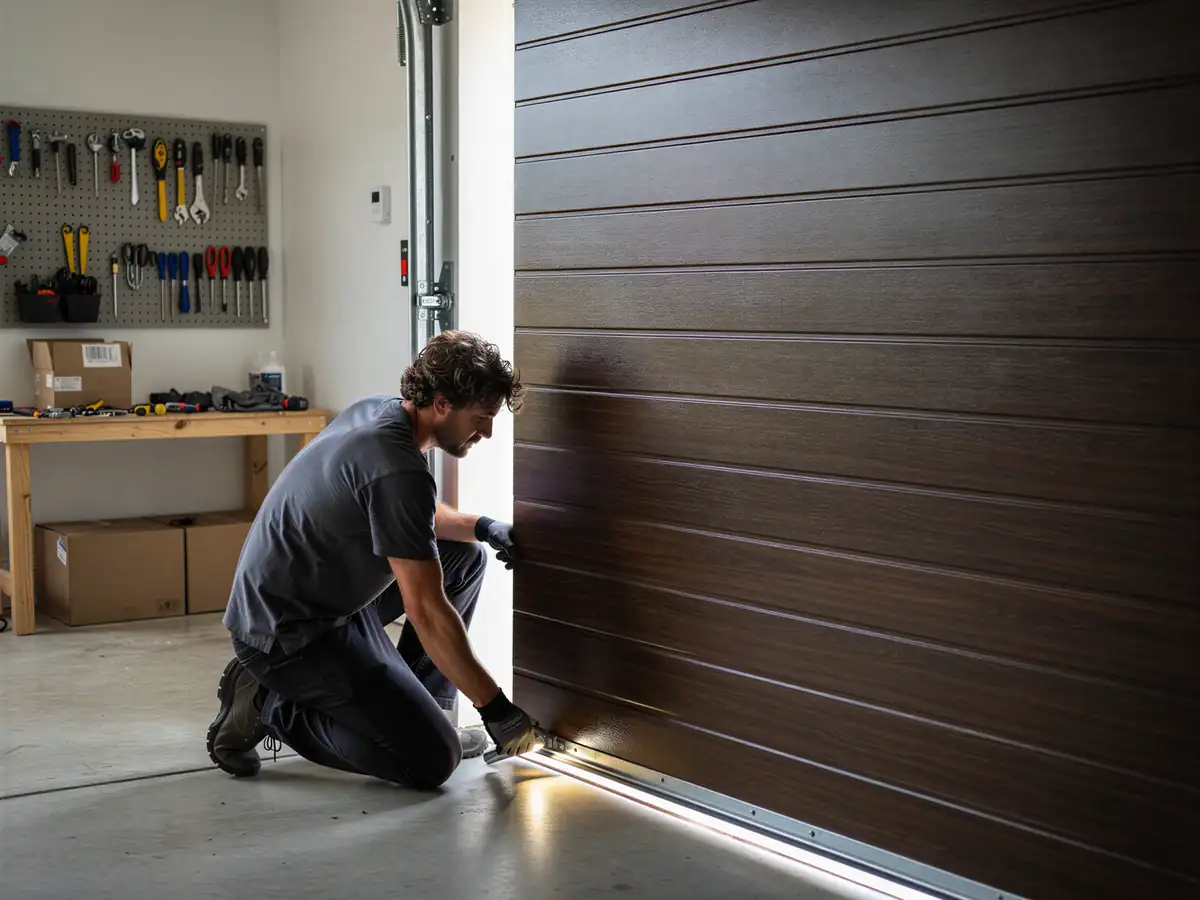
Most owners notice it in stages before the door fully derails. The door stops closing flush - one bottom corner sits an inch or two off the slab while the other side seats normally. You'll hear a grinding or scraping sound from one side of the opener travel, not both, because only one track is fighting the roller. Some doors will still close but leave a visible gap at one top corner, which is the panel twisting against a track that's no longer holding it square.
If you catch it at this stage, it's usually a roller and track-alignment job, not a rebuild. Wait until the door jumps the track entirely - panel wedged against the frame, opener straining or reversing on its own - and you're looking at a bent rail, possibly a cracked stile where the roller bracket pulled loose, and more time on the job.
Colder stretches add a small wrinkle here too. The service area sits in a cold-moderate climate band, and metal track and roller stems contract slightly in a hard cold snap. On a door that's already running loose rollers or a track bowed from age, that contraction is sometimes what tips a marginal door into actually jumping the rail.
The Cost of This Job
We don't have a set price to quote here, and I won't make one up. What drives the cost on an off-track call is how far it's gone: caught early, it's rollers and a track alignment, which is a short job. Caught late, with a bent rail or a cracked bottom bracket, it's track replacement on that side, sometimes both sides if the door's been racking unevenly for a while.
One honest limitation: if the track is original to a 1953-era build and we can't get a matching-profile rail, full replacement of both tracks is usually the straighter path rather than mixing old and new hardware that doesn't seat the same way. That's not an upsell - mismatched track is exactly the kind of thing that sends a door back off the rail in six months.
We travel to Belle Meade from Brentwood, about 9 miles out, so the drive is part of planning the visit rather than something that changes what the repair itself costs. Given the median household income here runs well above the wider service area, we'd rather talk through whether a repair or a track replacement makes more sense for the door you have than default to the bigger job.
Why It Happens Here
Belle Meade's housing runs older on average than most of the suburbs we cover
Median year built around 1953, versus roughly 1991 across the broader service area. That gap is the whole story for off-track failures. A door and track system installed decades ago has had far more cycles to wear rollers thin, loosen brackets, and let a rail bow slightly out of true - all of which make it easier for a roller to walk off the track on a hot summer day or a cold one.
It's a small market too
Belle Meade has around 920 households, a fraction of the roughly 33,700 households across the full service area, which is one reason this suburb doesn't carry its own dedicated crew - we cover it out of Brentwood, about 9 miles away.
- 9 miles
Add the cold-moderate climate swings that affect the whole area and you get a pattern specific to older stock
Metal that's already fatigued from forty-plus years of cycling, now also expanding and contracting with the season. Newer builds elsewhere in the service area, closer to that 1991 median, just haven't put in the same number of hard winters on original hardware yet.