How Long It Takes
We're not based in Forest Hills - we run the job from Brentwood, six miles up the road
That drive is short enough that it doesn't change much about how we schedule a call, but it does mean we're not sitting on a truck parked around the corner from you. Tell us what the door is doing when you call and we'll tell you honestly whether it sounds like a same-day fix or something that needs a part ordered first.
What does change things here is the age of the house
Forest Hills' housing stock runs older on average than much of the wider area we cover, with a median build year around 1970. That means more of what we find under the hood is original or near-original hardware that's been quietly wearing out for fifty years, not the 1980s-and-90s torsion setups that make up most of the broader service area's stock. A 1970-era door job usually takes longer to diagnose because the parts aren't always what the panel outside suggests.
Parts We Carry
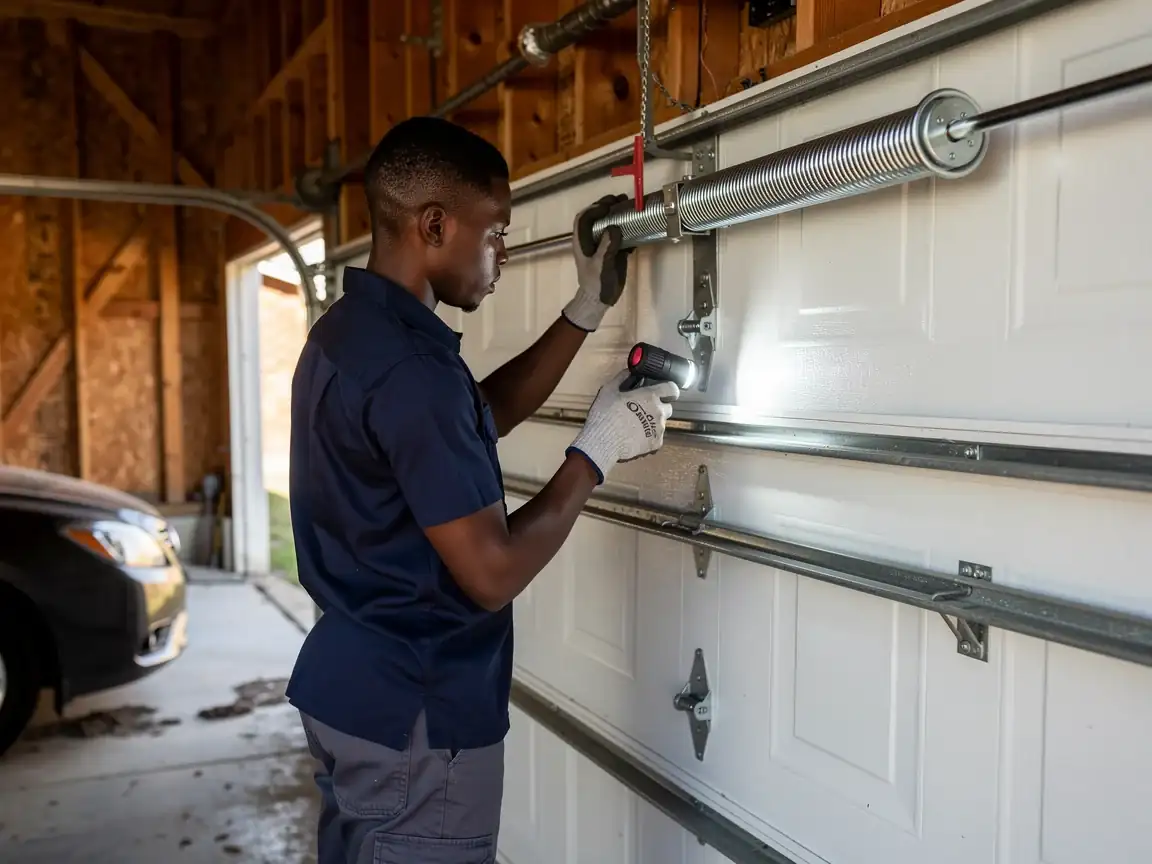
We stock the torsion springs, cables, and rollers that cover most of what rolls through this area - the stuff behind sectional steel doors built from the 1980s onward, which is most of the service area. Forest Hills complicates that a little, because a house built around 1970 is just as likely to have had its original door upgraded once already, sometimes twice, which means the hardware underneath might be a mismatched mix from three different decades.
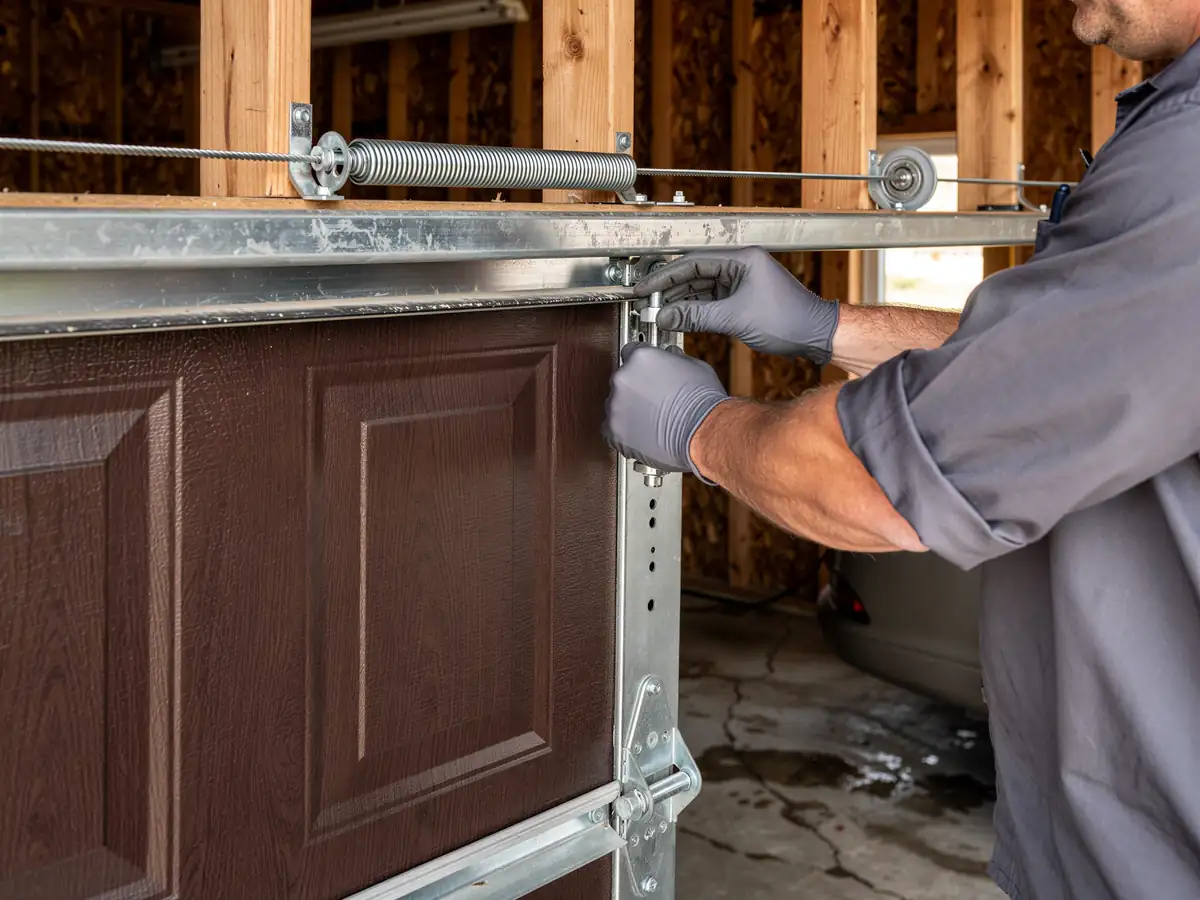
We don't carry every obsolete part for every extension-spring setup still bolted to a 1970s house. If your door still runs on side-mounted extension springs on exposed rails - which some original installs from that era did - we'll tell you straight whether it's worth sourcing the match or whether a torsion conversion makes more sense long-term. That's a judgment call we make on-site, not over the phone.
Doing It Yourself
If your door is sticking, jumping a track, or binding on one side, you can check a few things yourself before you call anyone: lubricate the rollers and hinges, check that the tracks are still plumb, and look at the bottom weatherseal, which dries out and cracks faster in a cold winter like the ones this region gets.
What you should not touch is a spring - torsion or extension, old or new. Springs on any garage door hold enough tension to do real damage, and on a house where the hardware might be original to a 1970 build, you genuinely don't know what you're dealing with until it's apart. That's not a sales line, it's just true: older installs don't always follow the layout a newer door would.
How It Shows Up
On a 1970-built house, the fault usually isn't a snapped spring out of nowhere
It's an opener that's been quietly failing one safety function at a time. Federal rules requiring photo-eye reversal sensors on residential openers didn't take effect until 1993, so a house from 1970 that's had even one opener replacement before that date, or that's still running something older, may not have working auto-reverse at all.
The other common complaint is a door that closes unevenly or drags on one side
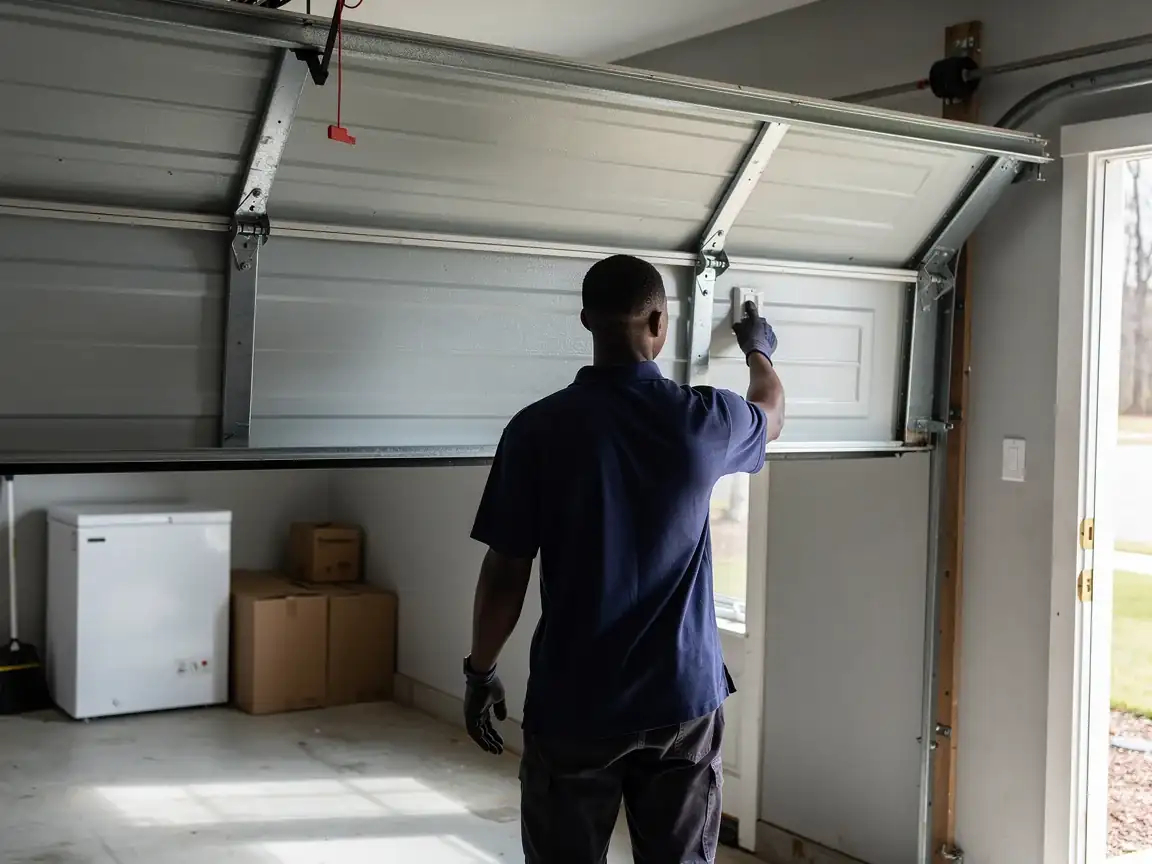
On original or early-replacement hardware, tracks shift out of plumb over decades of settling, and nobody's checked the alignment since install. It's not dramatic - the door just gets a little worse every year until one day it won't close square.
Why It Happens Here
Forest Hills sits about six miles from Brentwood, and its housing stock skews older than a lot of what we cover - median build year around 1970, versus a broader service-area range that runs from 1953 up through 2013 with a median closer to 1991. That gap matters more than the mileage does. A door and opener installed in 1970, or replaced once in the 80s, is carrying different wear patterns and different safety gaps than a door put in new in 2005.
The area also runs noticeably higher income than the rest of the service footprint - a median household income over $250,000 against the wider area's $98,723 - even though it's a small slice of the total household count, 1,818 against 33,732 across the whole service area. None of that changes what breaks on a garage door. It just means more homeowners here are replacing rather than patching once they understand what the original hardware actually is.
Getting It Booked In
Call and describe what the door's doing - whether it's slow, loud, stuck, or just not reversing when something's under it. If you know roughly when the house was built or when the door was last replaced, mention it; on a street built around 1970 that single detail tells us more than a description of the noise does.
We'll give you a straight read on whether it's a repair or a replacement before we show up, not after. For homes with original or early hardware, replacement sometimes costs less over time than chasing parts for a door that was never built to the current safety standard. That's not true of every call, but it's true often enough here that we'll say it up front instead of letting you find out after a service visit. See more on coverage near Forest Hills or our main service page.