Doing It Yourself
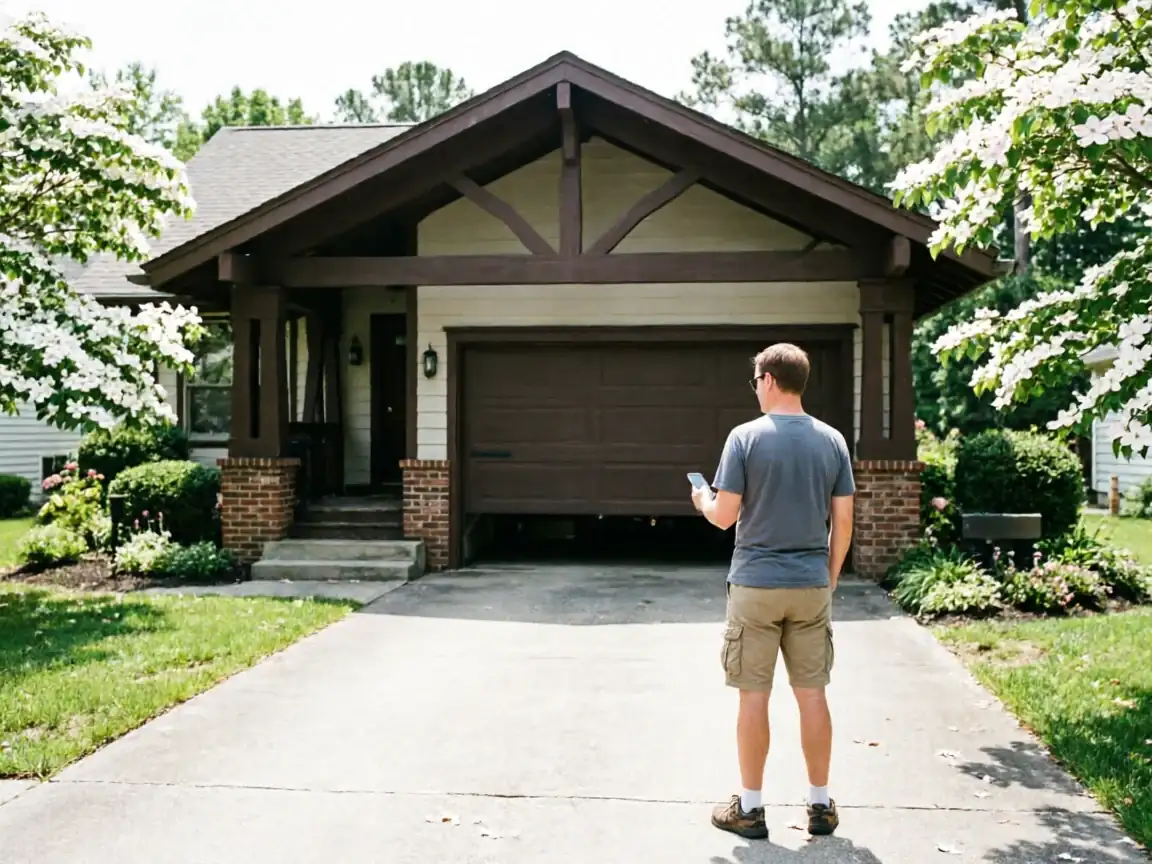
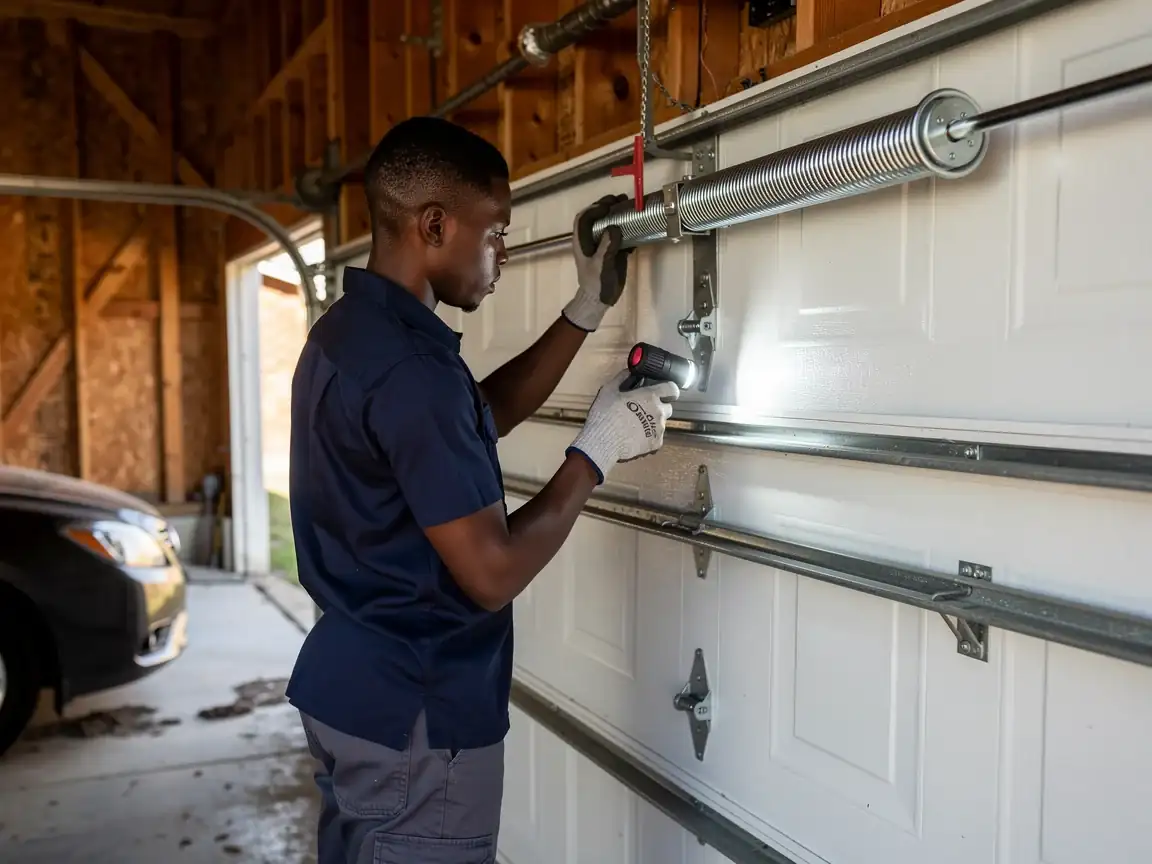
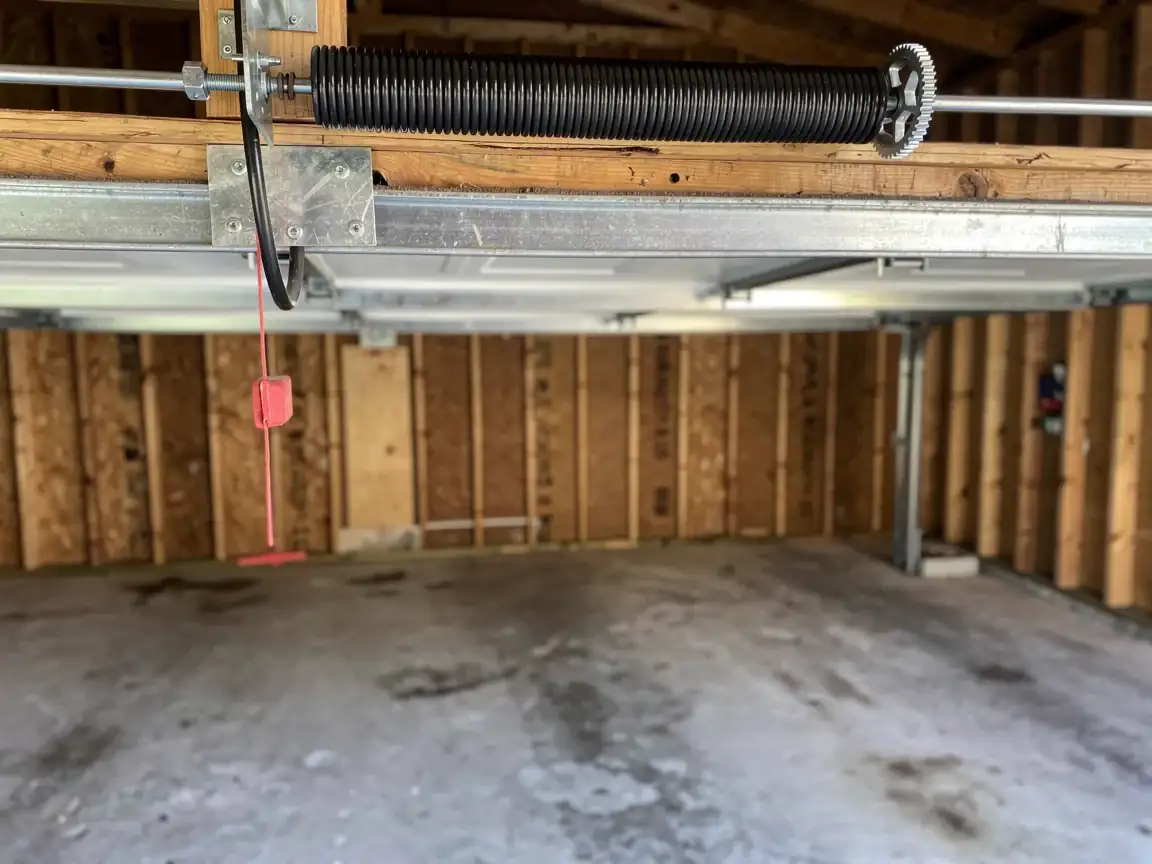
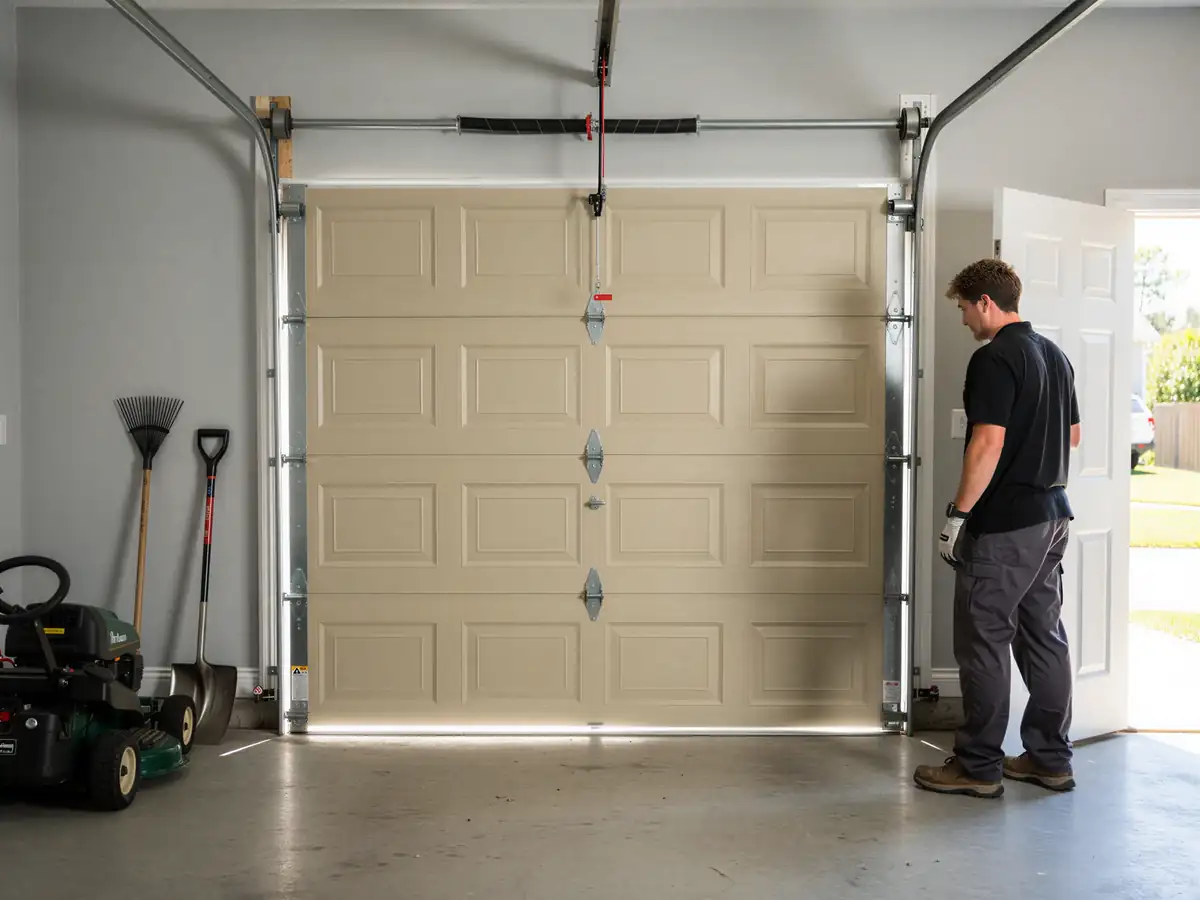
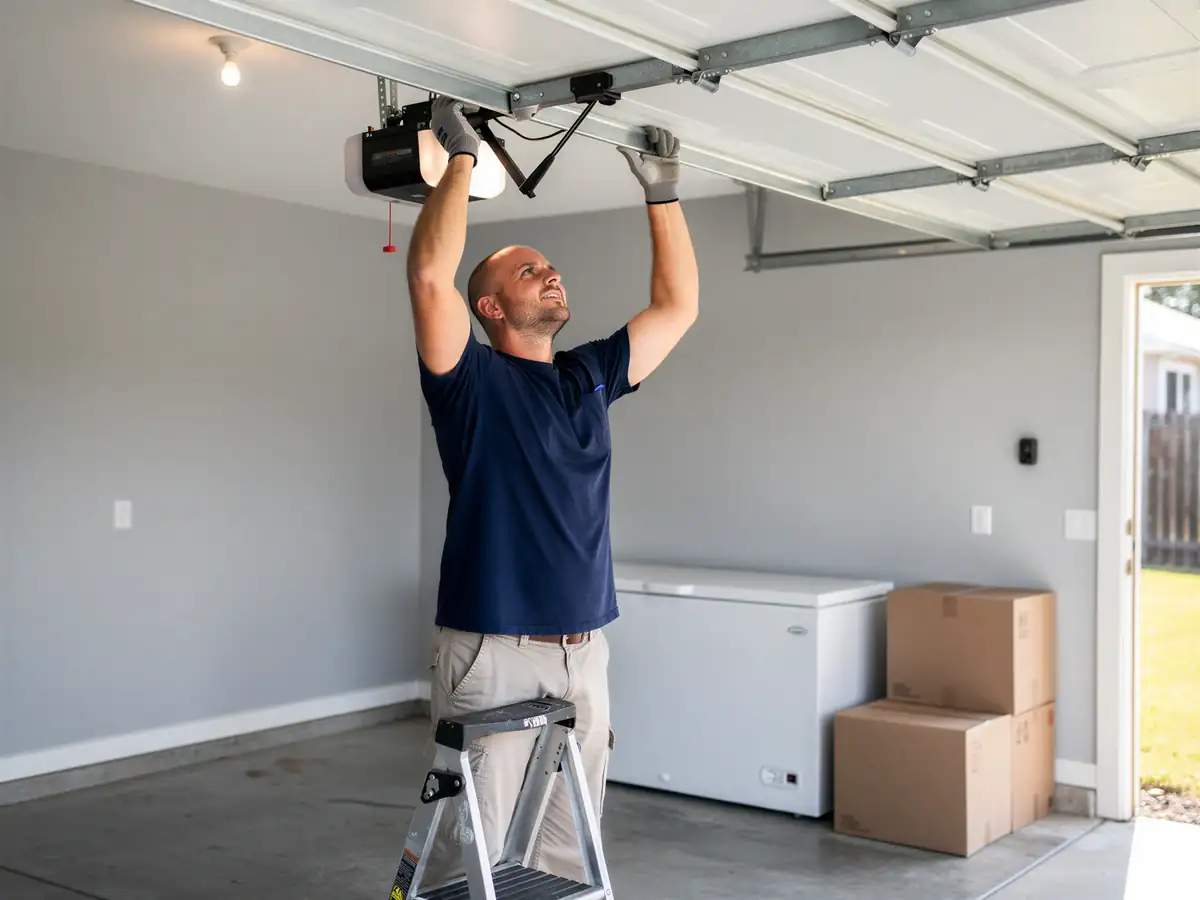
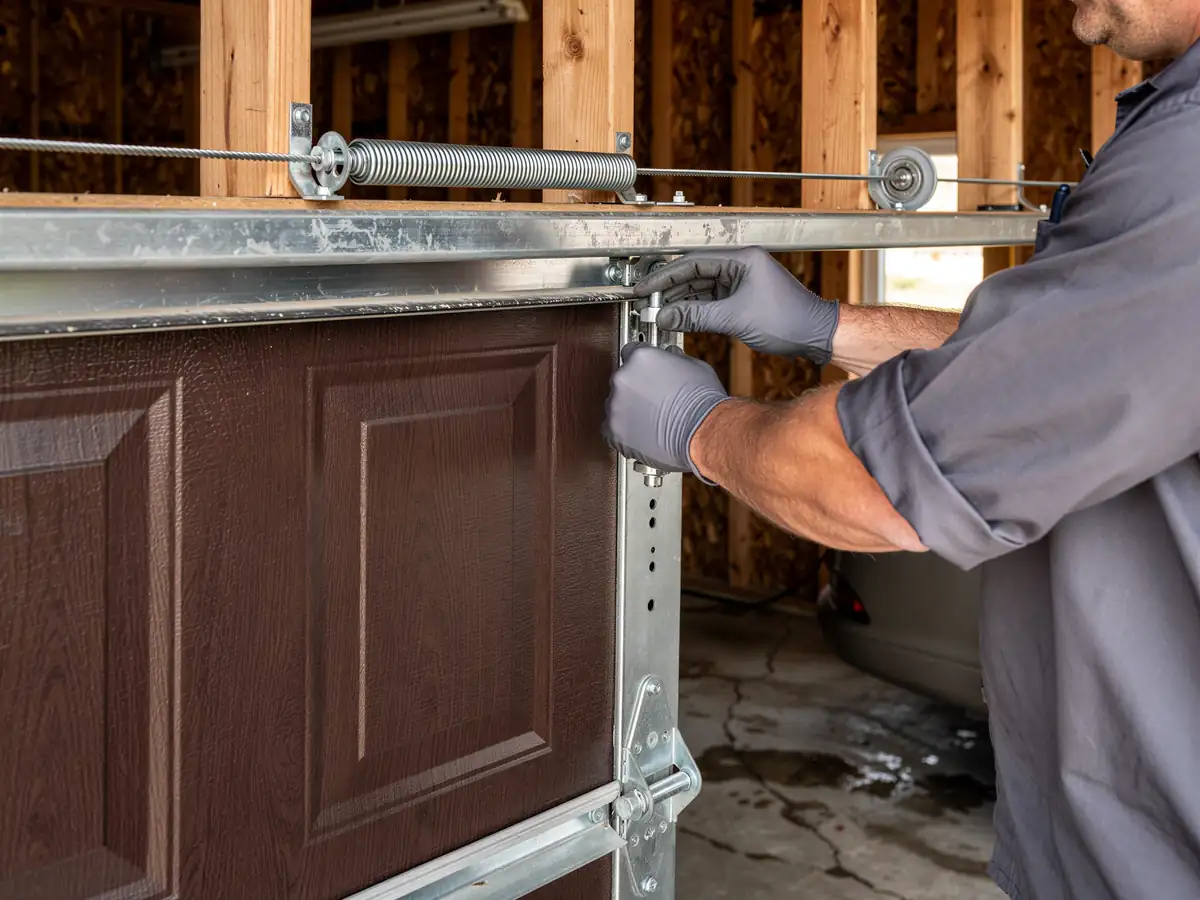
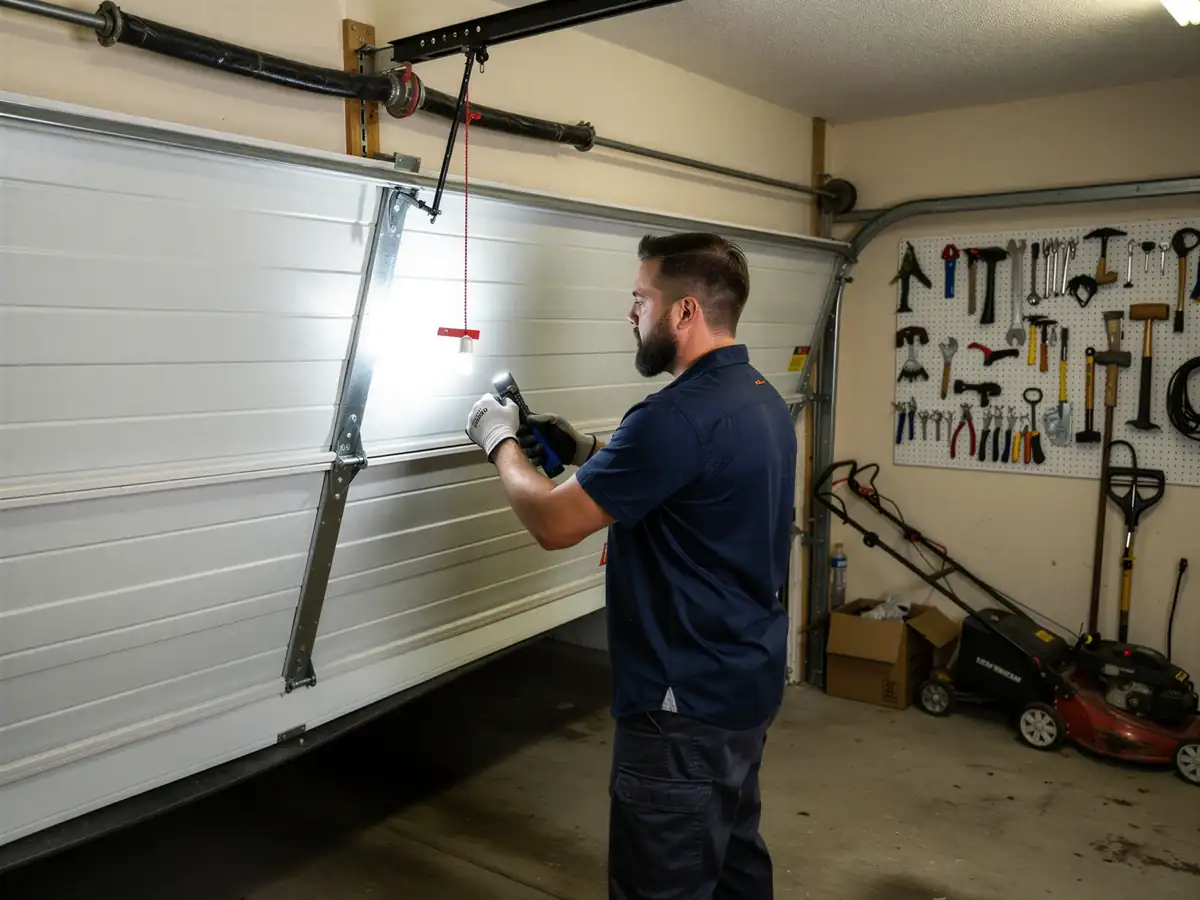
A door that's hopped off its track looks dramatic - one side hanging low, a panel cocked at an angle - but the door itself is usually fine. The mistake people make is trying to force it back into the track by hand or by running the opener anyway, which can snap a cable or bend the track further and turn a $150 fix into a $500 one. If the door is still in the opening and hasn't come all the way down on one side, the safe move is to leave it alone and disconnect the opener trolley so nobody hits the button by accident. We're not going to pretend every off-track issue needs a truck. A loose roller bracket that you can see and reach, with the door already resting on the ground, is sometimes just a matter of retightening lag screws. But once a cable's involved, or the door is partway up and holding itself there under spring tension, that's not a ladder job. Torsion springs on these builder-grade setups store real force, and a bracket that lets go while you're under it is how people end up in the ER instead of fixing their own garage door.
How It Shows Up
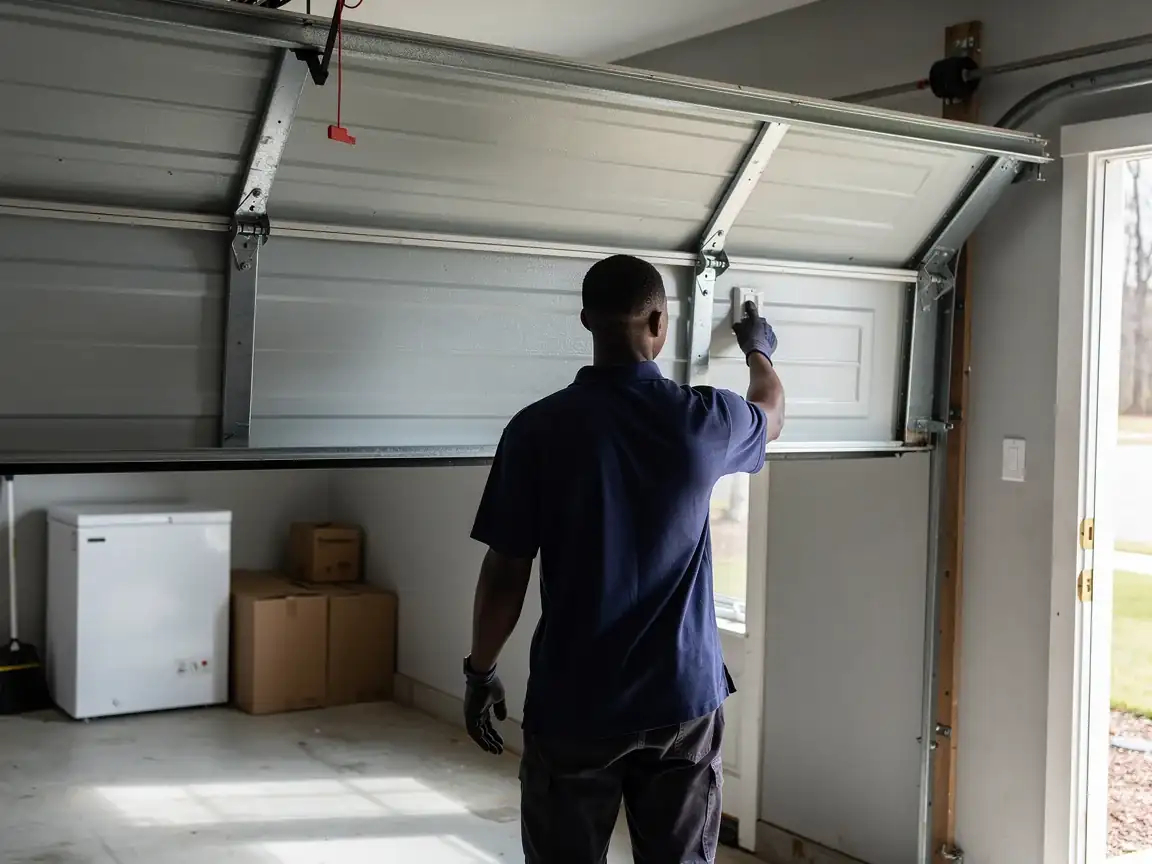
On a door built around 2000, off-track usually starts small. A roller wears down and starts riding the edge of the track instead of the channel, so the door runs rough for a few weeks before anything visible happens. Then one day a bracket that's been working loose finally lets go, and the bottom panel kicks out of the track while the door's halfway up. Other times it's sudden - a car bumper clips the bottom panel, or a kid leans a bike against the track and bends it just enough that the rollers can't track true anymore. Cold mornings make it worse here. When the grease in the track channel stiffens up and a bracket is already a little loose, the extra resistance is sometimes what finally pulls it free. You'll usually see the door sitting crooked, hear a grinding or popping sound as it moves, or find it's stopped responding to the opener mid-cycle because the safety sensors read the misalignment as an obstruction.
Parts We Carry
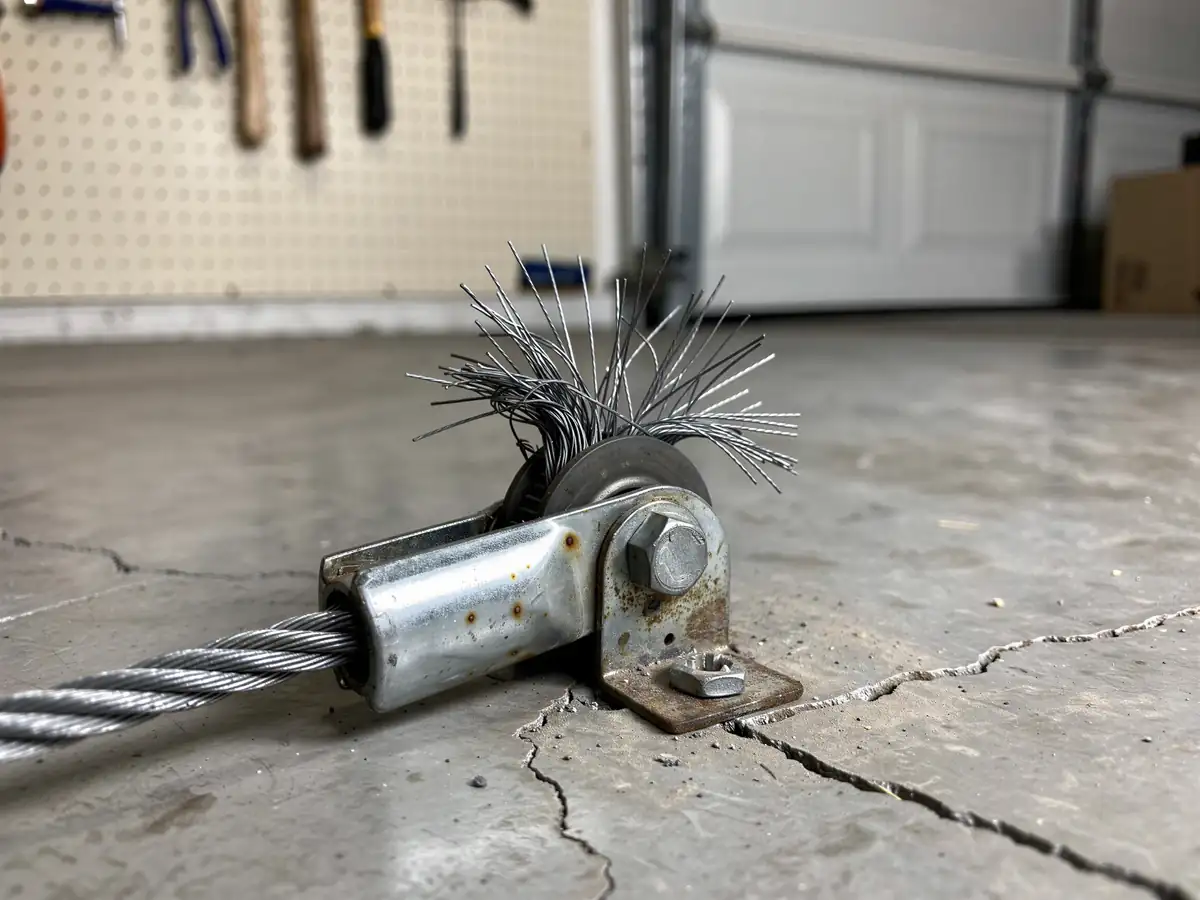
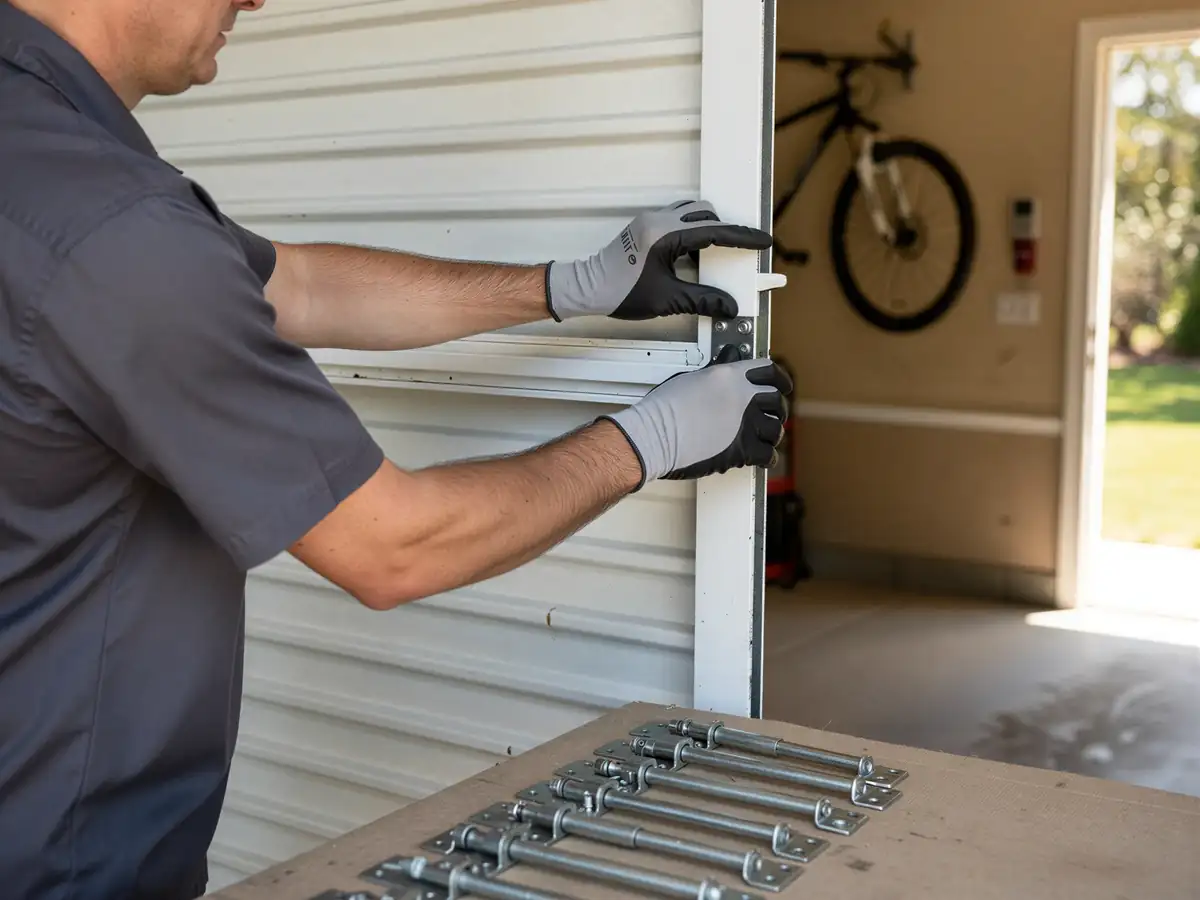
We carry replacement track sections, roller brackets, and both nylon and steel rollers sized for the sectional doors common on builder-grade installs like most of what's in La Vergne. We also stock the cables and drums that commonly need replacing alongside a bent track, since a cable that's jumped the drum during an off-track event is rarely still in good shape. What we don't keep on the truck is every specialty track profile - some custom or imported doors use track dimensions outside the standard sizes, and those sometimes mean a short wait on a special order. For a standard steel sectional door from the 2000s building boom, though, the parts that fail most - track, brackets, rollers, cables - are the ones we're carrying already, which is most of what we see called in from this part of the service area.
How We Fix It
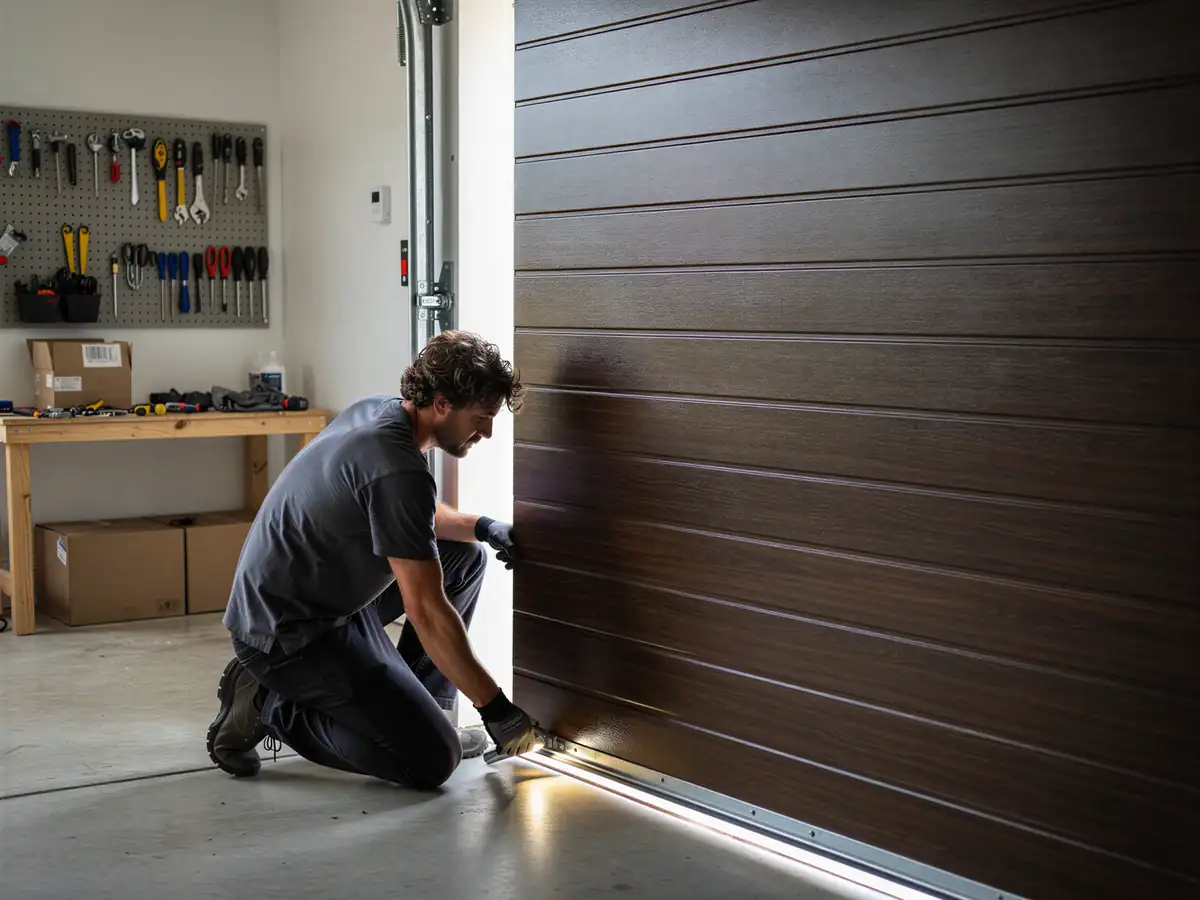
First we check whether the track is actually bent or just knocked out of alignment, because those get fixed differently - a misaligned track gets reset and re-shimmed against the framing, a bent one gets cut out and replaced. Next we check the rollers and brackets the door was riding on when it came off, since reusing a worn roller after a track repair just sets up the same failure again. If a cable jumped the drum, we check the drum and the spring before putting any tension back on the system, because a damaged drum under load is its own hazard. Once the track's solid and the hardware's sound, we rehang the door, run it through a full cycle by hand before powering the opener, and check that both sides are seated the same height off the floor. We're coming from Brentwood, about 12 miles out, so we won't pretend to know your street - but a builder-grade sectional door on a bent or loose track is a job we see often enough in this part of the service area to know what we're looking at before we open the truck. Learn more about garage door off-track repair or see our coverage near La Vergne.